


Domed Platinum Pentacle Pendant With Interwoven Star
$$$
Platinum
A client came to us wanting a pentacle pendant redesigned from reference photos he supplied — a five-pointed star with interleaved lines, set inside a circle, with the points blended smoothly into the outline rather than exposed. After receiving the first version, he found the back was hollow rather than solid, which he had not realized from the renders. The piece was rebuilt solid at a slightly smaller diameter to keep a similar weight, and when the replacement arrived he wrote: 'It looks great! Thank you so much.'
'It looks great! Go ahead and manufacture it.' — on design approval
'I got the new piece yesterday. It looks great! Thank you so much.' — on delivery
Quick specs
Design type
Primary Metal
Primary Stone
Accent Stones
Design Complexity
Intent: Certainty
Size
Pendant 32mm (1.25in) diameter, solid back. Bail with through-hole at top. Chain 18in x 2-2.2mm (client-provided, not included).
How they made it distinctive
-
01
Five-pointed star redesigned from a seven-pointed concept specifically to reduce platinum weight and simplify the crossing pattern
-
02
Star points blended into the surrounding circle rather than projecting past it, for a unified continuous silhouette
-
03
Visible interleaving at each crossing point of the star, where the lines appear to pass over and under one another
-
04
Cast-in-place solid bail with a through-hole instead of a separately soldered ring, for added durability at the chain connection
-
05
Rebuilt with a solid back rather than a hollow cavity, prioritizing a substantial feel over a lighter hollow casting
How you'd make it yours
Star points: this piece uses 5 points; a new commission could use 7 points or another point count for a different symbolic read
Metal: this piece is platinum; the same cut-out design works in white gold or sterling silver at a lower material weight and cost
Dome: this piece has a slight dome; a new commission could be made flat or with a more pronounced curve
Diameter: this piece is 1.25in; a new piece is sized to the wearer's preference
Construction: this piece is solid; a hollow-back version is available for a lighter alternative in the same design
One of a kind: this exact pendant was designed for one client and is not reproduced — a new commission is an original piece inspired by this one, not a copy
Design changes made
The star count changed from seven points to five points early in the design to simplify the piece and reduce weight. After delivery, the pendant was rebuilt with a solid back instead of a hollow one, with the diameter reduced slightly from 1.5in to 1.25in to keep the metal weight comparable.
Who this is for
This piece is for someone who wants a clean, symbolic design rendered with real weight and permanence rather than a lightweight stamped version. It suits someone who has a precise mental picture of proportions and construction details and wants those specifics followed exactly, down to whether the piece is solid or hollow underneath.
How it's made
The approved 3D design was 3D-printed in wax, then attached to a wax tree inside a flask and set in investment plaster. The flask was fired in a kiln to burn out the wax, leaving a hollow mold, and molten platinum was poured into the mold to cast the pendant. Once cooled, the raised metal was broken out of the investment and separated from the tree for finishing.
After casting, the pendant was cleaned up and polished to a consistent finish across the circle, the star, and the raised bail at the top. The star's negative space was cut through completely so the interleaved crossings read clearly from the front, and the piece was given a slight dome from center to edge during finishing. The bail was cast in place as a solid raised bump with a through-hole, rather than a separately soldered ring, so there is no solder joint at the pendant's highest-stress point.
Key note
The pendant was remade with a solid back rather than the original hollow casting, which is why the second version runs heavier despite a smaller overall diameter.
Pricing guidance
A platinum cut-out pendant of moderate complexity, with a domed solid construction and a cast-in-place bail, sits in the mid-to-upper range for custom pendant work. Platinum's density and the labor of polishing an open cut-out design evenly are the main cost drivers, more so than the stone count, since this piece has none. Overall diameter and whether the piece is cast solid or hollow move the price from there.
Moves price up ↑
- ↑ Increasing the overall diameter, which adds platinum weight at the density of the metal
- ↑ Choosing a fully solid casting rather than a thinner or hollow-backed version
- ↑ Adding stone settings into the star or circle for visual contrast
- ↑ Requesting a heavier dome or more pronounced three-dimensional curvature
- ↑ Upgrading the bail or chain to a thicker matched platinum chain
Moves price down ↓
- ↓ Reducing the overall diameter to save on platinum weight
- ↓ Switching the metal to sterling silver or white gold for a similar look at lower material cost
- ↓ Choosing a flatter profile instead of a domed one, which reduces finishing time
- ↓ Simplifying the design to fewer interleaving points
- ↓ Supplying your own chain rather than ordering one from the studio
Questions people ask
Yes, platinum is one of the most durable precious metals used in jewelry, and it resists tarnish completely since it does not oxidize like silver can. It is denser and heavier than gold or silver, so a platinum pendant of the same size will weigh noticeably more than a similar piece in another metal. It also develops a soft patina over years of wear rather than scratching sharply, which many people like for a piece worn daily. For a geometric cut-out design like this, platinum's strength also helps the thin crossing lines of the star hold their shape over time.
A solid-back pendant is cast as one continuous mass of metal with no interior cavity, while a hollow-back pendant has a cavity underneath the visible front design to reduce metal weight and cost. Hollow construction is common for larger pieces because it keeps the piece lighter and less expensive in precious metals like platinum or gold. The tradeoff is that a solid piece generally feels more substantial and is less prone to denting if struck. Confirming which construction you want before approving a 3D render is important, since the two can look identical from a flat photo.
A 5-pointed star has fewer crossing lines than a 7-pointed one, which means less metal is needed and the piece ends up lighter and generally less costly to produce, especially in a dense metal like platinum. The 5-pointed star is also the more widely recognized star form, while a 7-pointed star reads as a more specific or unusual symbol. Both are achievable as cut-out designs with interleaved crossings, so the choice mostly comes down to the look and symbolism you want. Reducing the point count is a straightforward way to lighten a design without changing its overall diameter.
A moderately complex platinum pendant with an open cut-out design and no stones typically falls in the mid-to-upper range for custom pendant work, largely because of platinum's cost per gram and the hand-finishing required to polish an open design evenly on all visible edges. Diameter and whether the piece is cast solid or with a lighter hollow back are the two biggest factors in the final cost. Removing stones, as is the case here, keeps the price lower than a comparable piece with gem settings. The exact price depends on the final confirmed weight once the 3D model is complete.
A standard custom pendant typically takes about one week for the design phase, including a sketch and a 3D rendered preview for approval, followed by three to four weeks of production once the design is approved. Production includes 3D-printing a wax model, investment casting the metal, and hand-finishing and polishing the piece. Platinum casting and finishing can take slightly longer than silver or gold due to the metal's higher melting point and density. Holiday seasons or high order volume can extend these timelines somewhat.
Yes, a star can be designed so its points blend directly into the inner edge of the surrounding circle rather than projecting beyond it, which keeps a cleaner, more unified silhouette. This is a design choice made at the 3D modeling stage, and it's worth specifying clearly before approving a render, since a flat image can make it hard to judge where exactly the points terminate. The resulting look reads as one continuous shape rather than a star and a circle as two separate overlapping elements. This approach also tends to be slightly more structurally sound since there's no exposed point that can catch or bend.
A cast-in-place bail is a loop or bump for the chain that is formed as part of the original casting, rather than a separate ring that is soldered onto the finished piece afterward. Because it's cast as one piece with the rest of the pendant, there's no solder joint at the point that bears the most ongoing stress from the weight of the chain and pendant swinging during wear. This generally makes it a more durable connection point than a soldered-on jump ring. It is a small detail that is easy to specify when designing a pendant meant for daily wear.
Yes, a pendant can be cast fully solid rather than with a hollow back, though a solid casting in a dense metal like platinum will weigh more for the same outer dimensions. If keeping the weight down matters more than having a solid back, reducing the overall diameter slightly is one way to balance the two. The choice between solid and hollow construction should be confirmed explicitly during the design review stage, since both can look the same in a flat rendered image. A solid casting is generally considered more durable for an open cut-out design worn daily.
Explore Similar Creations
Every masterpiece starts with a spark. Explore how our clients raw ideas - sketches, heirlooms, inspirations - were transformed into bespoke works of arts.
Sterling silver dimensional toad pendant. This pendant is about 1 inch in size and hangs ...

This stunning sterling silver pendant is the perfect way to memorialize a beloved son. The ...

This pendant translates a personal logo into a wearable piece: a teardrop or paisley-shaped silhouette ...

Where simplicity meets individuality, this 14kt yellow gold pendant is artfully designed to resemble the ...

This simple yet stunning 14karat gold pendant features the bold look of an equilateral triangle ...
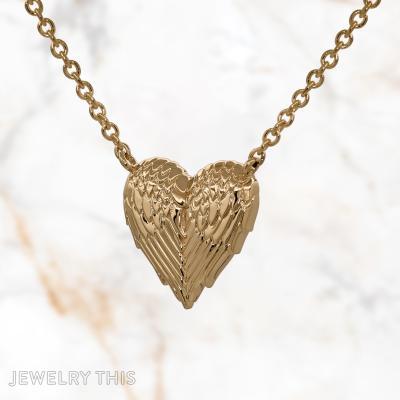
This pendant reshapes the classic angel-wing motif into a heart, with two detailed feathered wings ...

This pendant recreates a dragon’s claw gripping a round sky blue topaz orb, rebuilt after ...
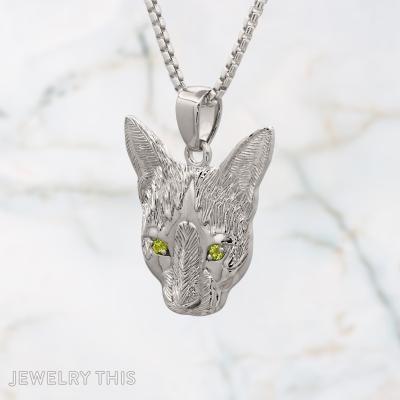
This exquisite custom pendant beautifully captures the unique features a cherished cat, immortalizing his memory ...

This stunning custom pendant captures a deeply personal story of love and cherished memories, reimagining ...

This sterling silver pendant reimagines the yin-yang symbol using two nose-to-tail foxes, cast identically on ...

This dainty 14k yellow gold mini star pendant is captivating with its intricate details. The ...

A BBQ business logo turned into a pendant worn with pride. Gifted by his wife, ...



