Heart of Angel Wings Pendant in 14k Gold
$$$
14k yellow gold
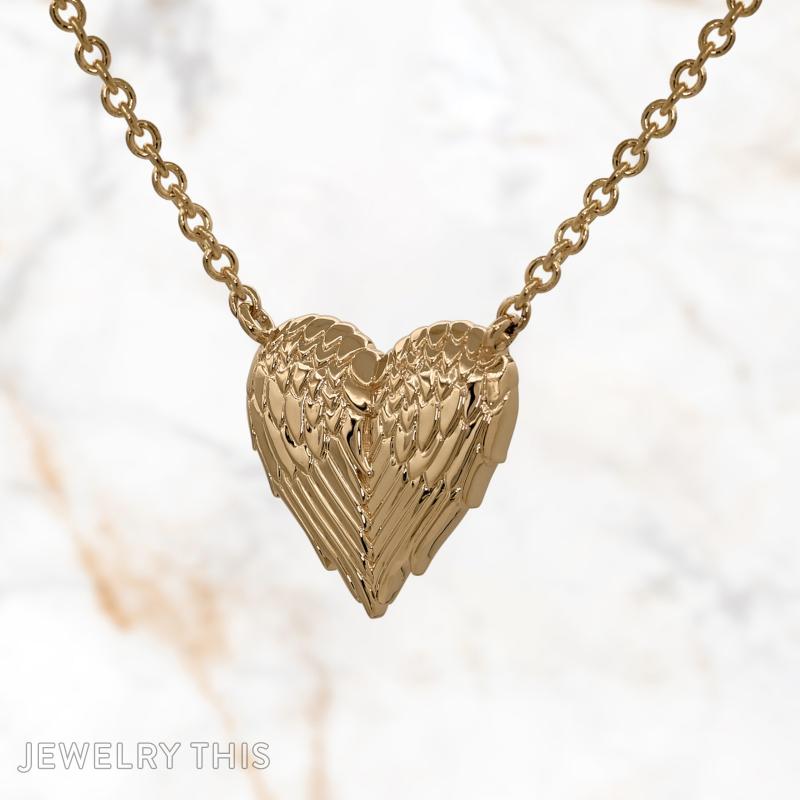
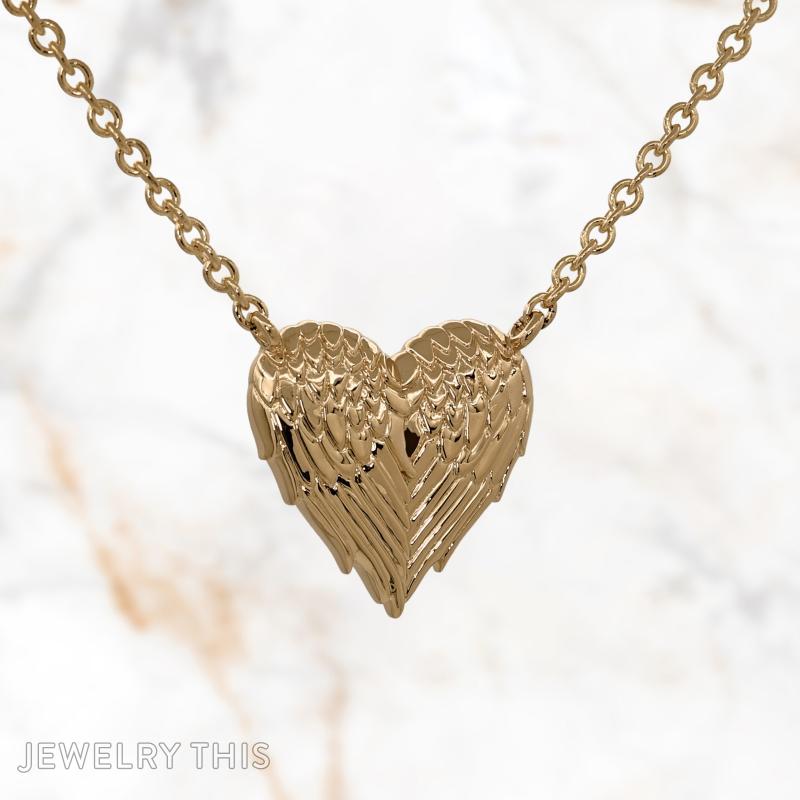
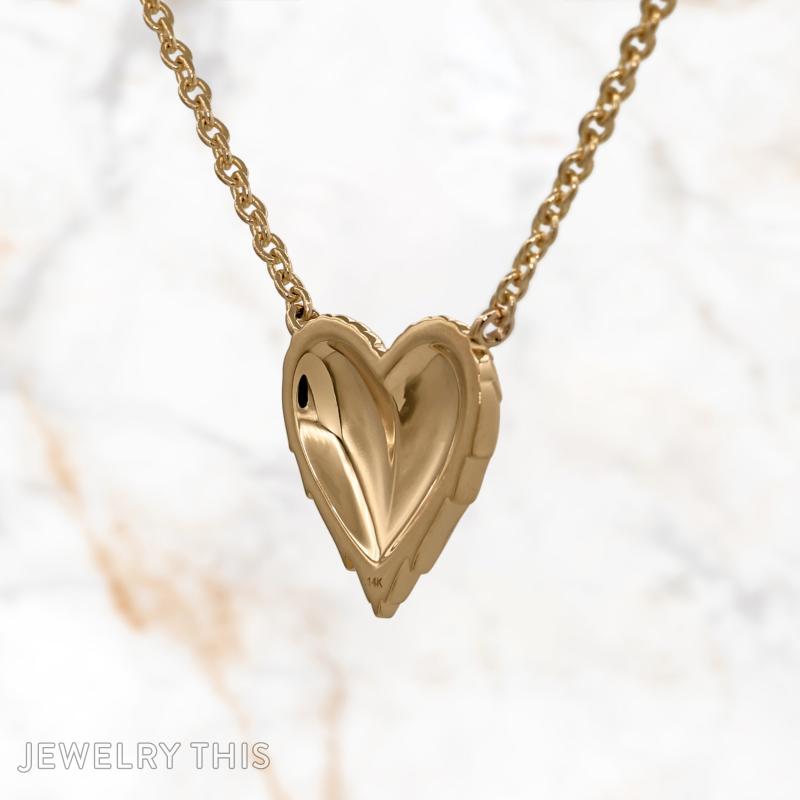
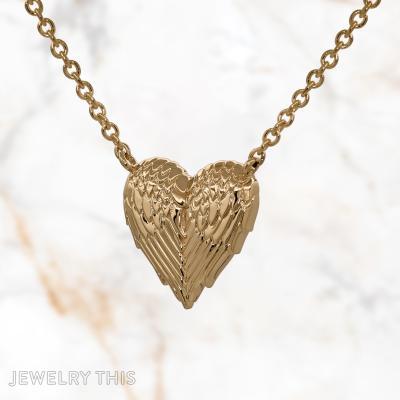
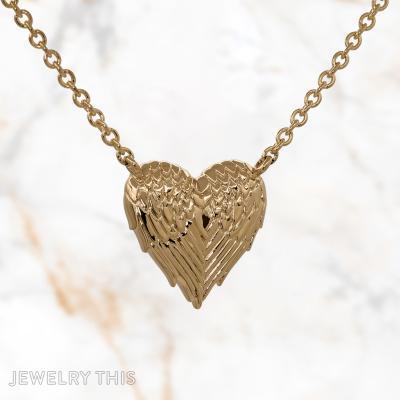
A client wanted a necklace built around a specific idea: angel wings shaped into a heart, hanging securely from both sides rather than a single loop. The design went through several rounds of chain and sizing discussion to get the proportions right before landing on a 14k gold pendant with a 2.4mm cable chain. On delivery she wrote: 'I love it! I think she's going to love it!'
'I love it! I think she's going to love it! Thank you so much and thank you for the extra gift!' — on delivery
Quick specs
Design type
Primary Metal
Primary Stone
Accent Stones
Design Complexity
Intent: Certainty
Size
Pendant approximately 0.8in (20mm) wing to wing. Chain 2.4mm cable, 16in length.
How they made it distinctive
-
01
Heart shape formed entirely from two angel wings meeting at center, rather than a separate wing motif applied to a heart outline
-
02
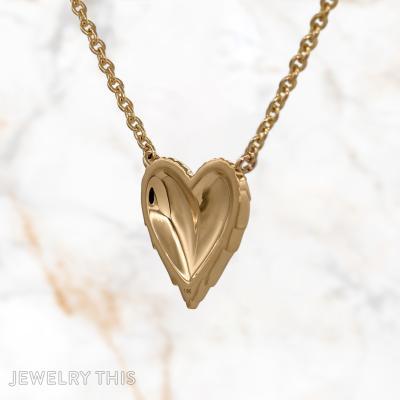
Pendant attaches to the chain at both upper wingtips instead of a single bail, giving it a more structural, supported hang
-
03
Wider 2.4mm cable chain chosen specifically because narrow chains lack enough solder contact for the two-point attachment
-
04
Pendant scaled down from an initial 1.5-inch concept to 0.8 inches to keep the proportion balanced against the chain weight and stay within budget
-
05
Chain shortened to 16 inches after casting, at the client's request, to better fit how the piece was meant to sit
How you'd make it yours
Metal: this piece is 14k yellow gold; the same wing-and-heart design works in white gold, rose gold, or gold-plated silver for a different look or price point
Chain style: this piece uses a 2.4mm cable chain; a new commission could use curb, figaro, or a heavier cable depending on desired thickness
Pendant size: this piece is 0.8 inches wing to wing; a new piece could be scaled larger or smaller to suit the wearer
Stones: this piece has no stones; a new commission could add small diamond accents within the feather detailing
One of a kind: this exact pendant was designed for one client and is not reproduced — a new commission is an original piece inspired by this one, not a copy
Design changes made
The pendant size was scaled down from an initial 1.5-inch concept to 0.8 inches, and the chain evolved from a rolo style to a 2.8mm cable and finally to a 2.4mm cable, after budget and proportion discussions. The chain length was also shortened from 18 to 16 inches after the design was approved.
Who this is for
This piece is for someone who wants a symbolic design with genuine structural thought behind it, not just a decorative charm on a chain. It suits someone giving a meaningful gift who cares as much about how the piece is built and worn day to day as how it looks in a photo.
How it's made
Once the heart-and-wings design was approved, the team built a 3D CAD model and produced a wax resin version on a 3D printer, which was shared with the client as a preview before casting. The resin was attached to a wax tree, invested in plaster, and fired in a kiln to burn out the wax and leave a hollow mold. Molten 14k yellow gold was then cast into the mold to form the pendant and its dual chain-attachment points.
After casting, the piece was cleaned and polished to a high-gloss finish across both wings, with the feather texture refined by hand to keep the linework crisp at this small scale. Because the pendant attaches to the chain at both upper wingtips rather than through a single bail, each connection point was finished and reinforced individually before the 2.4mm cable chain was fitted and shortened to the client's requested 16-inch length.
Key note
The dual-point attachment at both wingtips required a wider link chain rather than a tight rolo or box chain, since a narrow-link chain lacks enough solder contact area to hold securely at two separate points.
Pricing guidance
A yellow gold heart pendant of moderate complexity with a substantial cable chain sits toward the upper range for pendant work, largely because of the gold content in both the piece and the thicker chain. Chain weight and gauge are major cost drivers here, often rivaling or exceeding the cost of the pendant itself. Design detail like the feather texture adds modest hand-finishing time on top of that.
Moves price up ↑
- ↑ Increasing the chain gauge from 2.4mm to 3mm or larger, which adds significant gold weight
- ↑ Enlarging the pendant beyond 0.8 inches, since gold pendants scale in cost quickly with size
- ↑ Upgrading to 18k gold, which increases the gold content cost per gram
- ↑ Adding stone accents such as diamonds set within the feather detail
- ↑ Choosing a heavier link style like curb or figaro at the same width
Moves price down ↓
- ↓ Switching to gold-plated sterling silver instead of solid 14k gold for a similar look at lower material cost
- ↓ Reducing the chain gauge to 2mm or a lighter link style
- ↓ Keeping the pendant at a smaller scale, such as 0.6-0.7 inches
- ↓ Choosing a thinner chain profile like a standard cable rather than the requested wider link
- ↓ Selecting sterling silver as the base metal instead of gold
Questions people ask
On a design where the pendant attaches at two points rather than hanging from a single bail, the chain needs wide enough individual links to provide a stable solder connection at each attachment point. Narrow chains like box or tight rolo styles don't have enough surface area for a secure two-point connection. Wider styles such as cable, curb, or figaro are the standard choice for this kind of centerpiece design. This is a structural consideration, not just an aesthetic one.
A 14k gold pendant with a thick cable chain in this size range tends to sit toward the higher end for pendant-category work, largely because of gold's market price and the amount of metal required for a substantial chain. The chain itself is often a bigger cost factor than the pendant, especially as gauge increases. Reducing chain thickness or switching to a gold-plated silver base are the most effective ways to bring the cost down while keeping a similar look. Design complexity plays a secondary role compared to material choice here.
14k gold contains 58.3% pure gold alloyed with other metals for strength and durability, while 18k gold is 75% pure gold, making it softer but with a richer, warmer color. For a pendant that will be worn daily, 14k is generally more durable and resistant to scratching. 18k costs more due to its higher gold content. Most everyday pieces, including pendants like this one, are made in 14k for that balance of durability and value.
Yes, the heart-and-wings design translates well to white gold or sterling silver, and also to gold-plated silver for a similar yellow-gold look at a different price point. The feather texture and dual-point chain attachment are structural design choices that aren't tied to a specific metal. White gold would give a cooler, brighter tone, while sterling silver or gold-plated silver would bring the cost down significantly. The choice mostly comes down to color preference and budget.
The full process typically runs about four to five weeks from design approval to delivery. The first week or so covers the sketch, 3D CAD model, and photorealistic render for approval. Once approved, casting and finishing generally take three to four additional weeks. Rush timelines are possible when there's a deadline, such as a holiday delivery date, but should be discussed upfront.
Not usually — pendant size and chain weight are two of the biggest cost drivers in a solid gold piece like this, so scaling up the wings noticeably increases the amount of metal and hand-finishing required. Going from a 0.8-inch pendant to something in the 1 to 1.5-inch range can meaningfully raise the cost, especially if the chain gauge also increases to stay proportional. If budget is a concern, it's usually better to keep the pendant compact and prioritize chain thickness, or vice versa, rather than maximizing both.
Yes, a cast 14k gold pendant with a high-polish finish and no stones is a durable, low-maintenance option for daily wear. Because there are no set stones, there's nothing to loosen or catch on clothing, and the feather detailing is worked into the solid metal rather than applied as a separate element. The main wear consideration is the chain itself, which should use wide, secure links given the two-point attachment style. Occasional polishing will keep the shine consistent over time.
A single-bail attachment is the standard approach for most pendants, but a two-point attachment gives a wider design like this heart-and-wings shape a more stable, structural hang rather than letting it pivot or tilt on a single loop. This works particularly well for a symmetrical design like a heart, since both sides support the weight evenly. It requires a chain with wider individual links to provide enough solder contact at each connection point. The tradeoff is fewer chain style options, since narrow-link chains aren't suitable for this construction.
Explore Similar Creations
Every masterpiece starts with a spark. Explore how our clients raw ideas - sketches, heirlooms, inspirations - were transformed into bespoke works of arts.
The centerpiece of this 14 karat yellow gold necklace is a beautifully detailed ship’s helm ...
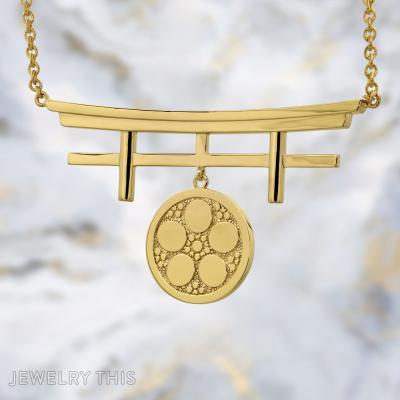
This pendant pairs an architectural torii-gate arch with a round coin-style medallion hanging beneath it, ...

This unique 14karat Yellow gold pendant boasts a detailed Gorilla head, showcasing elevated details along ...
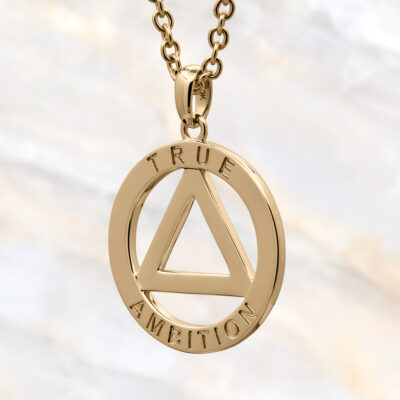
Celebrate the essence of architectural style with this geometric 10k yellow gold pendant, featuring an ...

This custom pendant is a beautiful and sentimental tribute to a beloved daughter. Measuring 1 ...
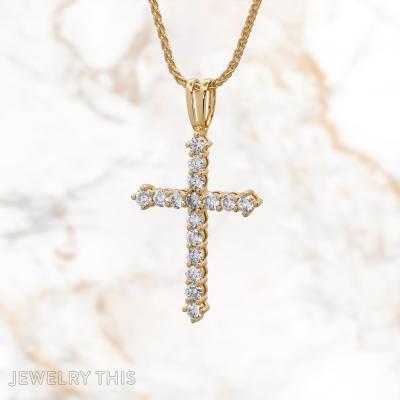
This diamond cross pendant was recreated from a piece that had been worn daily for ...

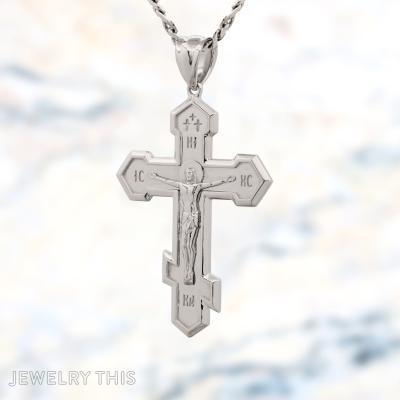
This platinum cross pendant blends Greek and Russian Orthodox design elements into a single three-bar ...

Designed as a meaningful gift for the client’s beloved daughter, this one-inch pendant is meticulously ...

Crafted with playful charm, this custom pendant captures the essence of fun and energy. Fashioned ...

Bold and full of spirit, this “Long Live Cowgirls” pendant is a tribute to the ...

This gorgeous rose gold tear drop pendant is the perfect combination of luxury and edginess. ...