


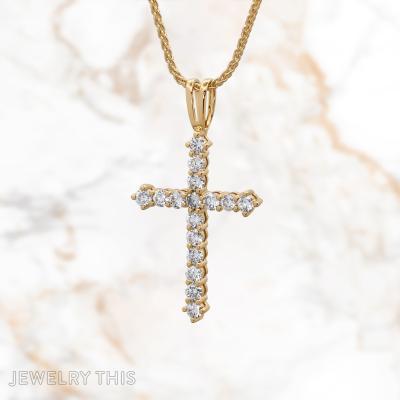

Recreated Diamond Cross Pendant — Heirloom Rebuilt in Gold
$$
14k yellow gold, lab-grown diamonds
A cross pendant given the night before a wedding — the first piece of jewelry ever bought for the giver by her own husband — had been worn every day for years before the chain broke and the pendant was lost. The client wanted it back in a form she could keep wearing, not tucked away for safekeeping, and worked through several rounds of design detail to get the back construction as close to the 55-year-old original as she could recall.
Quick specs
Design type
Primary Metal
Shape / Cut
Primary Stone
Accent Stones
Design Complexity
Intent: Certainty
Size
Pendant 30mm tall, approximately 20mm wide. Chain: 14k yellow gold wheat chain, 20in length.
How they made it distinctive
-
01
Gallery-wire back construction chosen after multiple rounds of revision specifically to recreate the hollow-backed feel of the 55-year-old original
-
02
Sixteen round lab-grown diamonds set continuously down both arms to match the density of stones in the original piece
-
03
Wheat-style chain sourced specifically to match the chain visible in the client's old photographs, rather than a standard stock chain
-
04
Prong length and finish refined after casting so the stones sit securely without the bulkier look of the unfinished model
How you'd make it yours
Stone type: this piece uses lab-grown diamonds; a new commission could use natural diamonds, moissanite, or colored gemstones for a different look
Metal: this piece is 14k yellow gold; the same cross design works in 18k yellow gold, white gold, or rose gold
Chain: this piece pairs with a 20-inch wheat chain; a new commission could use a rope, cable, or figaro chain in a different length
Back construction: the gallery-wire detail on this piece is a specific structural solution; a simpler solid back is also possible and reduces hand-finishing time
One of a kind: this exact pendant was designed to recreate one client's family piece and is not reproduced — a new commission is an original piece inspired by this one, not a copy
Design changes made
The back of the pendant went through several revisions to recreate the original's hollow-backed construction — settling on a gallery-wire design with a wire under each stone, negative space, and a second wire forming the back, instead of the initially proposed solid-and-holes structure.
Who this is for
This piece is for someone who wants a meaningful family piece back in their daily life, not preserved in a drawer out of fear of losing it again. It's especially right if you're working only from old photographs and memory, and you care enough about getting small structural details right that you're willing to go through a few rounds of revisions to get there.
How it's made
Once the design was finalized, a wax model was 3D-printed and mounted to a tree inside a flask, which was placed in a kiln to burn out the wax and leave a hollow mold. Molten 14k yellow gold was then cast into that mold under pressure. After cooling, the raw pendant was extracted from the mold and cleaned in preparation for finishing.
The cast piece was polished to a smooth, refined finish, with the prongs shortened and shaped after casting to securely hold each stone — they run longer in the unfinished model than in the final piece. Sixteen round lab-grown diamonds were then set by hand along both arms of the cross, into a gallery-wire structure that leaves a narrow hollow channel along the back rather than a solid backing.
Key note
The back of the cross uses a gallery-wire structure — a wire beneath each stone, open space, then a second wire forming the back — because a fully hollow back combined with cutout holes would have left the metal too thin to hold its shape.
Pricing guidance
A cross pendant of this size and stone count, in lab-grown diamonds and 14k gold, sits toward the lower-to-mid range for diamond-set pendants of moderate complexity. The main cost drivers are the number and size of the stones and the gallery-wire construction along the back, which takes more hand-finishing than a solid-backed piece. Chain choice adds an additional cost on top of the pendant itself.
Moves price up ↑
- ↑ Switching from lab-grown to natural diamonds for the same stone count and size
- ↑ Increasing the number or carat size of the diamonds along the arms
- ↑ Upgrading to 18k gold instead of 14k
- ↑ Choosing a heavier or more elaborate chain style, such as a wider wheat or cable chain
- ↑ Adding a more intricate back structure beyond the gallery-wire detail
Moves price down ↓
- ↓ Reducing the number of diamonds set into the arms
- ↓ Using a lower carat total weight for the stone line
- ↓ Choosing a simpler solid back instead of the gallery-wire construction
- ↓ Selecting a lighter or shorter chain
- ↓ Using moissanite in place of diamonds for a similar look at lower cost
Questions people ask
Yes, recreation from photographs and memory is a common request, especially for pieces with sentimental value that can no longer be repaired. The process starts with a detailed sketch based on the photos and any measurements you can provide, followed by a 3D model and rendered image for review. Multiple rounds of feedback are normal, especially for details like back construction that aren't always visible in old photos. The goal is to get as close as possible to the original, though some small differences are expected without the physical piece to reference.
Lab-grown and natural diamonds are chemically and optically identical — the same hardness, sparkle, and clarity grading apply to both. The only real difference is origin: natural diamonds are mined, while lab-grown diamonds are created in a controlled setting. Lab-grown diamonds typically cost meaningfully less than natural diamonds of the same size and quality. For a piece with many small stones, like a diamond-lined cross, this can make a noticeable difference in overall cost.
A diamond-lined cross pendant of moderate size and complexity in 14k gold with lab-grown diamonds generally falls toward the lower-to-mid range for custom diamond pendants. Cost is driven mainly by stone count, stone size, and the complexity of the back construction. A solid-backed design costs less to produce than one with an open gallery-wire structure. Chain material and length are priced separately from the pendant itself.
A gallery-wire back uses a wire directly beneath each stone, a small gap, and a second wire forming the underside — creating a narrow hollow channel without leaving the metal too thin. A fully hollow back combined with cleaning holes would make the walls too delicate and prone to bending. The gallery-wire approach was chosen specifically to balance an open, breathable back with enough structural strength for daily wear. It's a common solution when someone wants an antique or vintage look on the reverse side of a stone-set piece.
The design phase, including sketch, 3D model, and rendered review, typically takes about one week, though it can take longer if multiple rounds of revisions are needed to get details right. Once the design is approved and moved into production, casting, stone setting, and finishing generally take about four weeks. A resin 3D-printed preview is usually shared partway through production so you can see the piece before it's cast in metal. Total turnaround from approved design to shipment is usually five to six weeks, though revision-heavy designs can add time to the design phase.
Pendant size is fixed at casting since the diamonds are set directly into the metal, so length and stone placement can't be changed afterward. The chain length, however, can typically be chosen or adjusted independently of the pendant itself. If you want a different pendant size in the future, that would require a new casting rather than an adjustment to the existing piece. It helps to settle on final dimensions during the design and render stage before production begins.
Yes, chain styles can often be identified from close-up photos, even decades-old ones — wheat, rope, cable, and figaro chains all have distinctive link patterns that are recognizable in images. If the exact style isn't in standard stock offerings, it can usually be sourced separately. Chain width and length are chosen independently of the pendant design, so you can match the original's proportions as closely as your photo reference allows. Just keep in mind that chain pricing is separate from the pendant price.
Yes, the 3D model file used to produce a piece is typically saved and can be used again for future orders, including at a different size or scale. This is common for families who want to give a similar piece to multiple people over time, such as at different weddings or milestones. Reordering from an existing model is usually more straightforward than a full recreation from scratch since the design work is already done. Sizing and minor detail adjustments can still be made to each new version as needed.
Explore Similar Creations
Every masterpiece starts with a spark. Explore how our clients raw ideas - sketches, heirlooms, inspirations - were transformed into bespoke works of arts.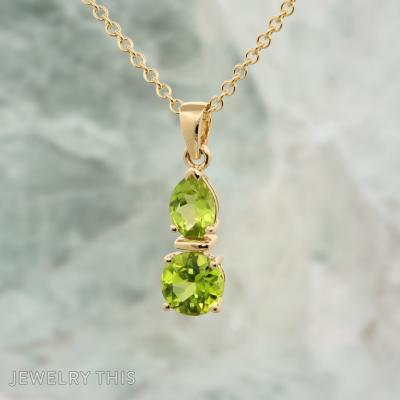
This pendant was designed around a simple idea: two peridots, one pear-shaped and one round, ...

This custom pendant is a heartfelt tribute to cherished college memories, designed to celebrate a ...

This custom 10k yellow gold pendant is a stunning representation of unity and personalization. This ...

Embrace the whimsical charm of this custom bird pendant. Meticulously crafted from 18k yellow gold, ...


Introducing our innovative 1-inch round Cuban flag pendant in 14kt yellow gold plated silver, showcasing ...

This sword pendant was designed as an engagement-season gift, built around a knight’s-sword silhouette with ...

This oval pendant borrows its silhouette from a classic devotional medallion style, reworked with a ...

Embrace the beauty of personalized elegance with this custom pendant—a tribute to cherished moments and ...

This pendant centers on a lion’s head in profile, rendered in high-relief detail across the ...

This yellow gold pendant features a unique combination of religious and spiritual symbols. A cross ...

This 10k gold pendant features a .75 inch compass cut-out with raised family member names ...



