


Diamond Teardrop Pendant with Gold Gear Accents
$$$
14k yellow gold, natural diamonds
A client wanted his own logo design turned into a pendant — a teardrop shape with gear details worked into it. He went through several rounds of renders, testing both yellow and white metal versions before landing back on the all-yellow look from the very first design. The finished pave-diamond pendant was a gift for his mother, and he wrote back simply: 'It's great I got it for my mom, she loves it.'
'It's great I got it for my mom, she loves it.' — on delivery
Quick specs
Design type
Primary Metal
Shape / Cut
Primary Stone
Accent Stones
Design Complexity
Intent: Certainty
Size
Pendant approximately 1in (25.4mm). Chain 2.0mm x 18in.
How they made it distinctive
-
01
Teardrop silhouette fully pave-set in round diamonds, reproducing the exact outline of the client's personal logo
-
02
Two gear shapes rendered as raised, solid-gold elements finished separately from the pave field so they read clearly against the stones
-
03
Client tested a two-tone yellow/white version before choosing to return to the original all-yellow gold design
-
04
Pave-set bail matches the diamond coverage of the pendant body rather than using a plain bail
-
05
Natural diamonds chosen over lab-grown for the full stone field
How you'd make it yours
Stone type: this piece uses natural diamonds — a new commission could use lab diamonds for the same look at lower cost
Metal: this piece is 14k yellow gold — the same design language works in white gold or a two-tone build
Pendant size: this piece is about one inch — a new commission could be scaled larger or smaller
Bail: this piece has a pave-set bail — a new piece could use a plain polished bail instead
One of a kind: this exact pendant was designed from one client's personal logo and is not reproduced — a new commission is an original piece inspired by this one, not a copy
Design changes made
The client asked to see a two-tone version with the gears in yellow and the rest in white metal, which required rebuilding the model since the gears had to be modeled as separate pieces. After comparing renders, he returned to the original all-yellow gold design he'd seen first.
Who this is for
This piece is for someone who has a specific image in mind — a logo, a personal mark, a meaningful graphic — and wants it translated faithfully into fine jewelry rather than settling for something generic. It suits a buyer who is comfortable working through a few rounds of renders and pricing options to get the design exactly right before committing.
How it's made
Once the logo-inspired design was finalized, the team built a technical drawing and then a 3D model to work out stone layout and metal weight before any physical model was made. A wax model was 3D-printed and attached to a tree inside a flask, which was invested in plaster and fired in a kiln to burn out the wax and leave a hollow mold. Molten 14k yellow gold was then cast into that mold under pressure to form the raw pendant and bail.
After casting, the piece was cleaned, polished, and prepared for stone setting. Because the design called for two gear shapes to read clearly in solid gold against a fully diamond-paved teardrop field, those gear elements were finished separately from the pave area before the round natural diamonds were set by hand across the teardrop shape and the bail, stone by stone, to achieve full coverage.
Key note
The gear elements were modeled and finished as their own component, separate from the diamond pave, so the solid-gold detail would read cleanly against the surrounding stone field.
Pricing guidance
A fully pave-set logo pendant like this sits in the mid-to-upper range for custom pendant work, mainly because of the labor involved in setting dozens of small diamonds across a shaped silhouette rather than a simple outline or single center stone. Natural versus lab diamonds and the karat of gold used are the next biggest levers on the final cost.
Moves price up ↑
- ↑ Choosing natural diamonds over lab-grown diamonds for the pave stones
- ↑ Increasing the pendant size beyond roughly one inch, which requires more stones to maintain full coverage
- ↑ Adding gemstone detailing to the bail as well as the main pendant body
- ↑ Using a two-tone build where separate components are modeled and finished individually
Moves price down ↓
- ↓ Switching from natural to lab-grown diamonds for the same pave look at lower material cost
- ↓ Reducing the pendant to a single stone shape or fewer diamonds instead of full pave coverage
- ↓ Choosing a gold-plated silver base instead of solid 14k gold
- ↓ Simplifying the design to an outline or engraved version of the logo rather than a dimensional, stone-covered piece
Questions people ask
Yes. This pendant started as a client's own logo image, which the design team translated first into a technical drawing and then into a 3D render before any metal was made. The process lets you review the layout, gemstone placement, and proportions before committing to production. It works well for personal marks, brand logos, or any graphic that has clean, recognizable shapes.
Lab-grown and natural diamonds are chemically and visually identical — the difference is origin, not appearance. In a piece like this with dozens of small pave-set stones, lab diamonds typically cost significantly less for the same look. Natural diamonds carry a higher price largely due to mining and rarity rather than any visible quality difference at this stone size. Either option holds up the same to daily wear.
The full process typically runs several weeks from approved design to delivery. Design usually takes about one to two weeks, including technical drawings and 3D render revisions. Production then takes roughly three to four weeks, covering wax modeling, casting, finishing, and hand-setting all the pave stones. Complex layouts with dimensional elements can add a few extra days for component finishing.
A shaped pendant covered edge-to-edge in small diamonds sits in the mid-to-upper range for custom pendant work, since the labor of setting many individual stones adds up quickly. The choice between natural and lab diamonds is usually the single biggest factor in the final price. Gold karat and any additional stone-set details, like a paved bail, also move the price.
Yes, though it depends on the design. If a design has a single metal color throughout, switching it is usually a quick update. If you want two different colors on separate elements — like this pendant's gears versus its diamond field — the model typically needs to be rebuilt so those parts can be finished independently, which adds a bit of time.
Renders are a close approximation, but the real luster and tone of cast gold can vary slightly from a digital render. This is a normal part of the process and is usually mentioned when a render is shared. Reviewing the render for overall design and proportion is more reliable than judging exact color from a screen.
Yes. Small dimensional shapes like gears can be modeled as raised, solid-metal elements that sit apart from a stone-set field, which keeps their form crisp and readable. This kind of detail is often finished as its own component before final assembly so the shape doesn't get lost among surrounding stones. It's a common approach for logos or designs that mix graphic and mechanical elements.
Yes, the scale can be adjusted up or down from the original size. Making it larger generally means more diamonds are needed to maintain full pave coverage, which affects both weight and cost. Making it smaller can simplify the stone-setting work but may limit how much fine detail, like the gear elements, can still read clearly.
Explore Similar Creations
Every masterpiece starts with a spark. Explore how our clients raw ideas - sketches, heirlooms, inspirations - were transformed into bespoke works of arts.
This unique pendant feature the next2play logo with a p rise Pheonix. Measuring one inch ...

This sterling silver lighthouse pendant captures the charm of the sea. This stunning piece is ...

This sleek, sterling silver pendant, standing at 20 mm/ 0.75 inches tall, showcases the AlmaVault ...

This lovely gold plated silver pendant is a symbol of love, commitment and family. The ...

This custom rose gold 14k watch fob is a captivating masterpiece. It includes a family ...
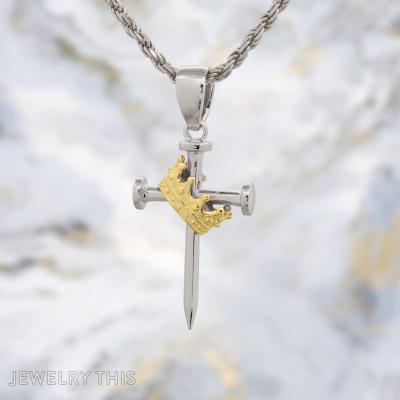
This striking pendant features a 1.5-inch nail-shaped cross crafted in 10k white gold, paired with ...
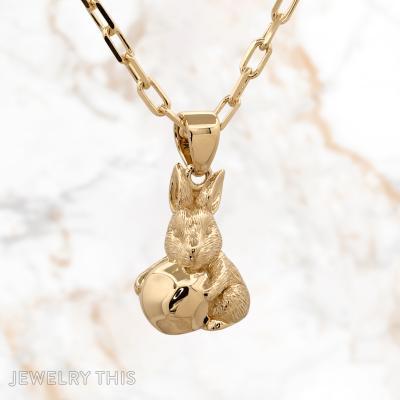
Inspired by the tender bond between a mother and her children, this one-of-a-kind pendant beautifully ...

This sweet 14k white gold pendant is a beautiful tribute to Lola, a beloved companion. ...

Crafted in the shape of a heart, this white gold pendant symbolizes the love and ...

This custom pendant is a striking rectangle in shape. Crafted from radiant 10k yellow gold, ...

This simple and timeless 10k yellow gold pendant is the perfect way to commemorate a ...




