

Dragonfly Bracelet Made From Heirloom Sapphires
$$$
14k yellow gold, natural sapphire, natural diamonds
A mother wanted to give her daughter something new, blue, and old all at once — sapphires from a ring she'd had for over 35 years, rebuilt into a dragonfly bracelet. The stones weren't perfectly matched or cut to modern standards, so the design team curved the dragonfly's tail to work with their natural shape rather than against it. She wrote that the quality of the original ring wasn't great, but that was never the point — it was about the sentimental value.
Quick specs
Design type
Primary Metal
Shape / Cut
Primary Stone
Accent Stones
Style
Design Complexity
Intent: Certainty
Size
Bracelet inside circumference 8.66in (22cm). Dragonfly motif approximately 1in wingtip to wingtip, 0.5in head to tail curve. Wings approximately 3mm wide.
How they made it distinctive
-
01
Dragonfly body and tail set with sapphires inherited from a ring over 35 years old, not newly sourced stones
-
02
Curved tail design chosen specifically to mask the natural, uncalibrated shape of the older sapphires
-
03
Dragonfly sized under 1 inch wingtip to wingtip to sit naturally within a thin chain bracelet
-
04
Wings kept solid rather than open-worked, since the 3mm wing width left no room for an open pattern
-
05
Small diamond accents added only to the wings, supplementing the client's own stones without overwhelming them
How you'd make it yours
Stone: this piece uses the client's own sapphires; a new commission could use sapphires in a different color family or lab-created stones for a similar look
Metal: this piece is 14k yellow gold; the same dragonfly design works in 18k yellow gold or white gold
Wing detail: this piece has diamond-set solid wings; a new commission with wider wing proportions could support an open-work design
Tail shape: this piece uses a curved tail; a new piece with calibrated stones could use a straight tail line instead
One of a kind: this exact bracelet was designed around one client's own stones and is not reproduced — a new commission is an original piece inspired by this one, not a copy
Design changes made
The client considered opening up the wing design to reduce the diamond accents, but the wings measured under 3mm wide — too narrow to support any open pattern — so the original solid, diamond-set wing design was kept. The curved tail was confirmed over a straight one specifically because it masked the sapphires' natural, uncalibrated shapes.
Who this is for
This piece is for someone who has an old stone with history but no real use for it in its current form. It's especially right if you want to pass something forward to the next generation in a way that feels new and wearable, not simply inherited as-is.
How it's made
Once the client's ring arrived, the sapphires were cleaned, inspected, and measured to determine which stones could be reused. A 3D model was then built around the usable stones, supplementing with a matched marquise sapphire and small diamonds, and shared as a photorealistic render for approval. After approval, the design moved into production: the dragonfly and its connecting rings were cast in 14k yellow gold, sized to link directly into a thin cable chain.
The wings were finished with a soft polish to let the small diamonds set along each one catch light without competing with the body. The marquise sapphire was set as the dragonfly's body, and the client's round sapphires were set in a graduated curve to form the tail, bezel-set to accommodate their slightly uneven, uncalibrated shapes. The curved tail setting was chosen specifically to disguise the natural irregularity of stones that were never cut to be perfectly round.
Key note
The tail's curve is a setting solution, not just a style choice — it was engineered specifically to mask the fact that the client's 35-year-old sapphires were never cut to calibrated round dimensions.
Pricing guidance
A charm-style bracelet built around client-supplied colored stones sits in the mid range for custom work, mainly because of the stone inspection, remounting labor, and small diamond accents involved. Using the client's own stones can offset some material cost, but the labor to assess, cut down, and reset older stones is a steady driver regardless of metal choice. Chain weight and length are the other main variables affecting the final cost.
Moves price up ↑
- ↑ Using a heavier or thicker gold chain rather than a light, thin cable chain
- ↑ Hand-fabricating open wing detailing instead of a cast solid wing with set stones
- ↑ Adding more diamond accents or upgrading to larger stones in the wings
- ↑ Using 18k gold instead of 14k for a richer color and higher gold content
- ↑ Sourcing additional matched stones rather than relying on the client's own supply
Moves price down ↓
- ↓ Reducing the number of supplemental diamonds added to the design
- ↓ Using sterling silver or gold-plated silver instead of 14k gold
- ↓ Keeping the bracelet chain thinner and shorter
- ↓ Omitting the diamond accents on the wings entirely
- ↓ Using only the client's own stones without sourcing any matching replacements
Questions people ask
Yes, this is a common request — stones from an existing ring, even one that is decades old, can be removed, inspected, and reset into an entirely new design. The original metal is typically not reused in this kind of project, but the stones themselves can be. The stones must be physically received and measured before the final design can be confirmed, since older stones are often not cut to today's standardized shapes. This process works well for sentimental stones that a client wants reimagined rather than stored away.
Sapphires rank a 9 on the Mohs hardness scale, just below diamond, making them one of the more durable gemstones available for everyday jewelry. They resist scratching well, which is one reason they're a common choice for pieces meant to be worn often. A bracelet setting does expose stones to more contact than a ring or pendant, so a secure bezel or prong setting matters more than the stone's hardness alone. With a secure setting, sapphires hold up very well to daily wear.
A small cast charm, like a dragonfly under an inch in size, in 14k gold typically falls in the mid range for custom jewelry once a chain and small accent stones are included. The main cost drivers are the labor for inspecting and resetting older or client-supplied stones, plus the metal weight of the chain itself. Using sterling silver or gold-plated silver instead of solid gold brings the cost down noticeably if budget is the main constraint. Supplementing with small diamond accents adds only a modest amount to the total.
When a client is supplying their own stones, the process starts with shipping the stones in for inspection and measurement, which typically adds about a week before design can begin. Once the stones are confirmed, a 3D model and photorealistic render are produced for approval, which usually takes about a week. After approval, production typically runs four to five weeks. Using client-supplied stones generally takes longer than starting with new stones because of this inspection and measurement step.
Yes, but the design often needs to work around the stones' natural irregularities rather than against them. In this piece, the original sapphires were not cut to perfectly calibrated round shapes, so the design used a curved, graduated setting line instead of a straight one specifically to disguise that irregularity. A skilled designer can usually find a setting approach that makes slightly uneven stones read as intentional rather than flawed. It's worth discussing the stones' actual condition with your designer before finalizing a design.
Using your own stones keeps sentimental material in the piece, but it does add time and sometimes design constraints, since the stones must be inspected in person before a final design is confirmed. New stones can be selected to a specific calibrated size and shape, giving more design flexibility. Cost-wise, supplying your own stones can reduce material expense, but the inspection and remounting labor means the savings are often smaller than expected. Many clients combine both approaches — using some of their own stones and supplementing with new ones where needed.
Small accent diamonds add relatively little to the overall cost of a piece, since the diamonds themselves are tiny and the main expense is the labor of setting them. In a piece like this, a handful of small diamond accents added a modest amount to the total price. The bigger cost factors in a custom piece are usually the metal weight and the labor for any stone-resetting work, not small accent stones. If budget is tight, removing accent diamonds is one of the easier ways to trim cost without changing the overall design.
A photorealistic render is a close approximation, but some variation is normal, especially in stone color and metal tone. In this case, the client was advised that her sapphires were darker than the stones shown in the render, and that the actual yellow gold color and luster would vary slightly from the rendered image. Reviewing a rotatable 3D model in addition to the flat render can help clarify details like proportions and surface texture before approving a design. Final pieces are generally very close to the approved design, but gemstones in particular can look slightly different in person than on screen.
Explore Similar Creations
Every masterpiece starts with a spark. Explore how our clients raw ideas - sketches, heirlooms, inspirations - were transformed into bespoke works of arts.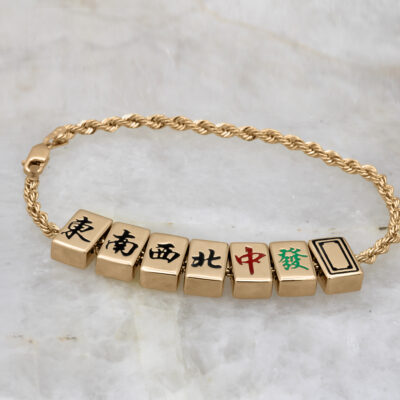
This bracelet reimagines a set of classic mahjong tiles — East, South, West, North, Center, ...

Celebrate the bond of loved ones with this personalized bracelet, a heartfelt tribute to cherished ...
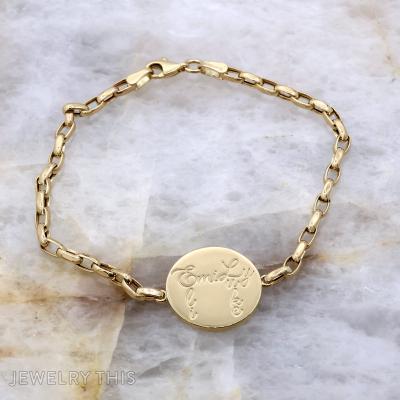
This bracelet centers a round engraved charm set into an oval-link chain, designed to display ...
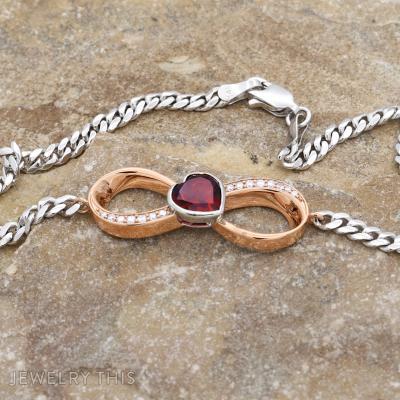
This bracelet centers on a heart-shaped garnet set in white gold, held within a sideways ...

This sentimental bracelet is a heartfelt Mother’s Day gift that any mom would cherish. The ...

Embrace the harmonious blend of color and elegance with this captivating custom bracelet. Crafted in ...

This wide sterling silver cuff bracelet translates a previously designed pendant into a wearable statement ...

This bracelet was built around a family tree rather than a single stone. Seventeen bezel-set ...

This cuff-style bracelet emanates comfort and meaning. Designed to fit snugly while embracing the wearers ...
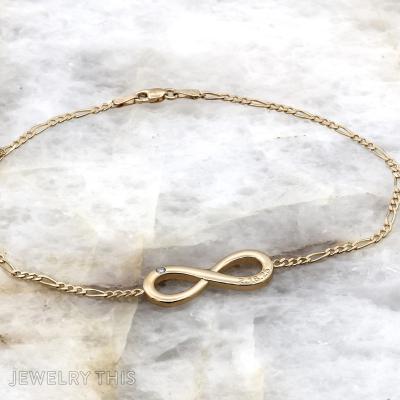
This bracelet centers a small polished 14k yellow gold infinity symbol, kept as compact as ...

This open cuff bracelet takes its shape from a signet ring, tapering gradually from slim ...

Step into luxury with our custom-designed bangle bracelet, a masterpiece crafted with vintage detailing. Fashioned ...