

17-Stone Family Birthstone Bracelet in White Gold
$$$
14k white gold, birthstones, lab-grown diamond, lab-grown sapphire, lab-grown alexandrite
A woman wanted her sister to wear her whole family on her wrist — birthstones for every niece, grand-niece, and grand-nephew, grouped generation by generation along the chain. The design took months of back-and-forth to get the grouping and stone sizing right before it ever reached production. When it finally arrived as a birthday surprise, she wrote: 'She LOVES it, it brought her to tears. It is such a personal, loving, caring piece of art, she was overwhelmed.'
'It is beautiful, it is a little more delicate than I expected; I believe she will LOVE it!' — on delivery to the buyer
'She LOVES it, it brought her to tears. It is such a personal, loving, caring piece of art, she was overwhelmed.' — on presenting it to the recipient
Quick specs
Design type
Primary Metal
Shape / Cut
Primary Stone
Accent Stones
Style
Design Complexity
Intent: Certainty
Size
Total length 7.25in. 17 bezel-set round stones (3mm) in 5 groupings of 5, 3, 4, 3, and 2 stones spaced along the chain. Lobster clasp.
How they made it distinctive
-
01
Seventeen birthstones grouped into five clusters, each cluster representing one niece and her children in birth order — the layout itself encodes the family tree
-
02
Bezel setting used throughout instead of prongs, protecting each small stone's edge across eight different stone species with varying hardness
-
03
A reinforced, heftier chain and lobster clasp chosen specifically to carry the combined weight and stress of 17 individually set stones
-
04
Lab-grown stones used selectively for sapphire, diamond, and alexandrite to manage cost without changing the stones' appearance or durability
-
05
Each stone grouping cast as its own separate unit rather than one continuous setting, keeping the five family clusters visually distinct along the band
How you'd make it yours
Stone count: this piece uses 17 birthstones for a specific family; a new commission could represent any number of family members
Grouping style: this piece clusters stones by generation; a new design could space them evenly instead
Stone size: this piece uses 3mm stones; a new commission could use 4mm for more visibility at added cost
Metal: this piece is 14k white gold; the same design language works in yellow or rose gold
One of a kind: this exact bracelet was designed for one family and is not reproduced — a new commission is an original piece inspired by this one, not a copy
Design changes made
The original plan considered square or rectangular stones, but the design settled on round stones to avoid added premiums, and stone size was increased from the initial 3mm quote consideration to confirm visibility across the wide color range before settling back on 3mm for budget reasons.
Who this is for
This piece is for someone who wants to give a gift that represents an entire family, not just one relationship — someone who thinks in terms of generations rather than a single occasion. It's especially right if the people being honored span a wide family tree and you want the design itself, not just an inscription, to carry that structure.
How it's made
Each of the five stone groupings was cast individually as its own setting element, then cleaned up by hand before the stones were set. Working in 14k white gold, the designer built the piece as a series of cast bezel units joined along a solid chain rather than as one continuous casting, which let each birthstone cluster keep its own clean bezel edge. The chain itself was selected for extra heft, since it needed to support the combined weight of 17 individually set stones without stressing any single link.
Once the groupings were cast and cleaned, each of the 17 stones was bezel-set by hand into its individual setting — a slower process than channel or prong setting, but one that holds mixed stone shapes and sizes more securely over daily wear. The chain was finished and joined to a lobster clasp, chosen over a spring ring for its added security holding the full weight of the piece. The five groupings were then spaced evenly along the finished chain length to keep each family cluster visually distinct.
Key note
Each birthstone grouping was cast as its own separate unit rather than as one continuous piece, which is why the five family clusters read as visually distinct segments along the chain rather than a single uniform row of stones.
Pricing guidance
A multi-stone station bracelet with this many individually set birthstones sits toward the higher end for bracelets of this type. The cost is driven primarily by labor — each stone requires its own cast setting, hand finishing, and individual bezel setting, which adds up quickly with a stone count in the mid-teens or higher. Metal choice and stone size are the next biggest levers on the final price.
Moves price up ↑
- ↑ Increasing stone size from 3mm to 4mm or larger across all settings
- ↑ Choosing square or rectangular stone shapes instead of round, which require premium custom cutting
- ↑ Using all naturally mined stones instead of lab-grown alternatives for species like sapphire or alexandrite
- ↑ Adding more family members and stones beyond the original count
- ↑ Upgrading from 14k to 18k white gold
Moves price down ↓
- ↓ Reducing the total stone count by grouping fewer family members
- ↓ Making the bracelet in sterling silver instead of white gold
- ↓ Using lab-grown stones where natural alternatives are costlier (sapphire, diamond, alexandrite)
- ↓ Keeping all stones at a uniform smaller size such as 3mm
- ↓ Choosing a single continuous stone row instead of spaced family groupings, which can simplify assembly
Questions people ask
Yes, this is a common request and bracelets can be designed to hold many individually set birthstones grouped however you like — by generation, by family branch, or spaced evenly around the piece. The main constraint is labor: each stone needs its own cast setting and must be hand-set individually, so stone count has a direct impact on both price and production time. Grouping stones into clusters, as in this piece, is one way to keep the design organized when representing a larger family. Most jewelers can source birthstones for any month, including lab-grown alternatives for stones like sapphire and alexandrite.
Lab-grown alexandrite is chemically, physically, and optically identical to natural alexandrite — the same color-change property and the same hardness. The difference is origin and cost: natural alexandrite is extremely rare and expensive, while lab-grown versions are far more available and affordable. For small accent stones in a multi-stone piece, lab-grown is a common and practical choice since the visual result is the same. A trained gemologist can usually distinguish natural from lab-grown colored stones, but the difference is not visible to the naked eye.
Bezel settings surround the stone's girdle with a continuous rim of metal rather than relying on prongs, which protects the stone edge and reduces the risk of snagging or chipping during daily wear. For a bracelet with many small stones of different species and hardness levels, bezel setting also gives a cleaner, more uniform look across the piece. It's a more time-consuming setting method than prong work, which adds to the labor cost on a multi-stone piece like this. The tradeoff is a more secure, lower-profile stone that holds up well over years of wear.
Pricing for a piece like this sits toward the higher end for bracelets, mainly because of the labor involved in individually casting and setting each stone rather than the stone cost itself. A bracelet with close to 20 small stones requires significantly more hand work than a single-stone or three-stone piece. Metal choice (gold versus silver) and stone size are the two biggest variables that move the price up or down from there. Choosing lab-grown stones where natural options are pricier, like alexandrite or sapphire, can help offset some of the labor-driven cost.
A piece with this much individual stone-setting work typically takes longer than a standard single-stone piece, often landing in an extended production window rather than a standard five- to six-week timeline. The process usually starts with a sketch, then a 3D model, then a photorealistic render for approval before any metal is cast. Once the design is approved and the majority of payment is received, production — casting, cleanup, and stone setting — typically takes several more weeks. Sourcing many individual birthstones, especially in matched sizes, can also add time versus a single center stone.
A station-style bracelet with stones spaced along a chain has some flexibility because the chain length can be adjusted, but once the stone groupings are finalized and cast, the spacing between them is fixed. It's best to confirm wrist measurement and desired total length, including room for movement, before the piece goes into production. A little extra length — generally around half an inch to an inch beyond the exact wrist measurement — is typically recommended for comfortable, secure wear. After casting, minor chain-length adjustments are usually possible, but repositioning the stone groupings is not.
White gold is more durable over the long term and does not require the same level of care as sterling silver, which can tarnish with exposure to moisture and skin chemistry. For a piece carrying many individually set stones, a sturdier metal base also better supports the combined weight and daily wear and tear. Sterling silver is a lighter-cost option for the same design, but the metal itself will need more regular cleaning and may show wear sooner around the stone settings. The choice mostly comes down to long-term durability preference, since the visual difference between the two white metals is subtle once finished.
Yes, mixing natural and lab-grown stones within one piece is common and doesn't affect the overall look, since lab-grown versions are physically and optically identical to their natural counterparts. A typical approach is to use naturally mined stones for species where the cost difference is small, and lab-grown versions for stones like alexandrite, sapphire, or diamond where lab-grown options offer meaningful savings without changing the appearance. This lets a multi-stone piece represent many different birthstones without the price escalating from the rarer natural stones. The decision is usually made stone-by-stone based on each species' natural-versus-lab price gap.
Explore Similar Creations
Every masterpiece starts with a spark. Explore how our clients raw ideas - sketches, heirlooms, inspirations - were transformed into bespoke works of arts.
The inspiration behind this Hebrew Letter Cuff lies in the fusion of heritage and contemporary ...

This cuff bracelet was designed as a companion piece to a ring the client already ...

This sterling silver cuff bracelet pays homage to a bracelet the client originally wore which ...

This custom anklet features a stunning design that artfully combines floral engravings with luxurious black ...

Ignite your sparkle with this stunning Cut-Out Star Bracelet, beautifully crafted in luxurious platinum and ...

This sterling silver macaroni charm bracelet is a whimsical and heartfelt creation. It perfectly capture ...

This cuff-style bracelet emanates comfort and meaning. Designed to fit snugly while embracing the wearers ...

This platinum bracelet pairs a delicate double-strand chain with a sculpted 14k rose gold cardinal ...

This beautiful dainty silver bracelet features a center piece that is adorned with a moon ...

Step into luxury with our custom-designed bangle bracelet, a masterpiece crafted with vintage detailing. Fashioned ...
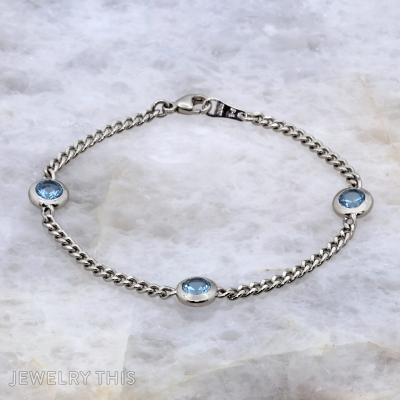
This delicate platinum bracelet is the perfect blend of simplicity and elegance, designed for those ...

This wide sterling silver cuff bracelet translates a previously designed pendant into a wearable statement ...



