


Gold Mahjong Tile Bracelet with Enamel Characters
$$$$
14k yellow gold, enamel detailing
A client who plays mahjong regularly with friends wanted to turn a set of plastic mahjong tiles into something made to last — cast in solid gold, strung on a rope chain, and worn rather than played with. He pushed back more than once on the look of the engraved characters until the brush-stroke style matched what he had in mind, and once it did, he said simply: "Omggg, I love it. You guys did great." When it arrived, he wrote: "I received it and it's exactly what I wanted. I love it."
'Omggg, I love it. You guys did great. Thank you so much.' — on design approval
'I received it and it's exactly what I wanted. I love it.' — on delivery
Quick specs
Design type
Primary Metal
Primary Stone
Accent Stones
Design Complexity
Intent: Certainty
Size
Rope chain 3.1mm x 8in. Seven tiles, each 5/16in wide x 3/16in thick x 1/2in tall, slide freely along the chain.
How they made it distinctive
-
01
Seven individually cast gold charms recreate a full mahjong tile set rather than a single symbol or motif
-
02
Brush-stroke character engraving went through multiple revisions until the font style matched the client's preferred reference, not the original sample photo
-
03
Charms slide freely along the rope chain so the wearer can rearrange their order or orientation
-
04
Hand-applied enamel colors match the traditional mahjong palette exactly — black, red, and green
-
05
Blank tile backs kept intentionally simple at the client's request, avoiding unnecessary decoration
How you'd make it yours
Tile count: this piece uses seven tiles; a new commission could use more or fewer symbols depending on what's meaningful
Metal: this piece is 14k yellow gold; the same design works in 18k yellow gold or 10k yellow gold at a different cost point
Chain: this piece uses a 3.1mm gold rope chain; a new commission could use a different chain style or width
Charm backs: this piece left the backs blank; a new piece could add engraving or texture to the reverse side
One of a kind: this exact bracelet was designed for one client's mahjong tile set and is not reproduced — a new commission is an original piece inspired by this one, not a copy
Design changes made
The Chinese character font went through two rounds of revision — the client felt the first and second renders stayed too close to his original reference photo rather than the bolder, more professional brush-stroke style he'd asked for. The team reworked the character artwork until the font matched his preferred sample, and he approved the result on the third attempt.
Who this is for
This piece is for someone who wants a hobby or personal interest taken seriously enough to become something worn every day, not just a novelty item. It fits someone who plays mahjong, cards, or another game with real meaning attached to it, and who wants that reference rendered in real gold rather than a literal plastic replica.
How it's made
The approved design was first 3D printed in wax, then attached to a wax tree and invested in plaster inside a flask. The flask was fired in a kiln to burn out the wax, leaving a hollow mold, and molten 14k yellow gold was cast into that mold to form the seven tile charms. Once cooled, the charms were removed from their mold, cleaned, and prepared for finishing alongside a separately sourced 14k yellow gold rope chain.
Each tile's brush-stroke character was engraved into the gold surface, then hand-filled with enamel in the colors matching the original tile set — black for four characters, red for the center symbol, and green for the prosper symbol, with the seventh tile left as a plain engraved pattern. The enamel required extra curing time before final polishing. The tiles were left unthreaded with an open profile so they slide freely along the rope chain, letting the wearer rearrange their order or orientation at will.
Key note
The tiles were deliberately left able to slide along the chain rather than fixed in place, so the wearer can rearrange or reorient them after the piece is finished.
Pricing guidance
A multi-charm gold bracelet with hand-applied enamel detailing sits toward the higher end for custom bracelet work, largely because each charm is cast and finished individually before assembly. The enamel application and the sourced rope chain add labor and material cost beyond a plain charm bracelet. Karat choice and charm count are the biggest levers on the final price.
Moves price up ↑
- ↑ Choosing 18k gold over 14k for the charms, which increases both material cost and weight
- ↑ Adding more charms to the sequence beyond the standard seven-tile set
- ↑ Using a thicker or longer gold rope chain than the 3.1mm, 8-inch option
- ↑ Requesting hand-carved dimensional detail on the charm backs rather than leaving them plain
Moves price down ↓
- ↓ Choosing 10k gold or gold-plated sterling silver for the charms instead of 14k or 18k
- ↓ Reducing the number of enameled charms in the set
- ↓ Using a sterling silver chain instead of solid gold
- ↓ Simplifying the enamel colors to a single tone instead of matching the full traditional palette
Questions people ask
Yes. This bracelet started from a photo of a set of plastic mahjong tiles, which was used as the reference for seven individually cast gold charms. The process begins with a 3D design based on the photo and description, followed by a render for approval before anything is cast in metal. Multiple rounds of revision are normal, especially for engraved detail like lettering or symbols where font style matters.
The design is engraved into the metal surface first, creating a recessed outline, and enamel is then hand-applied into those recesses to add color. This produces a glossy, slightly raised finish rather than a flat painted look, and the enamel typically needs extra curing time before final polishing. The finish is naturally shiny — enamel cannot be requested in a matte finish, since the drying process produces a consistent glossy surface. With normal wear, enamel can wear or chip over time and is best protected by avoiding excessive water exposure.
A bracelet with several individually cast and enameled gold charms sits toward the higher end of custom bracelet pricing, since each charm requires its own casting, engraving, and hand-finishing before assembly. Karat of gold is the biggest cost driver — 10k, 14k, and 18k versions of the same design can vary substantially in price. The chain itself, if sourced separately in solid gold rather than gold-plated silver, also adds to the total.
The full process typically runs 5 to 8 weeks from deposit to shipping, depending on how many rounds of design revision are needed. The 3D design and render stage usually takes about a week, though detailed engraved elements like custom lettering can take longer if adjustments are requested. Production itself — casting, enamel work, and finishing — generally takes 4 to 5 weeks, with enamel curing sometimes adding a few extra days.
On this design, yes — the charms were specifically designed to slide freely along the chain rather than being fixed in place, so the wearer can reorder or reorient them at any time. This is a deliberate design choice made during production and would need to be requested up front, since a charm can also be designed to sit in a fixed position if that's preferred. A sliding design also makes the bracelet easier to put on and take off evenly.
Yes, 14k gold is a common and durable choice for bracelets carrying multiple solid charms, offering a good balance between hardness and workability. It holds up well to daily handling, though any gold jewelry benefits from being removed before swimming or showering to protect both the metal finish and any enamel detailing. For a heavier multi-charm piece like this, 14k also keeps the overall weight more manageable than 18k while still being solid gold rather than plated.
Yes, specific font styles — including brush-stroke or calligraphy-style lettering — can be engraved into jewelry, though matching a reference image exactly can take a few rounds of revision. Scale matters: a bold, detailed font that looks great in a large reference image may need to be simplified slightly to read clearly at jewelry size. Providing a clear sample image of the desired font style upfront helps minimize the number of revisions needed.
A fixed charm is permanently set at one point on the chain and does not move, while a sliding charm has an open channel or loop that allows it to move freely along the chain's length. Sliding charms give the wearer flexibility to rearrange the sequence or adjust spacing, which matters for designs like a multi-symbol set where order might be personal preference. Fixed charms are generally more secure for delicate or asymmetric designs where a specific orientation needs to stay put.
Explore Similar Creations
Every masterpiece starts with a spark. Explore how our clients raw ideas - sketches, heirlooms, inspirations - were transformed into bespoke works of arts.
This uniqe bracelet is the perfect way to commemorate a championship. The stunning sterling silver ...

This design seamlessly combines style with sentimentality, creating a unique piece that will be treasured ...

Handcrafted to evoke nature’s beauty, this custom bracelet features an oval link cable chain adorned ...

This sterling silver cuff bracelet pays homage to a bracelet the client originally wore which ...

This elegant gold bracelet was meticulously crafted with oval-shaped links that exude sophistication and charm. ...

This sterling silver bracelet is more than a piece of jewelry; it is a heartfelt ...

Step into luxury with our custom-designed bangle bracelet, a masterpiece crafted with vintage detailing. Fashioned ...
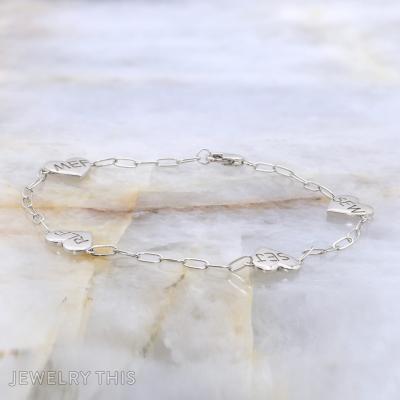
This bracelet pairs a visible paperclip-style chain with four small heart-shaped links, each hand-engraved with ...

This sterling silver bolo bracelet centers on a marquise-shaped plaque engraved with a custom wordmark ...

Embrace the harmonious blend of color and elegance with this captivating custom bracelet. Crafted in ...

This sterling silver link bracelet is a bespoke creation commemorating the union of two souls. ...
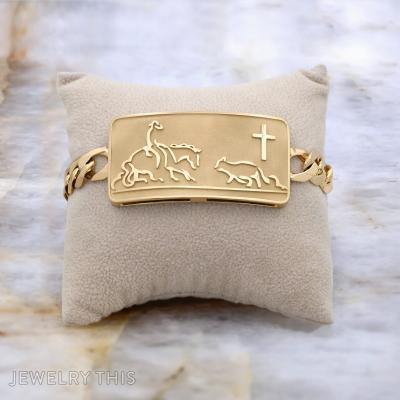
This bracelet centers on a large rectangular ID plate cast in solid 14k yellow gold, ...



