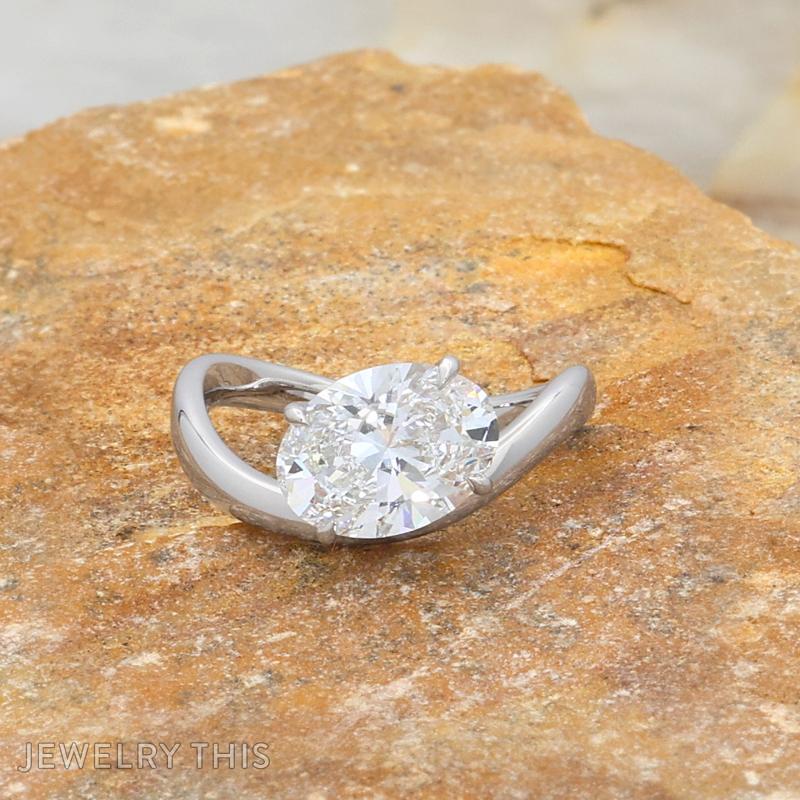
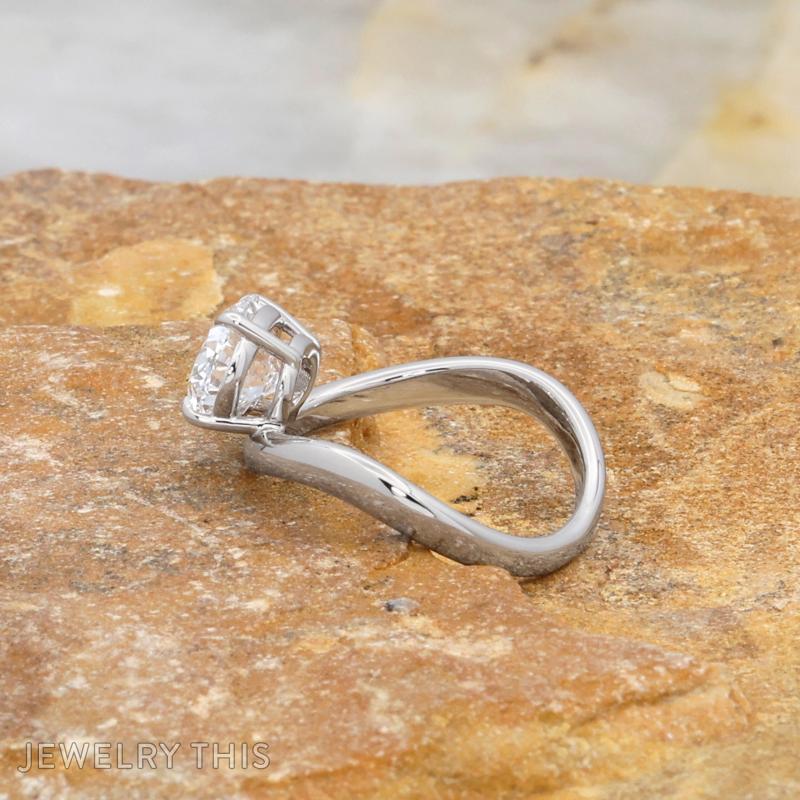
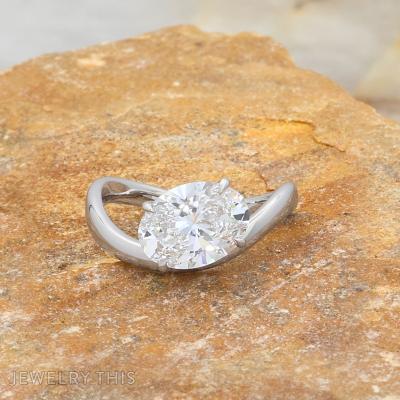
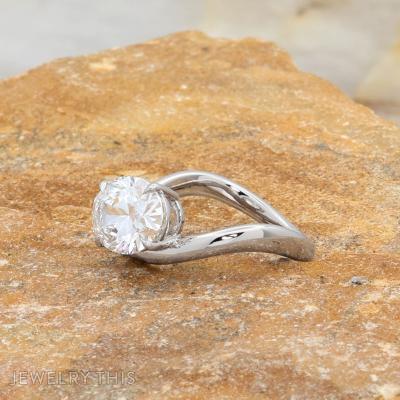
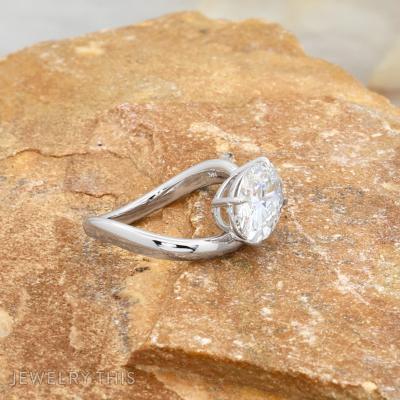
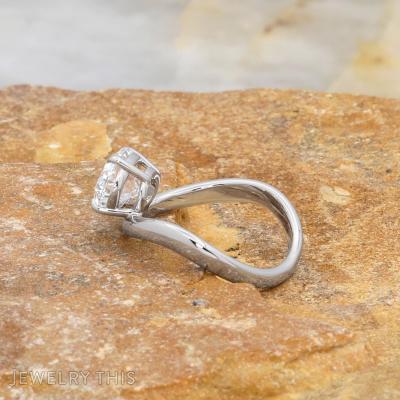
Wave-Band Solitaire Ring With Client's Oval Lab Diamond
$$$
14k white gold, lab diamond
A client sent in her own 2.89ct oval lab diamond and asked for it to be set in a wave-style bypass band she'd found as inspiration. When she saw the finished render she wrote: 'It's GORGEOUS! Exactly what I was hoping for.' After wearing the finished ring, she said: 'It's so beautiful! Been wearing it everyday.'
'It's GORGEOUS! Exactly what I was hoping for.' — on seeing the render
'It's so beautiful! Been wearing it everyday. Thank you so much!' — on delivery
Quick specs
Design type
Primary Metal
Shape / Cut
Primary Stone
Accent Stones
Style
Design Complexity
Intent: Certainty
Size
Ring size 7.5 US (17.73mm). Band width just under 2.5mm.
How they made it distinctive
-
01
Built entirely around a client-supplied 2.89ct oval lab diamond, scanned and measured before the setting was engineered
-
02
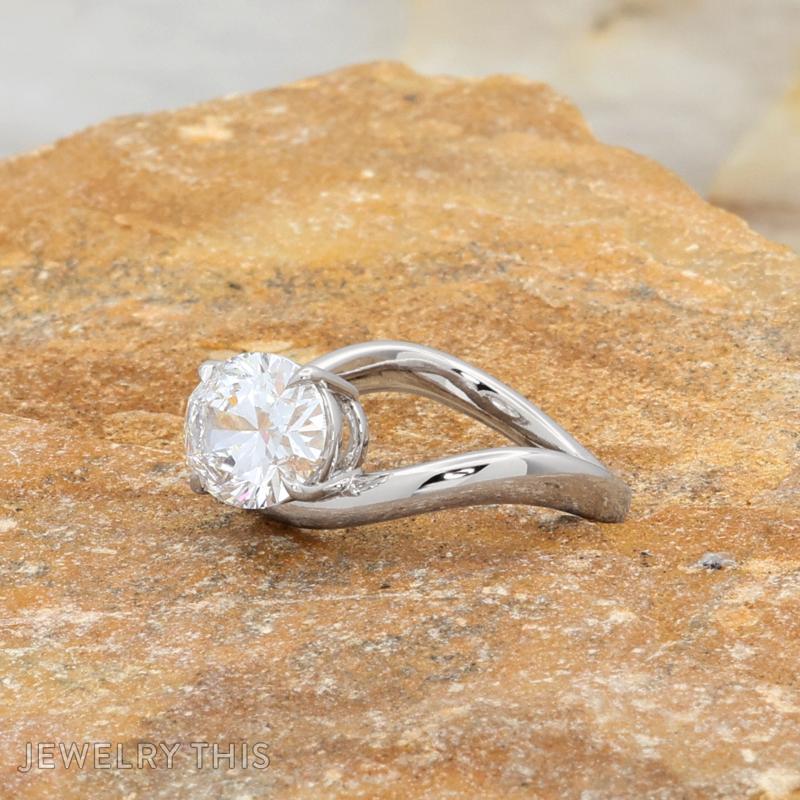
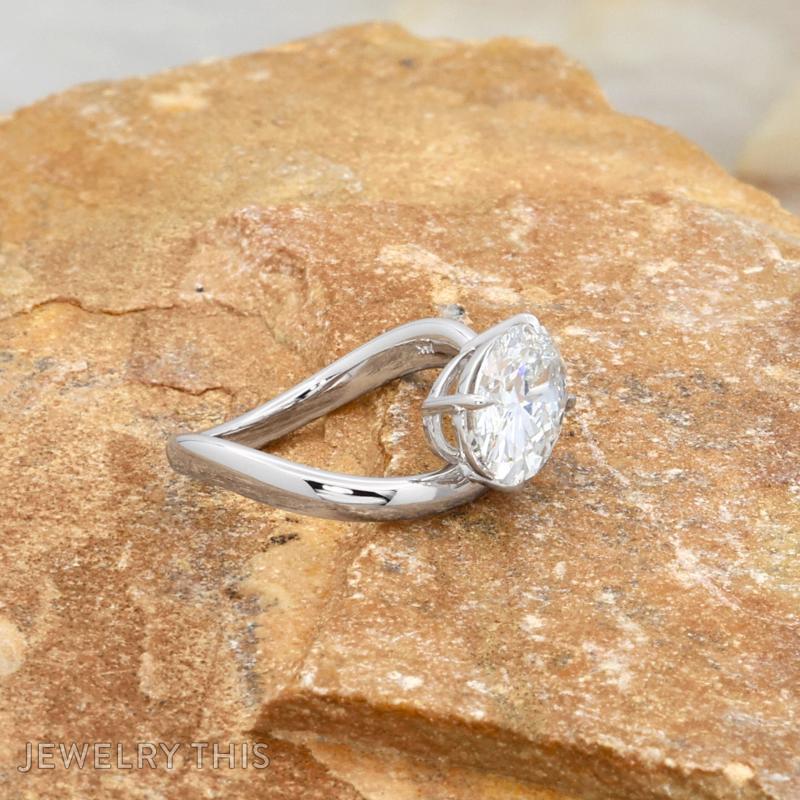
Bypass wave band chosen instead of a traditional shank, giving the ring a sculptural, contemporary look
-
03
Band kept just under 2.5mm wide — substantial enough for daily wear without overwhelming the hand
-
04
Four-prong basket setting oriented to let the bypass curves frame the stone without meeting beneath it
-
05
Single continuous polish finish across the whole band rather than separate texture zones, keeping the design clean
How you'd make it yours
Stone: this piece uses a 2.89ct oval lab diamond; a new commission could use a different shape like round, cushion, or pear
Metal: this piece is 14k white gold; the same bypass wave design works well in 18k white gold, yellow gold, or platinum
Band width: this piece is just under 2.5mm; a new piece could be made narrower for a delicate look or wider for more presence
Setting detail: a new commission could add pave accents or milgrain edging along the bypass arms
One of a kind: this exact ring was designed around one client's own diamond and is not reproduced — a new commission is an original piece inspired by this one, not a copy
Design changes made
Design matched the initial brief without major changes.
Who this is for
This piece is for someone who already has a diamond that matters to them and wants a modern setting that lets it be the whole focus. It's especially right if you want a solitaire that feels sculptural rather than traditional — a band that moves instead of sitting flat under the stone.
How it's made
Once the client's diamond arrived, it was scanned and measured so the design team could build a 3D model around its exact proportions. The approved design was then turned into a wax resin model, attached to a wax tree, and invested in plaster before the wax was burned out in a kiln to leave a hollow mold. Molten 14k white gold was cast into that mold, producing the raw bypass band.
After casting, the band was cleaned up and polished to a high shine along its full curved profile, since the design has a single continuous finish rather than separate zones. The client's oval diamond was then set into a four-prong basket at the center, positioned so the bypass arms curve around it without any additional metal meeting beneath the stone. The prongs were tightened and finished last to secure the diamond for daily wear.
Key note
Because the center diamond was client-supplied, it had to be scanned and measured before the 3D model could be built, so the final band curvature was engineered around this specific stone's exact dimensions rather than a standard-size setting.
Pricing guidance
A solitaire built around a large client-provided center stone in a bypass wave setting sits in the mid range for custom engagement-style rings. Most of the cost is in the labor of hand-fabricating the curved band and setting a large stone securely, rather than in the metal itself. Stone size and setting complexity are what move this type of ring up or down in price.
Moves price up ↑
- ↑ Using a larger or higher-clarity center stone that requires more precise prong engineering
- ↑ Upgrading from 14k to 18k white gold or platinum for the band
- ↑ Adding pave diamonds or milgrain detail along the bypass arms
- ↑ Switching from a client-supplied stone to a rep-sourced stone requiring sourcing time and cost
- ↑ Adding a matching wedding band designed to nest against the wave shape
Moves price down ↓
- ↓ Choosing a smaller center stone, which reduces prong and basket engineering time
- ↓ Using moissanite instead of a lab diamond for the center stone
- ↓ Simplifying the band from a curved bypass shape to a straight shank
- ↓ Choosing a thinner band width to reduce metal usage
- ↓ Selecting sterling silver instead of 14k white gold for the band
Questions people ask
Yes. A client-supplied stone is scanned and measured once it arrives so the design team can build the 3D model around its exact proportions rather than a generic setting size. The stone is shipped using a tracked, insured method and logged in before any design work begins. This approach lets the final setting be engineered specifically for that stone's shape and dimensions rather than approximated from photos.
A bypass setting is a band design where the two ends of the shank curve around the center stone rather than meeting directly beneath it, creating a wave-like flow on either side. It's a popular alternative to a traditional prong solitaire because it adds visual movement without adding extra stones. The setting still relies on a secure prong or basket to hold the center stone in place. It reads as more sculptural than a straight shank while keeping the overall design fairly minimal.
Yes. Lab-grown diamonds have the same chemical composition, hardness, and optical properties as natural diamonds — they score the same 10 on the Mohs hardness scale. The only difference between the two is where they were formed: one underground over geologic time, the other in a controlled lab environment. For daily wear, durability and appearance are identical. The main practical difference for buyers is typically cost per carat.
A ring like this, built around a large client-supplied center stone in a curved bypass band, typically falls in the mid range for custom engagement-style rings. The bulk of the cost comes from hand-fabricating the curved band shape and precisely setting a large stone, not from the metal itself. Choosing a smaller stone or a straight shank instead of a curved bypass would bring the cost down; upgrading the metal or adding accent stones would raise it.
Once the stone is received and scanned, the process typically runs about one week for the design and render phase, followed by three to four weeks for production once the design is approved. Shipping the stone in and having it logged in adds a few days at the start. The full process from sending in the stone to receiving the finished ring generally runs five to six weeks.
Yes, band width is one of the more flexible elements of a bypass design. A width just under 2.5mm reads as substantial without feeling bulky, but the same wave shape can be made narrower for a more delicate look or slightly wider for additional durability. The curve of the bypass and the basket holding the center stone stay consistent regardless of width. It's worth discussing wrist and hand size with the design team since a thinner band may feel different on different finger sizes.
The render is built from the actual scanned dimensions of the stone, so the proportions are highly accurate, but small variations are normal. Prongs in particular are often shown slightly longer in a render because they get trimmed and tightened during the final stone-setting step to securely hold the gem. Metal tone can also look very slightly different in person than on a screen due to lighting and monitor calibration. Overall shape, setting style, and stone placement should match the approved render closely.
Yes, a bypass or wave band can be adapted to round, cushion, or pear-shaped center stones with adjustments to the basket and prong configuration. The wave curve of the band typically stays the same; what changes is how the prongs are angled to secure the different stone outline. Oval and pear shapes tend to pair especially well with this style because their elongated shape complements the flowing line of the band.
Explore Similar Creations
Every masterpiece starts with a spark. Explore how our clients raw ideas - sketches, heirlooms, inspirations - were transformed into bespoke works of arts.
This engagement ring was designed around a client-supplied morganite cut into an elongated, shield-like shape ...

14karat Rose gold Engagement ring featuring .5 carat center Pear shaped Diamond surrounded by accented ...

This set of white gold rings is a breathtaking display of unique gemstones and elegant ...
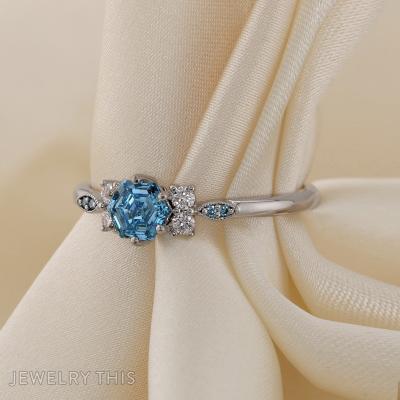
This engagement ring was designed to echo the look of a piece that belonged to ...

This striking white gold engagement ring showcases a captivating marquise-shaped black diamond at its center, ...

Celebrate a decade of love and commitment with this modern custom ring, a tangible reminder ...
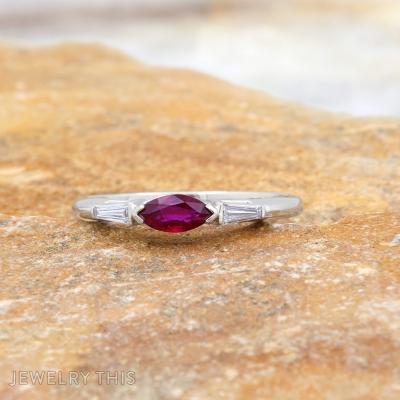
This platinum band recreates the style of a 1940s-era ring using the client’s own marquise ...
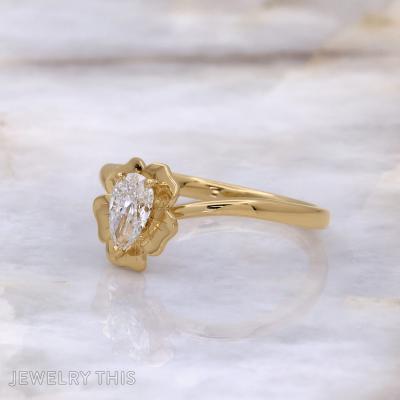
The Golden Bloom Ring Commissioned as a second chance to perfectly capture a client’s heartfelt ...

This engagement ring is a bold yet elegant statement piece. It features a 1-carat central ...


This oval cluster ring was recreated from photographs of a ring passed down within a ...
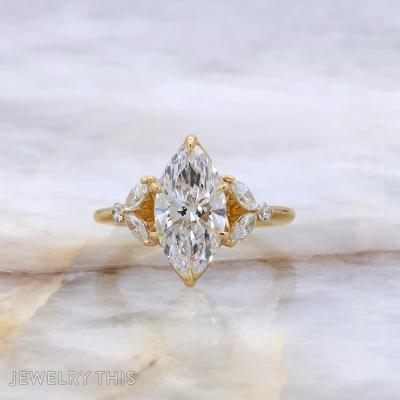
This breathtaking yellow gold engagement ring is a masterclass in asymmetrical, nature-inspired design. At its ...