


Don Quixote Signet Ring — Raised Gold Figure on Black
$
Gold-plated sterling silver
A client who writes online under a literary pen name wanted a signet ring built around Don Quixote — the knight, his lance, a windmill, and a sliver of sun, with the smaller figure of Sancho Panza left out by his own choice. He went back and forth on the finer points of the design with the team before settling on an oval face with a raised gold figure against a dark background. When the render came back, his response was simple: 'It looks great.'
'It looks great.' — on seeing the design render
Quick specs
Primary Metal
Primary Stone
Accent Stones
Design Complexity
Intent: Certainty
Size
Ring size 9 US; oval signet face sized proportionate to band, approximately nickel-sized.
How they made it distinctive
-
01
Design built around a literary reference chosen specifically by the client rather than a generic crest or initial
-
02
Smaller secondary figure deliberately left out of the final design at the client's request, simplifying the composition to a single knight
-
03
Oval rather than circular face chosen to better suit the proportions of the figural scene
-
04
Raised relief design specifically selected over engraving for more dimensional contrast against the matte background
-
05
Matte background applied after polishing to create deliberate contrast with the raised gold figure
How you'd make it yours
Design subject: this piece uses a literary knight figure; a new commission could use any personally meaningful image, symbol, or crest
Metal: this piece is gold-plated sterling silver; the same raised design works in solid 10k or 14k yellow gold
Face shape: this piece uses an oval face; a new commission could use a circular or cushion-shaped face depending on the design's proportions
Finish: this piece contrasts a matte background with a polished raised figure; a new piece could invert that or use an oxidized dark finish instead
One of a kind: this exact ring was designed for one client's personal reference and is not reproduced — a new commission is an original piece inspired by this one, not a copy
Design changes made
The client initially considered including both knights from the source image but chose to drop the smaller figure, keeping only the main knight, windmills, and part of the sun. He also moved from an engraved concept to a raised design and settled on an oval rather than circular face after discussing proportions with the team.
Who this is for
This piece is for someone who wants a signet ring that carries a personal reference — a favorite book, a character, a symbol only they fully understand — rather than a generic crest. It's especially right if you want something quietly meaningful that reads as a classic signet ring to everyone else, while meaning something specific to you.
How it's made
Once the oval design was approved, a wax model was 3D-printed and attached to a wax tree inside a flask, which was placed in a kiln to burn out the wax and leave a mold. Molten gold-plated sterling silver was then cast into that mold, cooled, and extracted as the raw ring blank.
After casting, the ring was cleaned and polished, with particular attention to separating the two finish zones: the raised figure was brought to a bright polish while the surrounding oval background was given a matte finish so the figural design stands out in contrast. The band itself was polished to match the raised figure. No stones were set on this piece, so the finishing sequence was entirely about contrast between the matte background and the polished raised elements.
Key note
The matte background isn't applied until after the raised figure is polished bright, since matting first would make it harder to achieve a clean contrast between the two finish zones.
Pricing guidance
A signet ring with a raised figural design in gold-plated sterling silver sits toward the lower end of custom signet pricing. Most of the cost comes from the 3D modeling and hand-finishing needed to create a crisp raised figure against a contrasting matte background, rather than from the metal itself. Moving to solid gold or adding more intricate detail is where the price shifts upward from there.
Moves price up ↑
- ↑ Upgrading from gold-plated silver to solid 10k or 14k yellow gold
- ↑ Adding more figures or intricate background elements to the oval face
- ↑ Increasing the size of the oval signet face beyond a standard proportion
- ↑ Adding a gemstone accent to the design
- ↑ Choosing a two-tone finish with contrasting metal colors for the figure versus the band
Moves price down ↓
- ↓ Simplifying the design to a single smaller figure rather than multiple elements
- ↓ Reducing the oval face to a smaller, more compact size
- ↓ Choosing a circular rather than oval face, which can simplify the wax modeling
- ↓ Leaving the background polished rather than adding a separate matte finish step
- ↓ Omitting the raised relief in favor of a flat engraved design
Questions people ask
Yes, raised (relief) designs are a common alternative to engraved signets. A raised design means the figure sits above the surrounding surface, which is cast directly into the metal rather than cut into it afterward. This style tends to show more dimensional detail and contrast well against a matte or oxidized background. It does require more careful wax modeling than a simple engraved design, since the raised elements need to hold their shape through casting and polishing.
Gold-plated sterling silver is a sterling silver base with a layer of gold, usually 14k or 18k, applied over the top. It gives the look of solid gold at a lower cost but the plating is a surface layer that will wear thin over time, especially on areas with frequent contact or friction. With normal wear, many people get one to two years before re-plating is needed. Re-plating is a standard jewelry service and does not require remaking the entire piece.
A custom signet ring with a raised design typically falls toward the lower end of custom jewelry pricing, especially in gold-plated silver. The bulk of the cost comes from design work and hand-finishing rather than material, since the oval face requires precise modeling to render a raised figure clearly. Choosing solid gold over plated silver, or adding more design elements, will move the price higher. The size of the signet face and the complexity of the engraving or relief are the two biggest cost drivers.
A custom signet ring typically takes about one week for the design phase — sketch, 3D model, and rendered approval — followed by three to four weeks for production once the design is approved and payment is made. Production includes 3D printing a wax model, casting the metal, and hand-finishing the piece including polishing and any contrast-finish work. Total turnaround is usually five to six weeks from first deposit to shipping, though this can shift based on scheduling and design revisions.
Yes, metal choice is typically finalized after the design render is approved, since the design itself (the raised figure, proportions, and finish) is independent of which metal is used to cast it. Once you approve the design, you are usually given a few metal and karat options to choose from at different price points. This lets you see the exact design before committing to a metal, which also means pricing may be presented as a range until the metal decision is made.
A cast signet ring, whether in gold-plated silver or solid gold, is generally durable for daily wear since the raised figure is part of the cast metal rather than a separately applied element. The main wear consideration is the plating layer if gold-plated silver is chosen, since the raised high points can show wear slightly faster than flat areas. Solid gold options avoid this plating wear entirely. The oval face shape and smooth polished band also help the ring resist catching on fabric or other objects during daily activities.
Yes, custom rings are frequently designed around a specific piece of art, a book, or a personally meaningful image the client provides as reference. The design team typically starts with a rough sketch based on the reference image, refines it with the client's feedback, and then builds a 3D model before producing a photorealistic render for approval. Elements can be added or removed from the original reference to fit the ring's proportions and the client's preferences. This makes it possible to carry a meaningful image or symbol into a wearable piece rather than keeping it purely visual.
Explore Similar Creations
Every masterpiece starts with a spark. Explore how our clients raw ideas - sketches, heirlooms, inspirations - were transformed into bespoke works of arts.
This signet-style ring trades the traditional flat engraving table for a fully dimensional skull face, ...

This three-finger ring is built as one continuous sterling silver bar spanning three connected bands, ...


Sterling silver ring with geometric design. Rose gold plated top with silver accents. Personalized engraving ...
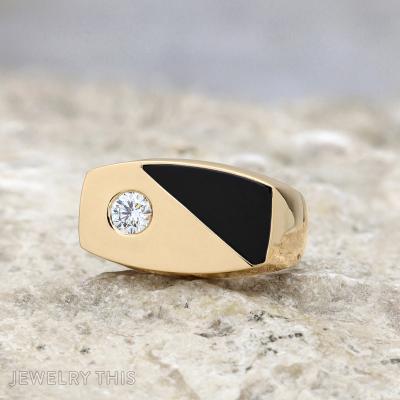
This ring reimagines a family piece in a trimmed, more wearable scale. An asymmetrical top ...

Embrace the spirit of the road with this custom Christian Crusader Motorcycle Club ring. Crafted ...

This 14k yellow gold Harley ring is the perfect personalized accessory for any Harley Davidson ...

This flat-top signet ring was designed by the client himself as a personal mark to ...

This classic14k yellow gold ring is a recreateion of a beloved family heirloom. The ring ...

This 14k yellow gold signet ring centers on a custom family crest: a raised dragon ...
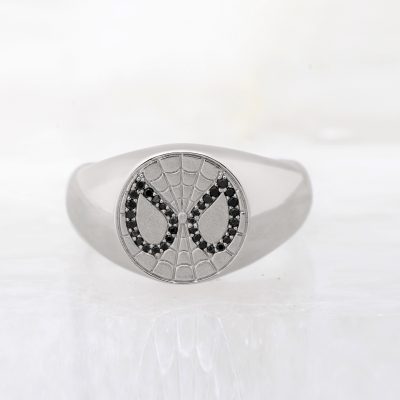
This Sterling Silver ring is perfect for the individual who wants to show off their ...

This exquisite silver ring, presented as an orientation gift, carries deep symbolism and elegance. The ...



