


Palladium Crossover Band Recreated for a Metal Allergy
$$$
Palladium, moissanite
A husband wanted to recreate a ring his wife kept returning to in stores — a wide woven band she loved but couldn't wear because it was made in a metal she reacted to. Working from his own photographs, he had it rebuilt in palladium, the same metal as her wedding ring, to be ready for her 60th birthday. When it arrived, he wrote: 'Nicole loves it and everyone finds it beautiful.'
'Nicole loves it and every one finds it beautiful.' — on delivery
Quick specs
Design type
Primary Metal
Shape / Cut
Primary Stone
Accent Stones
Design Complexity
Intent: Certainty
Size
Ring size 5 US. Multi-row crossover band, approximately 10-11mm width.
How they made it distinctive
-
01
Recreated entirely from client-supplied photographs of a ring the wearer loved but couldn't wear, with no original piece or appraisal to reference
-
02
Palladium chosen specifically to match the wearer's existing wedding ring and avoid a known metal sensitivity to silver
-
03
Moissanite substituted into the pave rows after close review of worn reference photos revealed stones rather than decorative texture holes
-
04
Five-row crossover structure alternates three stone-set rows with two smooth polished rows for contrast
-
05
Wide 10-11mm profile gives the design a substantial, statement presence without a center stone
How you'd make it yours
Stone type: this piece uses moissanite; a new commission could use natural or lab diamonds for a different budget and sparkle, or cubic zirconia for a lower-cost look
Metal: this piece is palladium, chosen for a metal sensitivity; the same woven design works well in platinum or white gold for those without sensitivity concerns
Stone-set rows: this piece has three of five rows set with stones; a new commission could set more or fewer rows
Band width: this piece is a substantial 10-11mm; the same crossover language can be built narrower for a more delicate feel
One of a kind: this exact ring was designed for one client's wife and is not reproduced — a new commission is an original piece inspired by this one, not a copy
Design changes made
The design was adjusted from the original silver version to use moissanite accents after closer review of the worn reference photos revealed small gemstones rather than plain texture holes. The ring size was also updated from 3.75 to 5 after the wife tried on sample bands and found the wider band needed more clearance to pass her knuckle.
Who this is for
This piece is for someone who already fell in love with a specific design but can't wear it because of how it's made — whether that's a metal sensitivity or a piece that's simply unavailable anymore. It's especially right for a milestone gift where getting the exact look matters more than starting from a blank page.
How it's made
Once the design was approved from photo references, a 3D CAD model was built and a resin printed test piece was produced to confirm the geometry before any metal was committed. The resin was reviewed internally, then the design moved to casting, where molten palladium was poured into an investment mold to form the woven, multi-row band structure in one piece.
After casting, the raw band was cleaned up and the five intersecting rows were separated and polished by hand, since the crossover design has rows passing both over and under one another. Three of the five rows were then channel or pave-set with round moissanite stones in sequence, while the remaining two rows were left smooth and brought to a high polish for contrast against the stone-set rows.
Key note
Palladium is prized for recreations like this specifically because it is naturally white and hypoallergenic without rhodium plating, so the finished color will not fade or require replating the way rhodium-plated white gold eventually does.
Pricing guidance
A wide, multi-row crossover band in palladium with pave-set stones sits in the mid-to-upper range for custom bands of this complexity. Most of the cost comes from the labor of hand-finishing and setting stones across five separate interwoven rows rather than a single band. Stone choice and the number of set rows are what move the price most from there.
Moves price up ↑
- ↑ Setting natural diamonds instead of moissanite across the pave rows
- ↑ Increasing the number of stone-set rows from three to all five
- ↑ Upgrading from palladium to platinum, a denser and more expensive metal
- ↑ Widening the band further, which increases both metal weight and finishing time
- ↑ Adding hand-engraving or texture to the smooth rows
Moves price down ↓
- ↓ Reducing the number of stone-set rows to one or two
- ↓ Using cubic zirconia in place of moissanite
- ↓ Narrowing the overall band width to reduce metal and labor
- ↓ Leaving all rows smooth with no stones at all
- ↓ Choosing sterling silver or a plated metal instead of palladium, if skin sensitivity were not a factor
Questions people ask
Yes. Palladium is a naturally white, hypoallergenic metal in the platinum family, which makes it a strong choice for anyone who reacts to sterling silver or nickel-containing alloys. Unlike white gold, palladium does not require rhodium plating to stay white, so there is no coating to wear off over time. It is also notably lighter than platinum while offering similar durability and skin-safety. Many people who have reactions to silver find palladium comfortable for daily wear.
Moissanite and diamond look very similar to the naked eye, but moissanite is a different mineral with slightly more fire, or rainbow flash, in the light. Moissanite is also significantly more affordable than natural diamond at the same visual size, which makes it a popular choice for pieces with multiple small stones like a multi-row pave band. Durability-wise, moissanite rates 9.25 on the Mohs hardness scale, just below diamond's 10, so it holds up very well to daily wear. For a design using many small stones, moissanite allows for more stones without the cost scaling the way it would with natural diamonds.
Yes, recreation from photographs is a common request, especially when the original piece can't be worn anymore or isn't available to send in. The process starts with a detailed sketch based on the photos, followed by a 3D CAD model and a photorealistic render for approval before anything is cast. Worn or low-resolution photos can make small details like texture or stone placement harder to confirm, so it helps to include close-up images from multiple angles, ideally next to a coin or ruler for scale. Any ambiguous details, like whether a texture is decorative holes or small stones, are usually clarified with the client before the final design is locked in.
A wide crossover band with multiple pave-set rows in palladium sits in the mid-to-upper range for custom bands, mainly because of the hand-finishing and stone-setting labor involved across several interwoven rows rather than one simple band. The specific stone choice has a significant effect — moissanite keeps the cost well below what the same design would run in natural diamonds. Band width and the number of stone-set rows versus smooth rows are the next biggest cost factors. Reducing either brings the price down without changing the overall look much.
A custom ring with this level of detail typically takes about one week for the design phase — sketch, CAD model, and render approval — followed by four to five weeks of production once the design is approved. Production includes casting, hand-finishing of the multiple band rows, and stone setting, which takes longer on a multi-row design than on a single-band ring because each row has to be cleaned up and set individually. Shipping time is additional and depends on the destination. Rush timelines are sometimes possible but should be discussed with the studio as early as possible.
A band of this width and complexity has more limited resizing range than a simple thin band, because the multiple interwoven rows make it harder to stretch or compress evenly. Small adjustments, generally within about half a size, are usually possible without disturbing the stone-set rows. Larger resizes may require more extensive rework since the crossing rows need to realign correctly at a new size. It's best to confirm sizing as precisely as possible before production, including trying on sample bands of similar width, since wider bands fit differently than thin ones.
Palladium offers a similar naturally white color and hypoallergenic quality to platinum, but at a noticeably lighter weight, which some wearers prefer for comfort, especially in a wide design like this one. Unlike white gold, it needs no rhodium plating, so the color stays consistent over the life of the ring without maintenance. It is a good option specifically for people with metal sensitivities who still want a white metal without the density of platinum. It's a less commonly requested metal, so it's worth confirming with a jeweler that they can source and cast it before committing to the design.
Yes, matching an existing metal — such as a wedding ring already in palladium or platinum — is a common request, especially for anniversary or milestone pieces meant to be worn together. The closest match comes from confirming the exact metal type and purity with the client, since metals that look similar, like palladium and platinum or white gold, can have different weights, tones, and hypoallergenic properties. Bringing or referencing the existing piece during the design process helps ensure the new piece's color and finish align closely. Small variations in tone are normal between different metal batches, but a well-matched palladium or platinum piece will read as a cohesive pair.
Explore Similar Creations
Every masterpiece starts with a spark. Explore how our clients raw ideas - sketches, heirlooms, inspirations - were transformed into bespoke works of arts.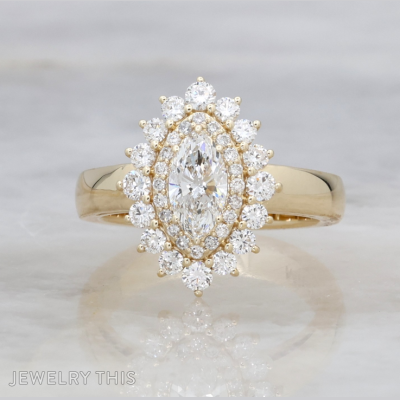
This magnificent yellow gold engagement ring offers breathtaking sparkle and substantial presence. At its heart ...

This 14k yellow gold bypass ring features two smooth, wave-like teardrop forms that cross and ...

This raw diamond custom engagement ring is an absolute masterpiece. Crafted in 14k yellow gold ...

This classic14k yellow gold ring is a recreateion of a beloved family heirloom. The ring ...

Introducing a stunning 14k white gold ring with a Spider Web design, featuring small colorless ...

This Yellow gold ring is a timeless tribute to cherished memories and enduring bonds. Crafted ...
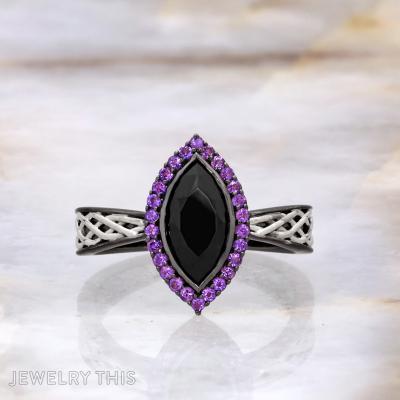
This engagement ring centers a custom-cut marquise black spinel, bezel-set and surrounded by a halo ...

Celebrate lasting love with our men’s slim comfort fit Wedding Band in platinum. Meticulously crafted, ...

This eternity-style band was recreated from a single aged photograph of a ring that had ...

Introducing Our Timeless Three Stone Moissanite Engagement Ring. Make a statement of eternal love with ...

Embrace the exquisite charm of this custom wedding band designed to perfectly match a previously ...

This custom engagement ring is the perfect symbol of never-ending love. The centerpiece of the ...



