


Opal & Garnet Anniversary Ring with Diamond Accents
$$
14k white gold, opal, garnet, natural diamonds
A husband wanted a ring for his wife's 20th anniversary that combined both of their birthstones — opal for him, garnet for her — in one design. He had photos of a style he loved: an oval opal surrounded by a burst of different-shaped garnets with a diamond-lined split shank, and asked the team to bring it to life. When the render came back he wrote: 'It look's amazing, thank you for creating exactly what I envisioned it to look like.'
'It look's amazing, thank you for creating exactly what I envisioned it to look like.' — on seeing the design render
'That's excellent news, and it is absolutely stunning... I'm excited to see it in person, my wife will love it for sure.' — on completion photos before shipping
Quick specs
Design type
Primary Metal
Shape / Cut
Primary Stone
Style
Design Complexity
Intent: Certainty
Size
Ring size 6 US. Center opal approximately 6x4mm (0.5ct). 20 accent diamonds set along the split shank.
How they made it distinctive
-
01
Opal and garnet chosen together specifically to represent two different birth months in one design, rather than using a single birthstone
-
02
Diamond count on the shank set to exactly 20 stones to mark the couple's 20th anniversary
-
03
Marquise and round garnets arranged in a floral burst around the center stone, requiring individual prong work for each stone shape
-
04
Split shank design lined with diamonds on both sides, adding continuous sparkle into the center cluster
-
05
Center opal size was finalized first specifically to work within the limited size range available for the marquise garnets
How you'd make it yours
Center stone: this piece uses an oval opal; a new commission could use a different birthstone or a sapphire for more durability
Accent stone count: this piece uses 20 diamonds to mark a specific anniversary year; a new piece could use a different count for a different milestone
Metal: this piece is 14k white gold; the same cluster design works in yellow or rose gold
Diamond origin: this piece uses natural diamonds; a new commission could use lab-grown diamonds for the same look at a different cost
Engraving: the inside of the band can carry a date or initials on a new piece
One of a kind: this exact ring was designed for one client's anniversary and is not reproduced — a new commission is an original piece inspired by this one, not a copy
Design changes made
The number of diamonds along the band was changed from 24 to 20 at the client's request, so the count would represent the 20 years of marriage being celebrated.
Who this is for
This piece is for someone who wants an anniversary ring that carries a specific, personal meaning rather than a standard birthstone design off the shelf. It's especially right if you're looking to combine two people's birth months into one cohesive piece, or if you want the stone count itself to mean something.
How it's made
Once the design was approved, the ring was 3D printed in wax and attached to a wax tree inside a flask. The flask was placed in a kiln to burn out the wax, leaving a hollow mold, and molten 14k white gold was cast into that mold under pressure. After cooling, the raw ring was removed from the mold and prepared for cleanup before any stones were set.
The cast piece was cleaned and polished to a uniform bright finish across the band and the split shank. The center oval opal was set first, followed by the marquise and round garnets arranged around it in a floral cluster, and finally the twenty round diamonds were set into the split shank on both sides. Each stone shape required its own prong configuration to sit securely within the tight cluster.
Key note
The marquise garnets are only available in a limited range of cut sizes, which is why the center opal's dimensions were locked in first — the surrounding stone cluster had to be built around what sizes could actually be sourced.
Pricing guidance
A multi-stone cluster ring combining a center opal, a garnet halo, and diamond accents along a split shank sits in the mid range for custom rings of this complexity. Most of the cost comes from the number of individually set stones and the hand-fitting required to arrange different stone shapes tightly around a center piece. Stone choice and diamond count are the biggest levers on price from there.
Moves price up ↑
- ↑ Increasing the diamond count along the shank beyond 20 stones
- ↑ Upgrading from lab-grown to natural diamonds throughout
- ↑ Using a larger center opal, which also requires larger surrounding garnets
- ↑ Adding diamonds or garnets to both sides of the shank in a denser pattern
- ↑ Choosing 18k gold instead of 14k for the band
Moves price down ↓
- ↓ Reducing the diamond count along the shank
- ↓ Using lab-grown diamonds instead of natural
- ↓ Choosing a smaller center opal with a simpler garnet cluster
- ↓ Limiting accent stones to one shape (round only) instead of mixing marquise and round
- ↓ Using sterling silver instead of 14k white gold
Questions people ask
Opal is softer than diamond or garnet, rating around 5.5–6.5 on the Mohs hardness scale, so it is more prone to scratching and chipping than harder stones. It can still be worn daily with reasonable care — avoiding hard knocks, harsh chemicals, and extreme temperature changes helps it last. A protective setting that shields the edges of the stone, like a cluster design surrounding the opal with other stones, reduces the risk of impact damage. Many opal rings are worn for years without issue when the wearer is mindful of these basics.
Lab-grown and natural diamonds are chemically, physically, and optically identical — the only differences are origin and price. A graduate gemologist cannot visually distinguish one from the other without specialized equipment. Lab-grown diamonds are typically priced somewhat lower than natural diamonds of comparable size and quality. Either option provides the same brilliance and durability in a finished piece.
Yes, combining two birthstones into a single design is a common request, especially for anniversary or couple's pieces. The two stones can be arranged as a center stone with accents, as a toi-et-moi side-by-side pairing, or woven into a larger cluster design. The key design challenge is balancing the two stone colors and shapes so neither overwhelms the other. A render stage before production lets you see how the combination looks before any metal or stones are committed.
A ring combining a center opal, a garnet cluster, and diamond accents along a split shank typically falls in the mid range for custom work of this complexity. The price is driven mainly by the number of individually set stones and the labor required to fit different stone shapes tightly together. Diamond count, diamond origin (lab versus natural), and the size of the center stone are the main variables that move the price up or down.
A ring with this level of stone-setting complexity typically takes several weeks from design approval to completion. The first stage covers the 3D render and design adjustments, which usually takes about a week. Production, including casting, polishing, and setting more than 20 individual stones, typically takes three to five weeks depending on sourcing time for the accent stones.
Yes, accent stone counts are frequently chosen to carry a specific meaning, such as matching the number of years of marriage, the number of children in a family, or another personal milestone. This kind of adjustment can usually be made during the design phase before stones are sourced and set. It is a simple way to add personal significance without changing the overall look of the design.
White gold rings can generally be resized within a modest range, though a ring with stones set close to the shank, like a split shank lined with diamonds, has more limited resizing room than a plain band. Significant resizing on a heavily set shank may require removing and resetting some stones. It's best to confirm your ring size as precisely as possible before production to avoid this.
Marquise-cut stones are only commercially cut in a limited range of standard sizes, unlike round stones which are available in a much wider range of small increments. When a design calls for marquise stones fitted tightly around a center stone, the center stone's size is often determined first so the marquise stones can be selected from the sizes that actually exist. This is a common constraint in cluster-style designs that mix multiple stone shapes.
Explore Similar Creations
Every masterpiece starts with a spark. Explore how our clients raw ideas - sketches, heirlooms, inspirations - were transformed into bespoke works of arts.
This exquisite Yellow gold ring features two oval Emerald stones, elegantly offset side by side ...

A vintage art deco ring featuring high quality natural emeralds and diamonds set in platinum.

Elevate your love story with this exquisite custom engagement ring, a testament to timeless beauty ...

This engagement ring centers a 1.56 carat oval-cut lab diamond, flanked by a matched pair ...

Together this exquisite pieces symbolize bold love. This striking engagement ring and wedding band set, ...

This beautiful custom engagement ring is made of platinum and features a timeless combination of ...


This wedding band pairs a rose gold, bark-textured wishbone shank with a white gold upper ...

This unique engagement ring embodies contemporary elegance with its mesmerizing hexagonal black diamond center stone. ...
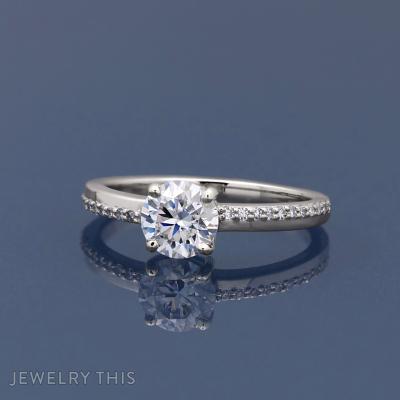
This engagement ring pairs a round moissanite center stone with a slim 14k white gold ...

Hamsa and evil eye ring made in yellow gold and set throughout with 1mm Amethyst ...

This men’s wedding band was built around a channel of rectangular baguette diamonds running the ...



