


Oval Three-Stone Engagement Ring in Yellow Gold
$$$
14k yellow gold, lab diamond, lab diamonds
A client came to us wanting an engagement ring built around an oval lab diamond with pear-shaped side stones, working within a set budget. Over the course of the design he asked thoughtful questions about carat weight versus visual size and ultimately chose a 1.56 carat center stone paired with two 0.38-0.40 carat pear side stones. When the balance was paid he wrote: 'I absolutely love it!!! It is perfect!!!'
'I absolutely love it!!! It is perfect!!! Thank you so much for your help' — on delivery
Quick specs
Design type
Primary Metal
Shape / Cut
Primary Stone
Accent Stones
Style
Design Complexity
Intent
Intent: Certainty
Size
Ring size 4 US (14.88mm). Center stone approx 1.56ct oval; side stones 0.38–0.40ct each, pear shape.
How they made it distinctive
-
01
Oval center stone paired with pear-shaped side stones — an elongated silhouette that reads larger than the carat weight alone
-
02
1.56 carat center diamond selected after comparing several color and clarity combinations for the best visual quality within budget
-
03
Matched pear side stone pair sourced specifically to complement the center stone's proportions
-
04
14k yellow gold chosen for a warm tone that shows more softly in person than in the initial render
How you'd make it yours
Stone: this piece uses a lab diamond center and side stones; a new commission could use natural diamonds or moissanite for a different look and cost
Metal: this piece is 14k yellow gold; the same three-stone design works in white gold or rose gold
Side stone shape: this piece uses pear-shaped side stones; a new commission could use round or marquise side stones instead
Center stone shape: this piece uses an oval cut; the three-stone layout also works well with cushion or radiant center stones
One of a kind: this exact ring was designed for one client and is not reproduced — a new commission is an original piece inspired by this one, not a copy
Design changes made
The center diamond was upsized slightly from the original 1.5ct target to 1.56ct after the client compared several diamond options at different clarity and color grades, settling on the highest-clarity option offered within budget. The side stone weight was also narrowed to a confirmed 0.38-0.40ct range per stone rather than the original 0.38ct estimate.
Who this is for
This piece is for someone who wants a classic three-stone engagement ring with a bit of shape variation rather than a plain solitaire. It's especially right if you want a center stone that reads larger through elongation rather than raw carat weight, and you appreciate a warm, traditional gold tone.
How it's made
Once the design was approved, a wax model of the ring was produced using a 3D printer and attached to a wax tree inside a flask. The flask was placed in a kiln, where the wax was burned out to leave a hollow mold. Molten 14k yellow gold was then cast into that mold, producing the raw ring band and prong structure in one piece.
After casting, the ring was extracted from the mold, cleaned, and polished to a mirror finish across the band and prongs. The oval center diamond was then set into its four-prong head, followed by the two pear-shaped side diamonds, each angled outward in their own prong settings to complete the three-stone arrangement.
Key note
The prongs on the finished ring are smoother and less pronounced than they appear in the initial photorealistic render, since renders exaggerate prong scale before hand-finishing softens them.
Pricing guidance
A three-stone oval and pear lab diamond engagement ring in 14k yellow gold sits toward the lower-middle of the range for engagement rings of this style. Most of the baseline cost comes from the center stone's carat weight and clarity grade, with the matched pear side stones adding a secondary cost driver. Metal karat and finishing labor account for a smaller share of the total.
Moves price up ↑
- ↑ Choosing a natural diamond center stone instead of lab grown
- ↑ Increasing the center stone's clarity grade beyond VVS2
- ↑ Increasing the carat weight of the center stone above 1.5 carats
- ↑ Upgrading the side stones to a higher clarity or larger carat weight
- ↑ Switching to platinum instead of 14k yellow gold
Moves price down ↓
- ↓ Reducing the center stone to the 0.90-1.0 carat range
- ↓ Choosing a lower clarity grade such as SI1 for the center stone
- ↓ Using smaller or fewer side stones
- ↓ Selecting 10k gold instead of 14k
- ↓ Choosing moissanite for the side stones instead of lab diamonds
Questions people ask
Lab grown and natural diamonds are chemically, physically, and optically identical — both are real diamonds made of crystallized carbon. The only difference is origin: one forms underground over millions of years, the other is grown in a controlled lab environment in a matter of weeks. Lab grown diamonds typically cost significantly less than natural diamonds of the same carat, color, and clarity. For a three-stone ring like this, choosing lab grown allows for a larger or higher-clarity center stone within the same budget.
Not always in direct proportion to the carat number. The visual difference between a 0.90 and a 1.0 carat diamond is minimal, and the jump from 1.4 to 1.5 carats is similarly subtle. A more noticeable size difference shows up between roughly 1.0 and 1.5 carats. Cut quality and stone proportions affect apparent size as much as raw carat weight, which is why sourcing focuses on cut and measurements rather than carat weight alone.
A ring like this — a 1.5+ carat oval lab diamond center with two pear-shaped lab diamond side stones in 14k gold — typically falls toward the lower-middle of the engagement ring price range. The center stone's carat weight and clarity grade drive most of the cost, with the side stones as a secondary factor. Choosing natural diamonds instead of lab grown would push the price meaningfully higher.
The full process typically takes about five to six weeks from deposit to delivery. The design phase — sketch, 3D model, and photorealistic render for approval — takes about one week. Once the design is approved and sourcing is confirmed, production including casting, polishing, and stone setting takes roughly four to five weeks.
Not exactly — renders tend to show yellow gold as slightly more saturated and intense than it appears in person. The finished 14k yellow gold piece will have a warm but slightly softer tone than the render suggests. Prong details also typically appear smoother and less pronounced on the finished piece than in the render, since the render exaggerates fine metal details before hand-finishing softens them.
Yes, pairing a different side stone shape with the center stone is a common and classic engagement ring design choice. In this ring, pear-shaped side stones flank an oval center stone, with the pear points angled outward to complement the center stone's elongated shape. This combination creates visual contrast while keeping the overall look cohesive and balanced.
Yes, lab grown diamonds used in a custom ring like this can be provided with a certificate of authenticity confirming the stone's origin and characteristics. This documentation is separate from the ring itself and is typically provided alongside the finished piece. It's a standard request for buyers who want written confirmation of what they purchased.
The two pear-shaped side stones on this ring were sourced as a matched pair, each weighing between 0.38 and 0.40 carats. Matching side stones as a pair as closely as possible in size and color ensures visual symmetry on either side of the center stone. This weight range is a common choice for three-stone rings with a center stone in the 1.5 carat range, keeping the proportions balanced.
Explore Similar Creations
Every masterpiece starts with a spark. Explore how our clients raw ideas - sketches, heirlooms, inspirations - were transformed into bespoke works of arts.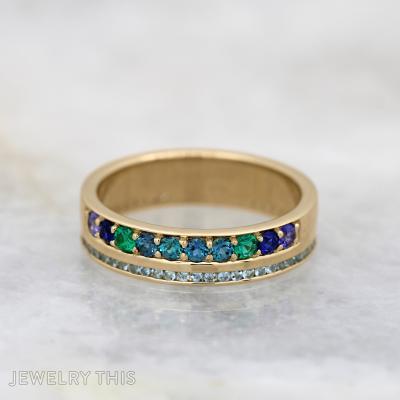
This stunning yellow-gold ring features two dazzling rows of stones. The top row showcases an ...

This custom 14k white gold engagement ring exudes elegance and charm with a timeless high-polish ...
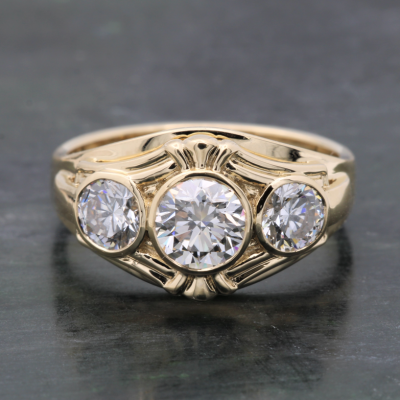
Experience the breathtaking beauty of this custom ring. Crafted with precision in 14k yellow gold, ...

This beautiful White gold ring is brimming with symbolism to celebrate a marriage of 20 ...

This enchanting vine-inspired engagement ring showcases a nature-inspired design, with a 1ct pear-shaped moss agate ...
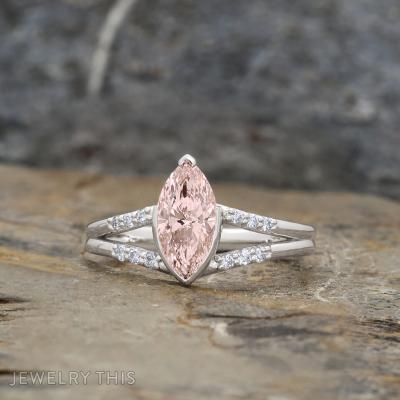
This elegant white gold engagement ring features a captivating pale pink marquise-shaped lab grown diamond ...
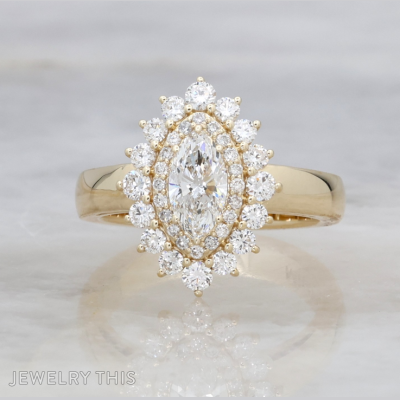
This magnificent yellow gold engagement ring offers breathtaking sparkle and substantial presence. At its heart ...
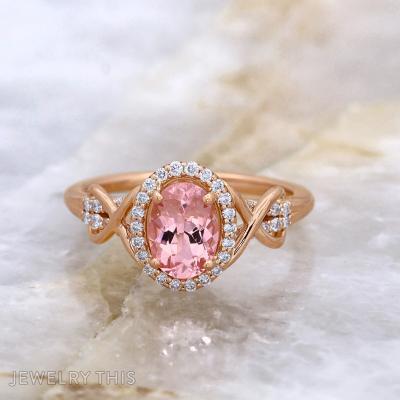
This engagement ring recreates a discontinued design the client’s wife once owned, rebuilt from photographs ...
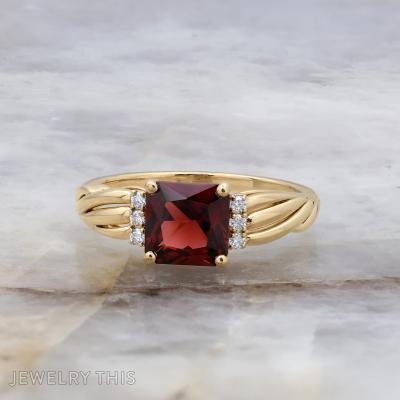
This exquisite engagement ring tells a story of love that is as deep and vibrant ...

This engagement ring began as two heirloom pieces — an original engagement ring and anniversary ...

The ocean-inspired Swirl Diamond Engagement Ring is characterized by its design. A stunning testament to ...

This exquisite 14k white gold ring is adorned with a stunning center oval aquamarine stone, ...



