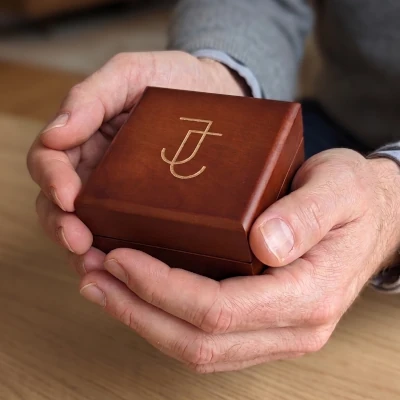


Fandom-Inspired Moonstone Ring With Black Diamond Accents
$
Sterling silver, black rhodium plating, moonstone, black diamonds
J. wanted a ring inspired by a video game motif — a symbol of appearing whole and alive rather than hollowed out by repeated loss. He worked through several rounds of feedback on a render before settling on a moonstone center framed by two black diamonds, brushed for an antiqued look. When it arrived, he wrote: 'It really is beautiful in person.'
'That actually looks so much nicer than I expected. I really do love how it looks.' — on seeing the first render
'It really is beautiful in person. I was unsure about the stones but they fit so well.' — on delivery
Quick specs
Design type
Primary Metal
Shape / Cut
Primary Stone
Accent Stones
Design Complexity
Intent: Certainty
Size
Ring size 10\u00be US (20.37mm). Band width 4mm.
How they made it distinctive
-
01
Moonstone center stone chosen specifically for its pale glow, symbolizing a return to a living, whole state after a game-inspired 'hollow' motif
-
02
Black diamonds selected as side stones to create the light-versus-dark contrast central to the design's meaning
-
03
Continuous beaded milgrain framing carried around the entire band rather than isolated to the setting
-
04
Brushed, antiqued finish under black rhodium plating chosen to give the piece a worn, symbolic quality rather than a bright polish
-
05
Scalloped bezel setting on the center stone designed to echo a blossom shape while still securing the cabochon stone
How you'd make it yours
Stone: this piece uses a moonstone center with black diamond sides; a new commission could use white opal or lab-created colored stones for a different tone
Metal: this piece is black rhodium plated sterling silver; the same beaded design language works in 14k or 18k gold with or without rhodium plating
Band width: this piece is 4mm; a new commission could be made narrower or wider depending on the wearer's hand
Finish: this piece uses a brushed antiqued surface under plating; a new piece could use a brighter polish instead
One of a kind: this exact ring was designed for one client's specific symbolic reference and is not reproduced — a new commission is an original piece inspired by this one, not a copy
Design changes made
The band width was adjusted from 4mm to 5mm and back to 4mm during design, and the client considered moving from silver to 18k gold with rhodium plating before ultimately returning to the original black rhodium plated sterling silver with the larger center stone. The bezel framing around the center stone was also discussed and kept as designed, since the beaded frame required a small transitional gap between the larger center stone and the smaller side stones.
Who this is for
This piece is for someone who wants a ring that carries a specific personal meaning, not just a striking look. It's especially right if you're drawn to symbolic contrast — light against dark, whole against hollow — and want that idea expressed through dimensional, hand-finished detail rather than a simple stone setting.
How it's made
Once the design was finalized, a wax model was produced using a 3D printer and attached to a wax tree inside a flask. The flask was placed in a kiln, where the wax was burned out to leave a hollow mold. Molten sterling silver was then cast into the mold, cooled, and extracted as the raw ring.\n\nAfter casting, the ring was cleaned and polished before receiving a brushed, antiqued surface treatment beneath the black rhodium plating, which softened the shine across the beaded frame and shank. The moonstone was bezel-set into the scalloped center frame — a raised wall of metal hammered against the stone's edge to hold it securely — while the two round black diamonds were set into their own beaded bezel-and-prong frames on either side.
Key note
The small gap between the center stone's frame and the beaded shank isn't a flaw — it's structurally necessary so the beaded ring can stay level across the transition from the larger center stone to the smaller side stones.
Pricing guidance
A three-stone sterling silver ring with this level of beaded, dimensional detail sits toward the higher end for silver custom work, since the price is driven mostly by the hand-finishing labor rather than the metal itself. Moving to gold increases the baseline substantially given the added material cost. Stone choice and plating add smaller, incremental costs on top of the base labor.
Moves price up ↑
- ↑ Upgrading from sterling silver to 14k or 18k gold
- ↑ Choosing natural diamonds instead of cost-effective side stones
- ↑ Adding more surface detail or beading coverage across the full band
- ↑ Selecting a larger or higher-grade center stone
- ↑ Adding rhodium plating maintenance touch-ups over time
Moves price down ↓
- ↓ Simplifying the beaded frame to a plain bezel
- ↓ Reducing the band width from 4mm to a narrower profile
- ↓ Using two stones instead of three
- ↓ Choosing a single consistent finish rather than a brushed-then-plated combination
- ↓ Selecting a lower-cost center stone alternative to moonstone
Questions people ask
Moonstone rates about 6 to 6.5 on the Mohs hardness scale, which is softer than sapphire or diamond. It can hold up to regular wear but is more prone to scratching or chipping than harder stones, especially around the edges of a bezel setting. A bezel setting like the one used here helps protect the stone's edge better than a prong setting would. Daily wearers should avoid knocking the ring against hard surfaces and remove it for heavy manual work.
Natural black diamonds get their color from dense mineral inclusions formed underground, while lab-created versions are grown in a controlled environment with the same chemical structure as mined diamonds. Both are genuine diamond material and rate a 10 on the Mohs hardness scale, making them extremely durable for everyday wear. The visual difference between natural and lab versions is generally undetectable to the naked eye. Cost is typically the main distinguishing factor, with lab-created stones usually priced lower.
Black rhodium is a surface plating applied over the base metal, giving a deep, dark matte finish, but it is not a permanent part of the metal itself. With regular daily wear, most people see noticeable fading within one to two years, especially on high-contact areas like the underside of the band. Re-plating is a routine jewelry service most jewelers can perform when the color starts to wear thin. The rate of wear depends heavily on how often the ring is worn and what activities the wearer does with their hands.
A three-stone sterling silver ring with this much dimensional beading and hand-finishing detail sits toward the higher end for silver custom work, since so much of the cost comes from labor rather than material. The hand-finishing required for a beaded frame around three separate stones takes considerably more time than a simple prong or bezel setting. Moving to gold would raise the baseline further because of material cost, while simplifying the beadwork or reducing the stone count would bring the price down. Stone selection also plays a role, though a smaller one than the metal and labor.
A custom ring like this typically moves through three stages: an initial sketch, a 3D CAD model, and a photorealistic render for approval, which together usually take about a week when uninterrupted. Once the design is approved and a majority of the balance is paid, production — wax modeling, casting, finishing, and stone setting — generally takes around four to five weeks. Complex, heavily detailed designs like a beaded three-stone frame can take longer to model correctly, since the digital file needs to account for how the metal will actually cast and finish. Delays can also occur if a payment plan means production waits until a payment threshold is met.
Yes, a design like this can be produced in 14k or 18k gold instead of sterling silver, with or without black rhodium plating over the top. Gold costs significantly more than silver as a base material, so switching metals raises the price substantially beyond the labor cost that silver and gold share. Rhodium plating can still be applied over gold to achieve the same dark, matte look as it does over silver. The choice mostly comes down to budget and whether the wearer prefers the weight and properties of gold over silver.
Yes, other pale, light-toned stones with similar visual softness could work in this setting, such as white opal or a light gray moonstone alternative. The bezel setting used for the center stone is well-suited to cabochon-cut stones without facets, so a similarly cut stone in a different material would fit the design without major changes. Harder stones would offer better scratch resistance for daily wear than moonstone does. The main consideration is choosing a stone with enough translucency or glow to create the pale, luminous contrast against the darker side stones.
The small gap exists because the beaded frame needs to transition from surrounding a larger center stone to surrounding two smaller side stones, and the beading has to stay level and continuous around that change. Removing the gap entirely would require either shrinking the center stone or altering how the frame steps down in size, both of which change the look of the piece. In the finished ring, the gap is much less noticeable than it can appear in a digital render. It's a structural consequence of the design's proportions rather than an error in construction.
Explore Similar Creations
Every masterpiece starts with a spark. Explore how our clients raw ideas - sketches, heirlooms, inspirations - were transformed into bespoke works of arts.
This extraordinary Yellow gold ring features a breathtaking 1 carat Round Moissanite stone set at ...
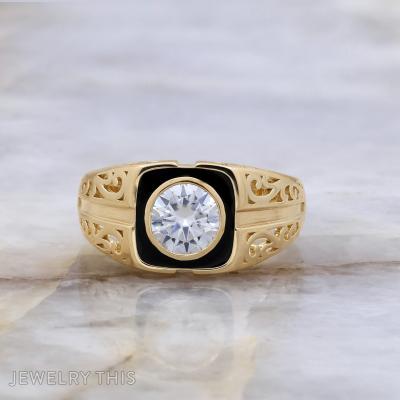
This men’s ring was designed as a gift, built around a bold square silhouette that ...
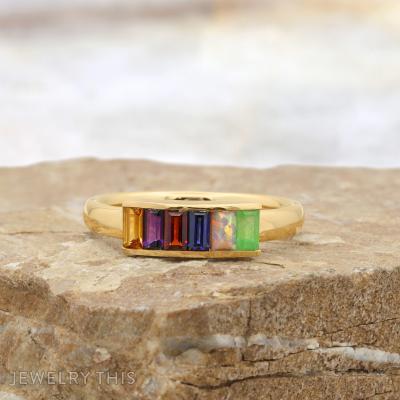
This ring uses six baguette-cut gemstones set closely together in a bar setting to spell ...

Sterling Silver Men’s wedding band featuring Stars running around central portion of the band. Recessed ...

This custom family ring is a heartfelt tribute to the bonds of love and kinship. ...
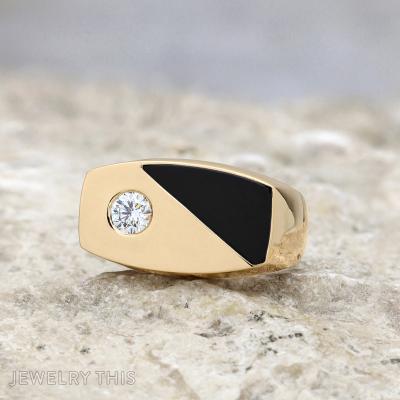
This ring reimagines a family piece in a trimmed, more wearable scale. An asymmetrical top ...

This white gold ring draws you in immediately with the captivating 9 carat rose cut ...
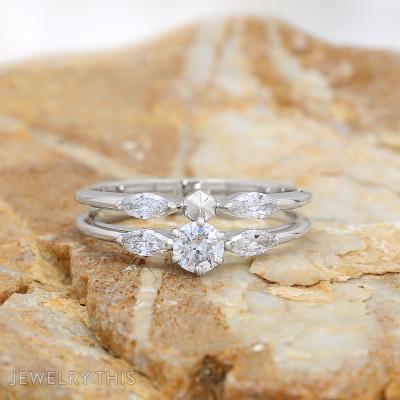
This two-band engagement and wedding set was recreated in 14k white gold from a single ...

This custom engagement ring showcases exquisite craftsmanship with a delicately carved poppy design that gracefully ...
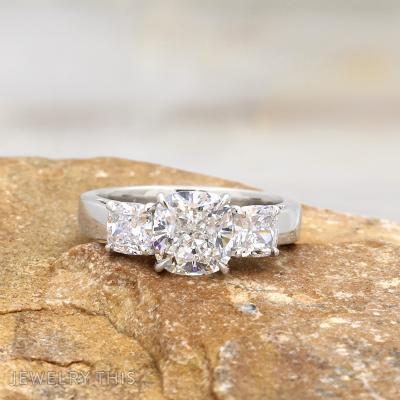
This exquisite custom engagement ring features a stunning 2-carat lab-created cushion cut diamond as the ...

This custom 14k yellow gold ring is a timeless beauty, featuring a tapered band that ...

This beautiful and unique ring is a stunning representation of the client’s beloved home country, ...