


Double Heart Ring Recreated From a Lost Family Piece
$
Gold-plated sterling silver, rhodium-plated accents, cubic zirconia
A husband set out to recreate his wife's great-grandmother's ring, lost a few years earlier and worn by her every day before that. With only a single old photo to go on, he tracked down family and friends for more references and sketched out the details himself, correcting the design team's first guess — the ovals were actually hearts. He kept the whole project a surprise.
Quick specs
Design type
Primary Metal
Secondary Metal
Shape / Cut
Primary Stone
Accent Stones
Design Complexity
Intent: Certainty
Size
Ring size 6.5 US.
How they made it distinctive
-
01
Two heart-shaped sections were confirmed only after the client corrected the design team's initial guess of ovals, based on a hand-drawn sketch
-
02
White metal was limited to just the heart tops after the first render, with the rest of the band changed to yellow gold to better match the original
-
03
Small cut-out detailing along the shoulders echoes the vintage character of a piece worn daily for years
-
04
Center stones are bezel-set directly into each heart, with smaller accent stones set in the channel between them
-
05
Rebuilt entirely from one old photo, family-sourced references, and the client's own sketch rather than the physical original
How you'd make it yours
Stone type: this piece uses cubic zirconia; a new commission could use moissanite or lab diamonds for more durability and sparkle
Metal: this piece is gold-plated sterling silver with white rhodium accents; the same two-tone design works in solid 14k or 18k gold
Heart count: this piece uses two hearts side by side; a new piece could use a single heart or a different number of motifs
Engraving: the inside of the band can carry a date, initials, or short phrase on a new piece
One of a kind: this exact ring was designed to recreate one family's lost heirloom and is not reproduced — a new commission is an original piece inspired by this one, not a copy
Design changes made
After seeing the first render, the client asked for the white metal to be limited to just the tops of the two hearts, with the rest of the band and sides changed to yellow gold rather than silver. This single adjustment was confirmed and approved in the next render.
Who this is for
This piece is for someone trying to bring back a design that only exists in memory, old photographs, or family recollections. It's especially right if you don't have the original piece in hand and need to work from incomplete references, correcting and refining details together until it feels right again.
How it's made
Once the design was approved, the piece was 3D modeled and printed in wax using a resin printer, then attached to a wax tree inside a flask. The flask was placed in a kiln to burn out the wax, leaving a hollow mold. Molten gold-plated sterling silver was then cast into the mold under pressure, and the raw piece was removed from the mold once cooled for cleaning and finishing.
After casting, the piece was polished to bring up the gold tone across the band and shoulders, while the two heart sections were finished and plated separately in a white rhodium tone to create the contrast the client requested. The round cubic zirconia stones were then bezel-set into the center of each heart, with the small accent stones set in the channel between them.
Key note
The two-tone finish was not part of the original plan — the heart tops were switched to white metal only after the client saw the first all-silver render and asked for the contrast, meaning the piece required a second plating pass to separate the two zones.
Pricing guidance
A two-tone heart ring of this style, built in gold-plated sterling silver with cubic zirconia accents, sits toward the lower end of the price range for custom recreation work. Most of the cost comes from the design and modeling work needed to rebuild a lost piece from limited references, rather than from the materials themselves. Moving to solid gold or natural stones would shift this into a higher tier.
Moves price up ↑
- ↑ Upgrading from gold-plated silver to solid 14k or 18k gold
- ↑ Switching from cubic zirconia to natural or lab diamonds
- ↑ Adding more accent stones along the shoulders or band
- ↑ Increasing the size or complexity of the heart sections
- ↑ Requesting a two-tone solid metal build rather than plating
Moves price down ↓
- ↓ Simplifying to a single heart motif instead of two
- ↓ Removing the accent stones between the hearts
- ↓ Keeping the entire band in one plating tone instead of two
- ↓ Using a thinner band profile with less metal overall
- ↓ Reducing the bezel detailing around each stone
Questions people ask
Yes, a single clear photo combined with a detailed description or sketch is often enough to start a 3D design. The process works best when the client can describe specific details like stone shape, metal color, and any patterns along the band. In this case, the client also tracked down family members for additional photos and hand-drew a sketch to confirm the layout. The design team builds a 3D render first so the client can review and correct details before anything is cast.
Cubic zirconia is a lab-created material that visually resembles a diamond but is chemically different and softer, rating around 8–8.5 on the Mohs hardness scale compared to a diamond's 10. It offers similar brilliance and clarity at a lower cost, making it a common choice for recreation pieces where the goal is visual accuracy rather than exact material matching. CZ is more prone to surface scratching over years of daily wear than diamond or moissanite. For a ring recreating a vintage piece, CZ gives a close visual match to the original stones without requiring a larger budget.
Gold-plated sterling silver is a sterling silver base ring with a layer of gold applied over the surface. The plating is a thin coating, so it will gradually wear with daily wear, especially at high-contact points like the underside of the band. Most gold plating holds up well for one to two years of regular wear before it may need re-plating, depending on how often the ring is worn and exposed to friction. Re-plating is a standard jewelry service and can restore the original gold finish when needed.
Yes, two-tone rings are a common and achievable design choice, where one section of the ring is plated or cast in a different metal color than the rest. In this type of build, the two zones are finished and plated separately during production to keep the color transition clean. The main consideration is where the color break falls on the design — a natural dividing line, like the edge of a stone setting, gives the cleanest result. This does add an extra finishing step compared to a single-tone piece.
A two-tone heart ring built in gold-plated silver with cubic zirconia accents typically falls toward the lower end of the pricing range for custom recreation work. The primary cost driver is the design and modeling labor required to rebuild a piece from photos and descriptions rather than from an existing physical reference. Choosing solid gold, natural stones, or a more complex design would move the price into a higher tier. Simpler single-tone designs with fewer stones cost less.
A standard custom ring build typically takes about five to six weeks from design approval to completion, with roughly one week for the initial 3D design and four to five weeks for production. Production includes wax printing, casting, polishing, and stone setting. The client is typically shown a resin or wax preview partway through production before the final metal piece is finished. Rush timelines are available in some cases if a specific deadline needs to be met.
Yes, the 3D render stage exists specifically so changes like this can be made before any metal is cast. Adjusting which sections are which metal tone is a straightforward change at the render stage, since nothing has been physically produced yet. Clients can request this kind of change as many times as needed until the render matches what they have in mind. Once the render is approved, the design moves into production and further changes become more limited.
Yes, a recreated ring is made to the current wearer's ring size from the start, rather than needing to be resized afterward. The client provides the intended wearer's ring size during the design phase, and the piece is cast to that size. Minor resizing after delivery is usually possible within about one size in either direction, depending on the band's design and the metal used. Significant resizing on a two-tone piece can be more complex because of the plated color sections.
Explore Similar Creations
Every masterpiece starts with a spark. Explore how our clients raw ideas - sketches, heirlooms, inspirations - were transformed into bespoke works of arts.
This ethereal engagement ring is a masterpiece of gothic-inspired botanical design, meticulously crafted from white ...
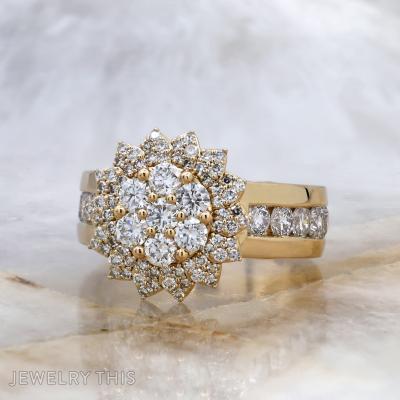
This engagement ring centers on a round flower-shaped cluster of lab-grown diamonds, designed as a ...

This custom mother’s ring is a stunning tribute to family bonds and personal style. Crafted ...

This ring recreates a family engagement ring that belonged to a client’s grandmother, rebuilt as ...

Exuding understated elegance, this delicate ring is a testament to refined simplicity. Its slender band, ...

Crafted from sterling silver, this striking flat band ring features a dimensional snake coiled around ...

Hamsa and evil eye ring made in yellow gold and set throughout with 1mm Amethyst ...

Radiant and reborn, this engagement ring is a recreated masterpiece born from cherished memories. Crafted ...
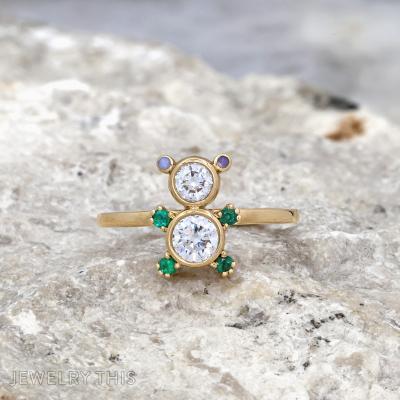
This 14k yellow gold ring is built around a whimsical teddy bear silhouette, formed from ...

This elegant three-stone engagement ring features a classic design. A dazzling round diamond sits at ...
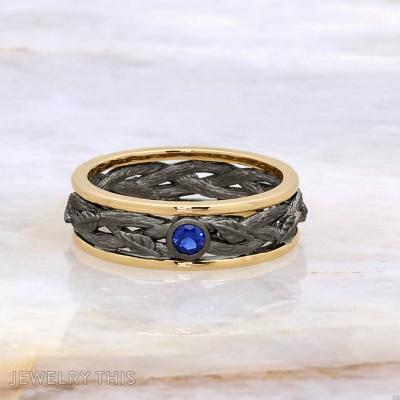
This engagement ring combines a dark, textured center band with two polished 14k yellow gold ...

Crafted with honor and distinction, this Yellow gold men’s ring bears a circular flat top, ...



