

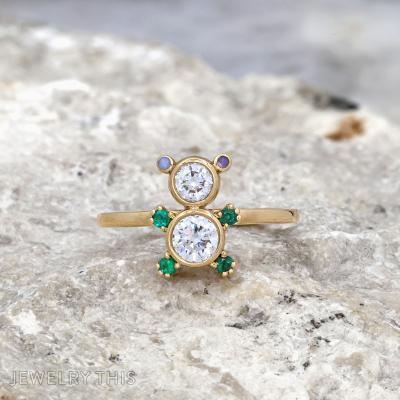


Teddy Bear Ring — Diamond, Emerald & Opal in Yellow Gold
$$$
14k yellow gold, lab diamond, opal, emerald
A client came across a teddy-bear-shaped ring design and wanted her own version in yellow gold, with a diamond head and body and colored stone accents for the ears and paws. Working through the design together, the stone cut shifted from a specialty rose cut to a round brilliant for a better fit with her budget and preferences. When she saw the finished render, she wrote simply: 'I like it.'
'I like it.' — on seeing the first render
Quick specs
Design type
Primary Metal
Shape / Cut
Primary Stone
Style
Design Complexity
Intent: Certainty
Size
Ring size 9 US (18.95mm).
How they made it distinctive
-
01
Two round lab diamonds bezel-set to form a teddy bear's head and body, a figurative silhouette rather than a traditional stone arrangement
-
02
Small opals bezel-set as the ears and emeralds prong-set as the paws, adding color contrast to the diamond centerpieces
-
03
Stone cut changed from a specialty rose cut to round brilliant specifically to fit the client's budget and stated preference
-
04
Bezel settings chosen for the primary stones, offering more protection for the raised figurative design during daily wear
How you'd make it yours
Stone type: currently lab diamonds for the head and body — natural diamonds or moissanite could be used instead
Accent stones: currently emerald paws and opal ears — birthstones or a single consistent gem type could replace them
Metal: currently 14k yellow gold — also available in white gold or rose gold
Stone cut: currently round brilliant — a rose cut is possible for a softer glow at added cost
Engraving: inside the band can be engraved with initials or a short phrase
Design changes made
The original reference design used rose-cut diamonds, but the client preferred the look of a round brilliant cut and it also fit her budget better, so the design was adjusted to round brilliants — slightly raising the bear's profile on the ring.
Who this is for
This piece is for someone who wants their jewelry to have a bit of personality and warmth, not just sparkle. It suits someone drawn to figurative or whimsical design who still wants the piece to read as genuine fine jewelry for daily wear.
How it's made
Once the design was approved, a resin model of the ring was 3D printed as the first physical version, giving a preview of the proportions before any metal was committed. That model was then used to create an investment mold, which was fired to remove the resin before molten 14k yellow gold was cast into the resulting cavity, producing the raw ring band and bear-shaped setting elements.
After casting, the piece was cleaned up and polished to a bright finish across the band and bezels. The two round lab diamonds were bezel-set to form the bear's head and body, the opals were bezel-set at the top as ears, and the four emeralds were prong-set along the sides and base to form the paws — each stone set individually given the small scale of the design.
Key note
Switching from the reference piece's rose-cut stones to round brilliants meant the bear's silhouette sits slightly higher off the band, since round brilliants have more depth below the setting than the flatter rose cut.
Pricing guidance
A figurative gold ring like this, combining a diamond centerpiece with small colored stone accents, sits in the mid range for custom work of this complexity. Most of the cost comes from the multiple small individual stone settings required for a design at this scale, rather than from the metal itself. Stone choice and cut are the biggest levers on price from there.
Moves price up ↑
- ↑ Using natural diamonds instead of lab-created for the head and body stones
- ↑ Upgrading to 18k gold instead of 14k
- ↑ Choosing rose-cut or other specialty-cut stones instead of standard round brilliants
- ↑ Adding more accent stones or increasing their size
- ↑ Adding engraving inside the band
Moves price down ↓
- ↓ Using cubic zirconia or moissanite in place of diamonds for the head and body
- ↓ Reducing the number of accent stones
- ↓ Choosing sterling silver with gold plating instead of solid 14k gold
- ↓ Simplifying the paw and ear accents to fewer stones
- ↓ Using a single stone type throughout instead of mixing diamond, emerald, and opal
Questions people ask
Lab-created diamonds have the same hardness and durability as natural diamonds — both rate a 10 on the Mohs scale, the hardest natural material. The only difference is origin: lab diamonds are grown in a controlled environment rather than mined. For a ring worn daily, there is no practical difference in how well the stone holds up over time. Lab diamonds also tend to cost less than natural diamonds of comparable size and clarity.
Opals are softer than diamonds, rating around 5.5 to 6.5 on the Mohs hardness scale, so they need a bit more care than diamond or emerald. They can be worn daily but should be protected from hard knocks, harsh chemicals, and extreme temperature changes, which can cause cracking. A bezel setting, like the one used for this ring's ears, offers more protection than an open prong setting because the metal fully surrounds the stone's edge. With reasonable care, opals hold up well in everyday jewelry.
Round brilliant cuts have a pointed bottom and many precisely angled facets designed to maximize light return, giving them a bright, sparkly look. Rose cuts are flatter, with a domed top and fewer facets, producing a softer, more subtle glow rather than sharp brilliance. Rose cuts are also rarer and typically cost more since fewer are cut. Round brilliants are generally the more budget-friendly option and were chosen here for both look and cost reasons.
A small-scale figurative design combining a diamond centerpiece with colored stone accents typically falls in the mid range for custom jewelry. The cost is driven mainly by the labor of setting several small stones individually rather than by the raw metal weight. Stone type — lab versus natural, and which colored stones are used — is the biggest factor in where the final price lands within that range.
The full process from approved design to delivery typically takes five to six weeks. The design phase — sketch, 3D model, and rendered preview for approval — usually takes about a week. Once the design is approved, production takes another four to five weeks, covering casting, finishing, and stone setting, before the piece ships.
Yes, a figurative design like this can be adapted with different accent stones or a different arrangement while keeping the overall silhouette. For example, birthstones could replace the emerald and opal accents to give the piece personal significance, or the accent stones could be swapped for a single consistent gem type. The main diamond or center stones can also be resized within reason without changing the overall design concept.
The raised bear silhouette does sit higher off the band than a flat design, which is a normal tradeoff for figurative rings with dimensional elements. The bezel settings around the two main stones add structural protection compared to open prongs, which helps guard against everyday knocks. It is still recommended for reasonably careful daily wear rather than heavy manual labor or contact sports.
Yes, the same design works in white gold or rose gold in addition to yellow gold, without changing the construction or stone setting approach. The choice of metal color is mostly aesthetic and does not affect the durability or cost significantly. Some clients also choose platinum for a whiter, more durable option, though it will add weight and cost compared to gold.
Explore Similar Creations
Every masterpiece starts with a spark. Explore how our clients raw ideas - sketches, heirlooms, inspirations - were transformed into bespoke works of arts.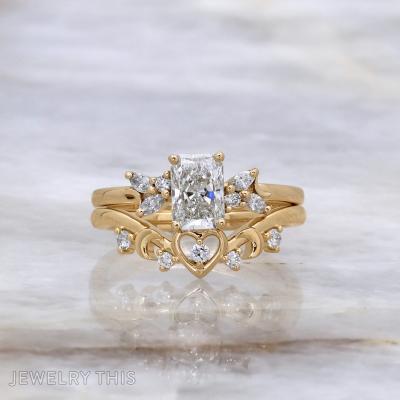
This breathtaking bridal set beautifully captures the essence of love and individuality. The engagement ring ...

Exquisite and timeless, this ring boasts a captivating design featuring two marquise-shaped stones set in ...
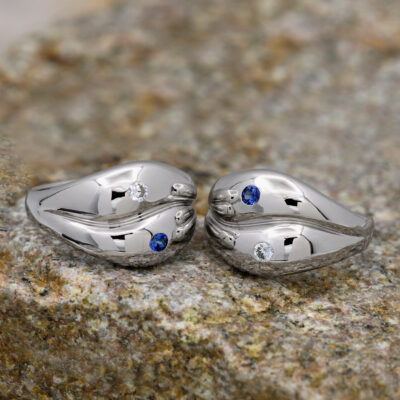
This captivating white gold ring boasts an intriguing design that plays with the illusion of ...

This engagement ring centers on a shield-cut lab-grown diamond, custom cut to just over two ...

This custom 14k yellow gold signet style ring is a beautiful replica of an original ...

This custom ring is a stunning tribute to heritage and elegance, centered around the client’s ...

This ring was created to replicate the sentiment and beauty of a lost family heirloom. ...
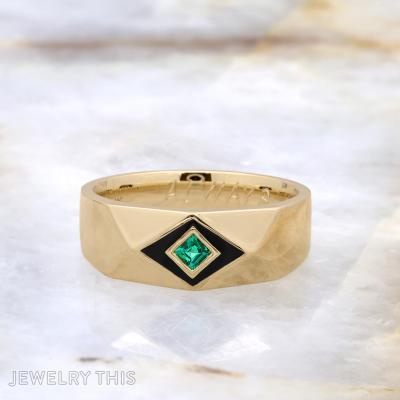
This striking yellow gold wedding band is a masterful blend of modern design and classic ...

This Platinum band is an elegant piece that seamlessly blends classic and modern elements. The ...

This 14k yellow gold bypass ring features two smooth, wave-like teardrop forms that cross and ...

This eye-catching two-tone ring is crafted from a mix of yellow and white gold, artfully ...
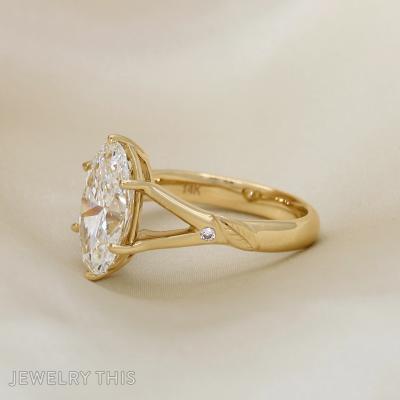
This engagement ring pairs a bold elongated oval center diamond with a softly split yellow ...