


Shield-Cut Engagement Ring with Black-to-White Diamond Trio
$$$
14k rose gold, lab diamond, black diamonds, salt-and-pepper diamonds
A. wanted a shield-cut center diamond big enough to make a statement, custom cut specifically for this ring since the shape and size he wanted didn't exist in any inventory. He chose a side-stone arrangement of black, salt-and-pepper, and colorless diamonds on each side specifically for the symbolism of moving from black to grey to white — finding clarity. When he proposed, she loved it.
'Wow, it does look amazing. Thank you so much!' — on delivery
'I'm very happy with the ring! I won't know until April if my partner likes it, but I'm sure she will.' — after delivery, before the proposal
Quick specs
Design type
Primary Metal
Shape / Cut
Primary Stone
Accent Stones
Design Complexity
Intent: Certainty
Size
Ring size 7.25 US. Center stone approximately 2.38ct; six side stones total approximately 0.36ct (approximately 2.74ct total weight).
How they made it distinctive
-
01
Center stone custom cut specifically for this design — no standard shield diamond existed in the shape and size wanted
-
02
Side stones arranged in a deliberate black-to-colorless gradient on each side, chosen for personal symbolism around finding clarity
-
03
Cluster setting keeps the accent stones visible from a top-down view rather than wrapping the finger, avoiding a heavier or less visible look at this carat weight
-
04
Rose gold selected specifically to complement the mixed-tone diamond palette
-
05
Center carat size decided collaboratively after comparing scaled visuals against a finger to balance size with visibility of the side stones
How you'd make it yours
Center stone: this piece uses a custom-cut shield lab diamond; a new commission could use a standard fancy shape or a different custom cut
Accent stones: this piece uses black, salt-and-pepper, and colorless diamonds; a new commission could use an all-colorless or all-natural-color arrangement
Metal: this piece is 14k rose gold; the same setting style works well in yellow or white gold
Carat weight: this piece centers a 2.38-carat stone; a new commission is sized to its own budget and preference
One of a kind: this exact ring was designed and cut for one client and is not reproduced — a new commission is an original piece inspired by this one, not a copy
Design changes made
The cutter proposed adjusting the shield's length-to-width proportions from the original concept to maximize the stone's brilliance, and the center was sized up slightly to 2 carats since custom cutting made the size change cost-neutral. A. also considered incorporating birthstones (opal, peridot, citrine) for himself and his children into the side stones, but the stones' softness led him to keep the diamond arrangement for durability.
Who this is for
This piece is for someone who has a very specific vision that doesn't exist off the shelf and is willing to have a stone custom cut to get it exactly right. It's especially right for someone drawn to symbolism in their design choices — using stone color or arrangement to represent something personal rather than picking stones for their appearance alone.
How it's made
Because no standard shield-cut lab diamond existed at the size and proportions this design called for, the center stone was custom cut to order before any metalwork began. Once the stone was finished and received, the design moved to a 3D model, then a wax model was 3D-printed and set on a tree inside a flask. The flask went into a kiln to burn out the wax, leaving a hollow mold, and molten 14k rose gold was cast into that mold to form the ring.
After casting, the ring was extracted, cleaned, and polished to a mirror finish across the rose gold band. The center shield diamond was then set first, followed by the six round accent diamonds — arranged in mirrored trios of black, salt-and-pepper, and colorless — set by hand into the triangular clusters flanking each side of the center.
Key note
The center diamond had to be custom cut before design work could even begin, since no lab-grown shield diamond existed off the shelf in the size and proportions this ring called for.
Pricing guidance
An engagement ring built around a large custom-cut fancy-shape center stone with mixed-color accent diamonds sits toward the higher end for custom engagement work. Custom stone cutting is the dominant cost driver here, independent of the setting itself. Metal choice and the number and size of accent stones are the next biggest levers on price.
Moves price up ↑
- ↑ Increasing the custom-cut center stone's carat weight beyond 2 carats
- ↑ Choosing a natural diamond instead of lab-grown for the custom-cut center stone
- ↑ Upgrading the six accent diamonds to larger sizes or higher clarity
- ↑ Using platinum instead of 14k rose gold for the setting
- ↑ Adding a matching wedding band with the same accent-stone arrangement at time of order
Moves price down ↓
- ↓ Selecting a standard-inventory diamond shape instead of a custom cut
- ↓ Reducing the center stone to 1 to 1.5 carats where cut lab diamonds are more readily available
- ↓ Using all-colorless accent diamonds instead of a mixed black/salt-and-pepper/colorless arrangement
- ↓ Choosing sterling silver or gold vermeil in place of solid 14k gold
- ↓ Reducing the accent stone count from six to four
Questions people ask
Yes, when a shape isn't available in standard sizes — shield cuts are a good example since their proportions aren't standardized the way round or oval cuts are. A cutter takes a rough lab-grown or natural diamond and cuts it to the exact shape, size, and proportions requested. This typically adds a few weeks to the timeline since the stone has to be finished before the setting design can be finalized around its exact dimensions. Custom cutting works for both lab-grown and natural diamonds.
Lab-grown and natural diamonds are optically, chemically, and physically identical — both are pure carbon crystallized into the same structure. The only real difference is origin: one forms underground over geologic time, the other is grown in a controlled lab environment in weeks. Specialized gemological equipment is required to tell them apart, and a qualified gemologist with GIA training is the best resource if you want third-party verification. Lab-grown diamonds typically cost significantly less than natural diamonds of comparable size and quality.
Salt-and-pepper diamonds are diamonds with visible natural inclusions that create a speckled, grey-toned appearance, while black diamonds get their solid dark color from a dense concentration of these same inclusions. Both are genuine diamonds, just with more visible internal characteristics than a colorless stone. They're popular as accent stones for their organic, one-of-a-kind look and often cost less than comparable colorless diamonds. In a design like this, they can be arranged deliberately to create a gradient or symbolic color progression.
A ring built around a large custom-cut fancy-shape diamond sits toward the higher end of custom engagement ring pricing, largely because of the stone-cutting fee itself, which is separate from the setting cost. The setting, accent stones, and metal choice all add on top of that base. Choosing lab-grown over natural for the center stone keeps costs meaningfully lower at larger carat weights. Getting a firm number typically requires a completed 3D model, since fancy-shape settings can vary in labor depending on the exact stone dimensions.
Custom stone cutting typically adds two to four weeks before design work can even start, since the setting has to be built around the stone's final, exact measurements. After the stone is finished, the standard design and production process applies — roughly a week for the 3D model and render, then about four to five weeks for production once the design is approved. All together, a ring like this usually takes eight to twelve weeks from deposit to delivery, longer than a standard engagement ring build.
Yes, a ring like this can typically be resized within a reasonable range, usually up to about a size or two in either direction, without disturbing the side stone clusters. Because the accent diamonds sit in clusters near the shoulders rather than continuously around the band, resizing is more straightforward than it would be on an eternity-style setting. Larger resizes may require additional work to reshape the shoulder area where the stone clusters sit. It's best to have sizing done by the original maker when possible to avoid disturbing stone settings.
It depends on the stone and how it's set. Softer gemstones like opal, pearl, or tourmaline can be used as accents, but they require different setting techniques than faceted diamonds and are more prone to scratching or chipping with daily wear. Many designers recommend limiting softer stones to pieces that see less daily impact, or reserving them for a separate ring rather than an engagement ring worn every day. Durable options like sapphire or ruby are usually a safer swap if color is the goal.
Yes, rose gold pairs well with black, salt-and-pepper, and colorless diamonds — the warm tone of the metal contrasts nicely against the darker stones while still complementing the brightness of colorless diamonds. Champagne-colored diamonds are another option that blends particularly well with rose gold's warm undertone, if a softer contrast is preferred. The choice ultimately comes down to whether a higher-contrast or more blended look is wanted. Rose gold is a durable, popular choice for daily-wear engagement rings regardless of accent stone color.
Explore Similar Creations
Every masterpiece starts with a spark. Explore how our clients raw ideas - sketches, heirlooms, inspirations - were transformed into bespoke works of arts.
This striking wide yellow gold engagement ring showcases a bold and sophisticated design, centered around ...

This sterling silver ring is timeless in style, exudes beauty and elegance. With its classic ...
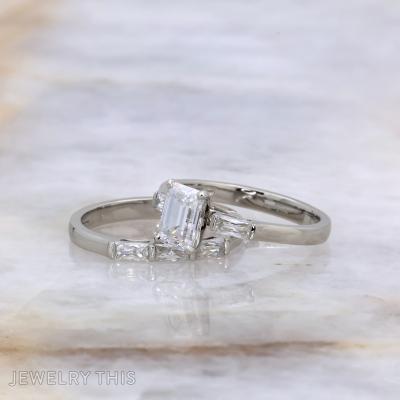
This exquisite platinum engagement ring and wedding band set features a stunning 1-carat emerald-cut moissanite ...
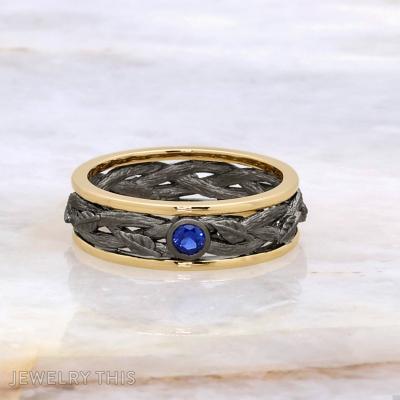
This engagement ring combines a dark, textured center band with two polished 14k yellow gold ...

This unique yellow gold engagement ring celebrates the allure of the color green with its ...
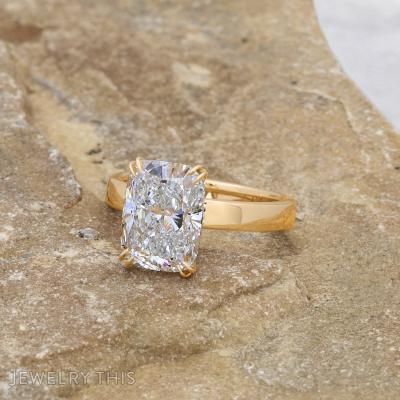
This yellow gold engagement ring highlights the beauty of simplicity and precision with its refined ...

This sleek white gold ring features a distinctive flat rectangular top, designed for a modern, ...

This unique set of wedding rings is designed for golf lovers, symbolizing a shared passion ...
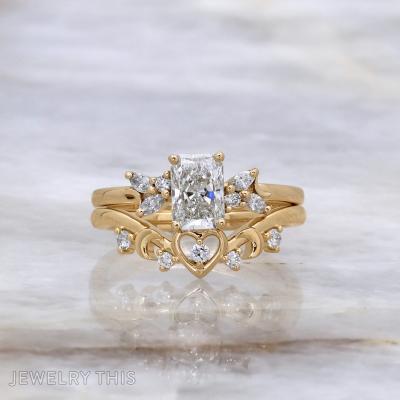
This breathtaking bridal set beautifully captures the essence of love and individuality. The engagement ring ...

This bridal set recreates a wedding ring that had been lost — originally a grandmother’s ...

This elegant engagement ring captures the beauty of cultural symbolism and timeless style. At its ...

This 18karat white gold men’s ring is a masterpiece of refined elegance. At its heart ...



