


Cat and Initial Ring in 14k Yellow Gold with Peridot Eyes
$$
14k yellow gold, peridot
R. wanted an everyday ring that combined her initial with a cat — rendered from her own rough sketch and reference photos. The design went through several rounds of practical adjustment to balance her vision with comfort, landing on a wider band to support both the cat figure and a smaller circle engraved with her initial. When it arrived, she wrote: 'I absolutely love it.'
'The design is very cute, I like it; and it's fine if there's some variation in the colors.' — on design approval
'I absolutely love it.' — on delivery
Quick specs
Design type
Primary Metal
Shape / Cut
Primary Stone
Accent Stones
Design Complexity
Intent: Certainty
Size
Ring size 7 US (17.32mm). Band width 10mm.
How they made it distinctive
-
01
Two separate design elements, a cat figure and an initial circle, cast as one continuous piece with no gaps or moving parts
-
02
Band widened to roughly 10mm specifically to structurally support both raised elements for comfortable daily wear
-
03
Peridot chosen and kept as the eye stones even after a harder-stone alternative was suggested, honoring the client's original vision
-
04
Solid 14k yellow gold with no plating or mixed alloys, selected specifically because the client wears rings every day
-
05
Circle with the engraved R reduced in scale after the first sketch to improve wearability without losing the two-part design
How you'd make it yours
Stone: this piece uses peridot; a new commission could use a lab-created emerald or moissanite for a similar green tone with more daily-wear durability
Metal: this piece is solid 14k yellow gold; the same design language works in 14k white or rose gold
Letter: this piece carries the initial R; a new commission could carry any single letter or initial
Figure: this piece uses a cat; a new commission could use a different animal or symbol in the same sculptural style
Band width: this piece is widened to roughly 10mm to support two raised elements; a new design with a single element could use a narrower band
One of a kind: this exact ring was designed for one client and is not reproduced — a new commission is an original piece inspired by this one, not a copy
Design changes made
The circle with the R was reduced in size and the band widened to roughly 10mm after the first sketch showed the original scale would be uncomfortable to wear — the client preferred keeping the two elements separate rather than merging them onto the cat's body.
Who this is for
This piece is for someone who wants an everyday ring that carries real personal meaning — not just a decorative shape, but their own initial paired with something they love. It's especially right if you've struggled with plated or mixed-metal rings wearing down from daily use and want something solid enough to never take off.
How it's made
Once the design was approved, a 3D-printed resin model was produced first — the exact physical shape of the ring before any metal was involved, shared with the client as a preview. That resin was then set into investment plaster and fired in a kiln to burn out the wax/resin, leaving a hollow mold. Molten 14k yellow gold was cast into the mold, then the raw piece was removed, cleaned, and prepared for finishing.
After casting, the cat figure, the engraved circle, and the wide band were polished to a single continuous mirror finish, since the whole piece reads as one sculptural unit rather than separate zones. The two round peridot stones were then hand-set into small prong settings forming the cat's eyes, and the letter R was engraved into the small circle before final polishing.
Key note
The band was deliberately widened to roughly 10mm during the design phase specifically to give the cat figure and the separate initial circle enough structural support to be cast as one continuous piece with no open ends or moving parts.
Pricing guidance
A sculptural figural ring like this, combining two dimensional design elements on a widened band, sits in the mid range for custom gold rings of this complexity. Most of the cost comes from the 3D modeling and hand-finishing needed to support two separate raised elements on one band, rather than from the stones themselves. Metal choice and band width are the biggest variables from there.
Moves price up ↑
- ↑ Using 18k gold instead of 14k for a higher gold content
- ↑ Adding more stones or upgrading to diamonds instead of peridot
- ↑ Widening the band further to support larger or heavier design elements
- ↑ Adding more surface detail or texture to the cat figure
- ↑ Using a harder, more expensive stone that requires specialized setting
Moves price down ↓
- ↓ Simplifying to a single design element instead of two connected pieces
- ↓ Choosing a narrower band where the design allows it
- ↓ Using lab-created stones or a less expensive gemstone than peridot
- ↓ Reducing the number of engraved details
- ↓ Choosing sterling silver instead of 14k gold
Questions people ask
Peridot sits at about 6.5 to 7 on the Mohs hardness scale, which makes it softer than sapphire or diamond. It holds up reasonably well in small accent settings like eyes on a figural design, especially when the stones are protected by surrounding metal. For someone who is consistently hard on their hands, a lab-created alternative like emerald or a harder stone can be substituted for better daily durability. Regular wear can cause more visible wear over years compared to a harder gem, but it is a realistic choice for everyday jewelry with reasonable care.
Yes, solid 14k gold with no plating and no mixed alloys is a standard option for custom rings. Plated pieces use a thin gold layer over a different base metal, which can wear through with constant daily use, while solid 14k gold keeps its color and finish because the gold is part of the metal all the way through. This option typically costs more than plated alternatives because of the gold content, but it holds up significantly better for rings worn every day without being removed.
A ring with two dimensional elements, like a figure and a separate engraved shape, is typically designed as one continuous cast piece rather than assembled from parts. The band usually needs to be made wider than a simple ring to physically support both raised elements without thin, fragile connection points. The whole design is modeled digitally first, refined through sketches and renders, and then cast as a single unit so there are no gaps, moving parts, or weak joints.
A custom ring combining a sculptural figure and a separate engraved element in solid 14k gold generally falls in the mid range for custom jewelry of this complexity. The price is driven mainly by the modeling and finishing work required for multiple raised design elements, plus the gold content of a wider-than-standard band. Simpler single-element designs or smaller stones would bring the cost down from there.
The process usually starts with a rough technical sketch based on the client's description and reference images, which takes about one to two weeks to finalize. Once the sketch and then the 3D render are approved, production typically takes another three to four weeks, including casting, stone setting, and finishing. Total turnaround from first sketch to a finished ring is usually around five to seven weeks depending on design complexity.
Yes, custom gold rings are typically stamped with a hallmark indicating the karat, such as 14K, as a standard part of the finishing process. This stamp confirms the metal content and is usually placed on the inside of the band where it is not visible during normal wear. It is a standard practice across fine jewelry, not an optional add-on.
A wider band, often in the 10mm range, is sometimes necessary to structurally support raised design elements like a figural shape, but comfort depends heavily on how the inside of the band is finished. A rounded, polished interior edge rather than a flat or sharp one makes a significant difference in everyday comfort. Ring size and finger shape also affect how a wide band feels, so getting an accurate size measurement before production is important.
Yes, the eye-stone setting in a design like this can accommodate a range of small round stones, including lab-created emerald, moissanite, or other green gems with more durability than peridot. The setting style stays the same regardless of which stone is chosen, so the swap does not require redesigning the piece. This is a common substitution for clients who want the same green color but with a harder, more daily-wear-resistant stone.
Check what our clients say about us

Reeya Bhagwandin
1 year ago
Going into this process, there were a lot of doubts about the legitimacy of the service and the quality of the product, as this was something I had never done before.
However, I ended up being impressed by the professionalism, patience, and communication and payment transparency updates that I received from both Holly and Jewelrythis throughout the whole process.
From start to finish, Holly worked with me to understand what I wanted and the best ways to accomplish that vision while still being realistic. The end result was exactly what I envisioned and I have no complaints.
Explore Similar Creations
Every masterpiece starts with a spark. Explore how our clients raw ideas - sketches, heirlooms, inspirations - were transformed into bespoke works of arts.
This men’s wedding band was built to bring back a ring that had been lost ...

This unique set of wedding rings is designed for golf lovers, symbolizing a shared passion ...

This enchanting rose gold engagement ring showcases a mesmerizing oval-shaped opal at its center, radiating ...

A family’s story is beautifully captured in this one-of-a-kind ring, thoughtfully designed by a husband ...

This engagement ring and companion band were designed as a nesting two-ring set in 14k ...

This 14k yellow gold stacking band takes its cue from a vine tattoo and a ...
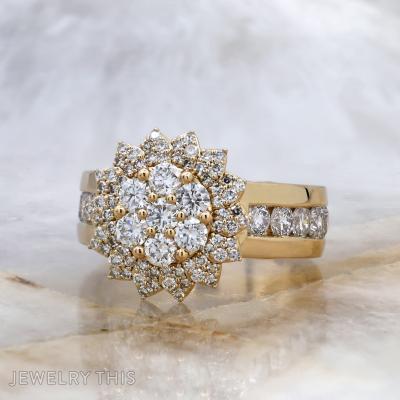
This engagement ring centers on a round flower-shaped cluster of lab-grown diamonds, designed as a ...

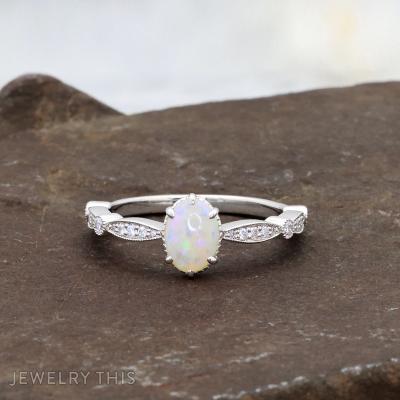
This exquisite engagement ring showcases a stunning 0.81-carat round moissanite center stone, surrounded by a ...

This stunning sapphire and diamond wedding band combines timeless elegance with a touch of color. ...

This platinum engagement ring centers a large oval lab-grown diamond in a raised cathedral setting, ...

This pair of sterling silver wedding bands are a symbol of the unbreakable bond between ...



