

Recreated Two-Tone Gold Cross Pendant From a Single Photo
$
14k yellow gold, white rhodium plating
J. came to us with a single photo of a cross pendant he had lost and wanted it back as close to the original as possible. After one small adjustment to the texture of the white rhodium accents, he approved the design and it went into production. When it arrived, he wrote: 'It came out great, I love it. It's really close to my original pendant.'
'It came out great, I love it. It's really close to my original pendant. The only feedback I'd have is that I wish the white rhodium accents were a little more white, but other than that no complaints at all!' — on delivery
Quick specs
Design type
Primary Metal
Primary Stone
Accent Stones
Design Complexity
Intent: Certainty
Size
Pendant approximately 0.75in (19mm) tall. Bail sized to fit client's existing chain.
How they made it distinctive
-
01
Recreated entirely from a single photograph after the original pendant was lost
-
02
White rhodium accents switched from a small-circle texture to a linear line texture at the client's request during design review
-
03
Bail custom-sized to fit the client's existing chain rather than a standard opening
-
04
Two-tone finish achieved with rhodium plating over polished 14k yellow gold, kept to diagonal accent zones on each arm and the lower shaft
How you'd make it yours
Metal: this piece is 14k yellow gold; the same two-tone design works in 18k gold or combined with rose gold
Accent finish: this piece uses white rhodium plating in a linear texture; a new commission could use a different texture or a different plated metal
Size: this piece is sized to about 0.75 inches for its wearer's chain; a new piece is sized to its own wearer and chain
Engraving: the smooth polished sections could carry a date or initials on a new commission
One of a kind: this exact pendant was designed for one client and is not reproduced — a new commission is an original piece inspired by this one, not a copy
Design changes made
The white rhodium accents were changed from a small-circle texture to a linear, textured-line pattern after the client reviewed the first render — the rest of the design matched the original photo on the first pass.
Who this is for
This piece is for someone who lost a meaningful pendant and wants it back as close to the original as possible, working from nothing more than a photograph. It's especially right if you value a faithful recreation over a brand-new design, and want just enough contrast detail to keep a simple cross from feeling plain.
How it's made
Once the design was approved, a wax model was 3D-printed from the final CAD file and attached to a wax tree, which was invested in plaster and fired in a kiln to burn out the wax and leave a hollow mold. Molten 14k yellow gold was then cast into the mold under pressure, cooled, and removed before cleaning and polishing began.
The gold surfaces were polished to a bright finish first, and the designated diagonal sections across the arms and lower shaft were left textured to receive the white rhodium plating, which was applied last so it would not be disturbed by subsequent polishing. The bail was finished and checked against the client's existing chain before the piece was packaged for shipping.
Key note
The printing support structure visible on the back of the wax/resin model before casting is removed entirely prior to the metal pour — it exists only to hold the piece upright during 3D printing and leaves no trace on the finished pendant.
Pricing guidance
A simple two-tone cross pendant like this sits toward the lower end of custom pendant pricing. Most of the cost comes from the gold weight and the labor of applying and finishing the white rhodium plated accents cleanly against the polished gold. Because the design is compact and uses a single stone-free element, it stays efficient to produce compared to multi-stone or heavily textured pieces.
Moves price up ↑
- ↑ Increasing the pendant size beyond 0.75 inches, which requires more gold weight
- ↑ Upgrading from 14k to 18k gold, increasing material cost per gram
- ↑ Adding stone accents or engraving to the smooth gold sections
- ↑ Extending the rhodium texture to cover a larger portion of the surface
Moves price down ↓
- ↓ Reducing the pendant size for a lighter gold weight
- ↓ Using gold-plated silver instead of solid 14k gold
- ↓ Simplifying the rhodium accent to a smaller area or omitting it entirely
- ↓ Choosing a lower karat gold such as 10k
Questions people ask
Yes, a single clear photo is often enough to recreate a pendant's overall shape, proportions, and surface details. The process starts with a 3D render based on the photo, which the client reviews and can request changes to before anything is cast. In this case, the only adjustment needed was changing the texture style of the two-tone accent sections. The more detail visible in the photo, the closer the recreation can get to the original.
White rhodium plating is a thin surface layer applied over a different base metal — in this case, 14k yellow gold — to create a bright white contrast finish. It is a plating, not a solid metal, so it can gradually show warmth from the gold underneath over time, especially when brand new. If the contrast fades more than expected, re-plating is a straightforward service most jewelers can perform. Daily handling and exposure to skin oils can accelerate this fading slightly.
A simple two-tone cross pendant in 14k gold with plated accents typically falls toward the lower end of custom pendant pricing. The main cost drivers are the gold weight required for the size requested and the labor of applying and finishing the contrasting plated sections. A compact design without stones or heavy texture, like this one, stays on the more efficient end to produce.
From design approval to a finished piece typically takes four to five weeks of production time, following about a week for the initial render and any requested adjustments. The process includes 3D printing a wax model, casting it in gold, polishing, and applying any plating before final inspection and shipping. Rush timelines are sometimes possible depending on the current production schedule.
Yes, texture and pattern on plated accent sections can be adjusted during the render review stage before production begins. In this pendant, the accents were changed from a small circular texture to a linear, line-like texture at the client's request. These adjustments are made to the CAD design and then carried through to the physical piece during finishing. Texture changes like this do not typically affect the overall cost.
Yes, the bail or loop on a pendant is typically custom-sized to fit a chain the client already owns, rather than using a fixed standard opening. Confirming the chain width in advance lets the bail be finished to the right internal clearance before casting. This avoids the common problem of a bail that is too tight or loose for the intended chain. It's worth measuring or providing the chain's width when placing an order.
Yes, 14k gold is a common choice for daily-wear pendants because it balances durability with a warm, rich gold color. It is harder than higher-karat golds like 18k or 24k, making it more resistant to scratching and deformation over normal wear. It does not tarnish the way sterling silver can. For a solid gold pendant like this one, minimal maintenance beyond occasional cleaning is needed.
Explore Similar Creations
Every masterpiece starts with a spark. Explore how our clients raw ideas - sketches, heirlooms, inspirations - were transformed into bespoke works of arts.
A patriotic pendant featuring an original design inspired by the outline of the USA as ...

Crafted with meticulous attention to detail, this custom initial pendant exudes elegance and sophistication. Made ...

This pendant takes a personal monogram and turns it into an openwork geometric silhouette — ...

This custom pendant is a heartfelt tribute, meticulously crafted in 10k yellow gold to celebrate ...

This custom pendant is crafted in a distinctive wax seal style, embodying both elegance and ...

This round 14k yellow gold pendant features a raised, polished caduceus emblem — the winged ...

Exuding sleek sophistication, this custom logo pendant boasts the bold letter “B” elegantly adorned with ...

This exquisite custom-made 14k yellow gold round pendant is a timeless piece of jewelry, designed ...

Celebrate the allure of a cherished landmark with this custom pendant—a stunning homage to Ukraine’s ...

This 14k yellow gold pendant necklace was rebuilt from faded photographs and a hand-drawn sketch ...
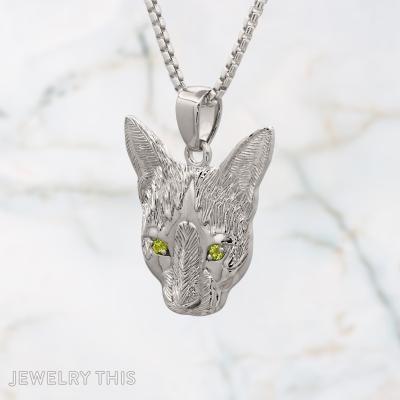
This exquisite custom pendant beautifully captures the unique features a cherished cat, immortalizing his memory ...

This unique custom jewelry pendant was crafted in sterling silver setting to an antique coin ...



