


placeholder
$$$
14k yellow gold
A client wanted a personal logo turned into a small gold pendant, cut out so the letterforms would be visible as negative space rather than solid metal. Getting the open sections right took real back-and-forth — too closed and the design lost its point, too open and the letter shapes stopped reading correctly. Working through two rounds of sketch revisions, they landed on a middle ground that kept the intended shape while preserving just enough separation between the lines. On seeing the finished render, the client wrote: "It does look amazing!"
'It does look amazing!' — on seeing the photorealistic render
Quick specs
Design type
Primary Metal
Primary Stone
Accent Stones
Design Complexity
Intent: Certainty
Size
Pendant approximately 0.75-1 inch; bail sized to fit up to a 3mm chain.
How they made it distinctive
-
01
Personal monogram translated into a cut-out silhouette rather than a solid engraved surface, so the letterforms exist as negative space
-
02
Teardrop outer shape chosen to frame two overlapping letters within a single compact form
-
03
Design revised twice to balance readability of the cut-out gaps against the letter shapes staying recognizable at a small scale
-
04
Kept to the smallest workable size for a thin-lined cut-out design, prioritizing a compact, close-to-body pendant over a larger, easier-to-cast piece
-
05
Cast in solid 14k yellow gold rather than plated metal for long-term durability and color retention
How you'd make it yours
Metal: this piece is 14k solid yellow gold; the same design works in 10k or 18k yellow gold, white gold, or rose gold
Letterforms: this piece overlaps two specific letters; a new commission could use different initials or a single letter
Outer shape: this piece uses a teardrop silhouette; a new design could use a circle, oval, or other geometric frame
Size: this piece is sized to its smallest workable dimension for the cut-out detail; a new piece could be made larger if a bolder look is preferred
Chain: this piece was designed to pair with the client's own chain; a new commission could include a sourced chain in a chosen length and style
One of a kind: this exact pendant was designed for one client's initials and is not reproduced — a new commission is an original piece inspired by this one, not a copy
Design changes made
The tail of one letterform was adjusted twice — first opened to keep the cut-out gap from closing in on such a small piece, then pulled back after the opening felt too wide and the letter looked off. The final version settled on a middle ground between the two extremes.
Who this is for
This piece is for someone who wants their initials or a personal mark represented as jewelry, but doesn't want it to look like a typical nameplate. It suits someone drawn to minimal, geometric design who is willing to go through a few rounds of refinement to get proportions exactly right, especially if they want the piece to stay small and close to the body.
How it's made
Once the design was approved, the team built a 3D model and 3D-printed a wax version of the pendant, which was attached to a wax tree and invested in plaster inside a flask. The flask was fired in a kiln to burn out the wax, leaving a hollow mold, and molten 14k yellow gold was poured into the mold to cast the piece.
After casting, the pendant was removed from the mold, cleaned, and polished to a mirror finish across all surfaces, including the fine interior edges of the cut-out sections. Because the design relies on thin open gaps to read the letterforms clearly, the polishing had to preserve the separation between sections without letting the edges round over and close the negative space.
Key note
The minimum pendant size was driven by the cut-out gaps themselves — below roughly 0.75 inches, the open sections between the letterforms would have closed in during casting and polishing.
Pricing guidance
A small solid-gold cut-out pendant like this sits in the mid range for custom pendant work, largely because of the CAD design time needed to get thin negative-space sections to hold their shape at a small scale. Metal choice (10k, 14k, or 18k) is the biggest lever on cost from there, with design complexity a secondary factor.
Moves price up ↑
- ↑ Upgrading from 10k to 18k yellow gold for a richer color and higher gold content
- ↑ Increasing the overall pendant size, which increases the amount of gold used
- ↑ Adding more intricate cut-out detail or additional overlapping letterforms
- ↑ Adding a two-sided design or engraving on the back
Moves price down ↓
- ↓ Choosing 10k gold instead of 14k or 18k
- ↓ Keeping the pendant at the smallest workable size for the design
- ↓ Simplifying the letterform overlap to reduce CAD design time
- ↓ Choosing gold-plated silver instead of solid gold
Questions people ask
Yes, this is a common request — a personal monogram or logo is translated into a 3D CAD model with open, see-through sections rather than a solid engraved surface. The main design challenge is keeping the negative space large enough to read clearly once the piece is cast at actual size. Very small pendants with thin cut-out gaps may need those gaps opened up slightly so they don't close in during casting and polishing. The process typically involves a sketch stage followed by a photorealistic 3D render for approval before anything is cast.
Both are solid gold, not plated — the difference is the percentage of pure gold in the alloy, with 14k containing more gold than 10k and being slightly softer as a result. For a small, thin-lined cut-out design, 14k is a common choice because it holds fine detail well while still being durable for daily wear. 10k is a reasonable alternative if durability against scratching is a priority, since it's slightly harder. Both options will look like yellow gold to the eye, with 14k typically reading a touch richer in color.
For a cut-out design with thin lines and small gaps, roughly 0.75 to 1 inch is usually the practical minimum. Below that size, the open sections between design elements start to close in on each other during casting, especially at the tightest points. If a very small size is a priority, the design may need to be adjusted — opening up certain gaps or thickening certain lines — to make sure the finished piece casts cleanly and holds its intended shape.
A small solid-gold cut-out pendant with a custom design sits in the mid range for custom pendant work. Most of the cost comes from the CAD design and modeling time required to get a small-scale open design to hold up structurally, plus the cost of the gold itself. Metal karat (10k versus 14k versus 18k) is usually the single biggest factor in the final price, followed by the complexity of the cut-out pattern.
The design phase typically takes about a week, though it can take longer if there are several rounds of revisions, as there were for this piece to get the cut-out gaps right. Once the design is approved, production of a solid gold piece generally takes three to four weeks, covering wax modeling, casting, and finishing. So from initial approval to a finished piece, six to eight weeks is a reasonable total estimate for a piece with a bit of back-and-forth in the design stage.
Yes, many pendants are designed to work with a chain the client already owns rather than one sourced by the jeweler. The main thing to confirm is the chain's width, since the pendant's bail needs to be sized to fit it — a standard bail will typically accommodate a chain up to about 3mm wide. If your chain is wider than that, let the designer know so the bail can be sized accordingly before the piece is cast.
It's a real risk with very thin negative-space designs, which is why the design stage exists — to test how the open sections will hold up at the pendant's actual finished size before anything is cast. If a gap looks like it might close in, the jeweler can widen it, adjust the angle of a line, or lift part of the design to preserve the separation. Once the design is approved and cast, the gaps are fixed as shown in the final render.
Yes, slightly — a photorealistic render is a close approximation, but the exact luster and warmth of the gold color can vary a little once the piece is physically cast, polished, and photographed. This is a normal and expected difference, not a defect, and is usually most noticeable in how light reflects off polished surfaces versus a digital rendering. Cast gold generally reads a bit richer and warmer in person than it does on a screen.
Explore Similar Creations
Every masterpiece starts with a spark. Explore how our clients raw ideas - sketches, heirlooms, inspirations - were transformed into bespoke works of arts.
A sterling silver logo pendant with bold black enamel lettering. This piece is about 1.5 ...

Crafted as a heartfelt tribute to a cherished family heirloom. The cross is intricately designed ...

This custom pendant features the initials “OB” elegantly intertwined in a modern style, showcasing a ...

Imbued with personal meaning, this silver Chai pendant, just shy of 1 inch, is a ...

14k white gold pendant with custom logo design elevated in center of circular frame. Entire ...
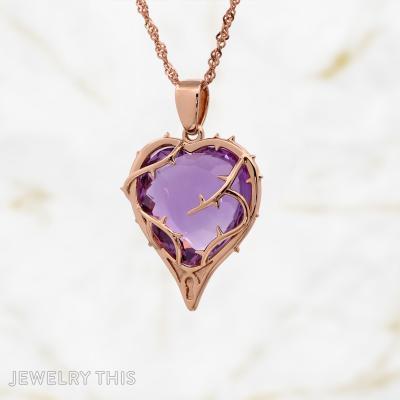
This exquisite heart-shaped pendant captures a unique blend of romantic elegance and gothic allure. Crafted ...

Exquisitely crafted, this custom yin yang pendant symbolizes harmony and unity within relationships. Made of ...

Unlock the mystery of elegance with this captivating custom pendant. Skillfully crafted in sterling silver, ...

This pendant depicts a small winged fairy figure rendered in polished 14k white gold, holding ...

This pendant featuring abstract elements inspired by Croatian heritage, blending vibrant colors and distinctive patterns. ...
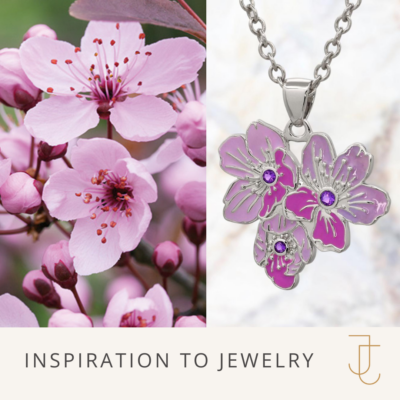

Crafted in radiant 10K yellow gold, this pendant features cursive script that spells out “Ling ...



