


Recreated Pearl & Tourmaline Drop Pendant Necklace
$$$
14k yellow gold, freshwater pearls, green tourmaline
A woman wanted to recreate her mother's necklace, gifted decades earlier and since lost. Working from faded photographs and a hand-drawn sketch, she and the team worked through pearl shape, stone color, and finish until it matched what she remembered - trading a hard-to-source pearl style for freshwater pearls and settling on a muted green-tourmaline stone instead of the brighter blue first proposed. When it arrived in time for Mother's Day, she wrote that her mother loved it.
'This is terrific, we are so close.' — on reviewing the mock-up of the full necklace
She loved it — on delivery in time for Mother's Day
Quick specs
Design type
Primary Metal
Shape / Cut
Primary Stone
Accent Stones
Style
Design Complexity
Intent: Certainty
Size
Pendant hangs approximately 1.5in below neck. Three flat freshwater pearls approximately 5-8mm long with gold caps. Necklace length approximately 19-20in with spaced pearl stations.
How they made it distinctive
-
01
Three freshwater pearls chosen specifically for their flat, irregular shape to match the original piece rather than easier-to-source round pearls
-
02
Center stone changed from a bold dark-blue sapphire to a muted green tourmaline after the client felt the darker stone drew too much visual attention
-
03
Curled top frame redrawn smaller and less prominent so the pearls and stone stay the visual focus
-
04
Brushed rather than high-polish finish, chosen to match the softened look of a piece worn for decades
-
05
Pearl stations spaced along the chain to echo the pendant's dangles in miniature
How you'd make it yours
Stone: this piece uses green tourmaline; a new commission could use sapphire, moissanite, or another faceted stone in a similar muted tone
Metal: this piece is 14k yellow gold; the same design language works in white gold or a gold-plated silver version at lower cost
Pearl style: this piece uses flat, irregular freshwater pearls; a new commission could use rounder, more readily available pearls for easier sourcing
Finish: this piece has a brushed, understated finish; a new commission could use a high-polish finish for more shine
Chain length: this piece is sized to its wearer; a new piece is sized to its own wearer and can include more or fewer pearl stations
One of a kind: this exact pendant and chain were designed for one client's mother and are not reproduced — a new commission is an original piece inspired by this one, not a copy
Design changes made
The center stone shifted from a bright dark-blue sapphire to a softer, more muted green tourmaline after the client felt the darker stones drew too much attention away from the pearls. The pendant's curled top element was also redrawn to be smaller and less prominent, and the metal finish was changed from high-polish to brushed to match the softened look of the original piece.
Who this is for
This piece is for someone trying to bring back a necklace that means something specific, working only from old photos and memory rather than the object itself. It suits someone who cares about getting small details right - pearl shape, stone tone, the softness of the metal finish - rather than settling for a close-enough approximation.
How it's made
Once the pendant design was approved, the piece was modeled in 3D and cast in 14k yellow gold using the lost-wax method - the design team first shared photorealistic renders so the curl of the frame, the stone setting, and the pearl arrangement could be reviewed before any metal was committed. The three freshwater pearls were sourced separately, since matching the original's flat, irregular shape at the needed size took considerable searching before a workable source was found.
After casting, the frame was given a brushed finish rather than a high-polish shine, softening the metal's reflectivity to resemble a piece worn for decades. The green tourmaline was faceted and set into the curled frame first, then the three pearls were individually capped in gold and hung from the base so each could move naturally. The chain was finished separately, with small pearls set at intervals using gold bead spacers to echo the pendant above.
Key note
The pearls, stone, and curled frame element were each finalized in sequence rather than together, because the pearls' final size and shape determined the proportions everything else had to be built around.
Pricing guidance
A recreated pendant necklace of this kind - a sculpted metal frame, a faceted center stone, and hand-set pearl drops with a matching station chain - sits in the mid range for custom recreation work. Labor is the dominant cost driver here, since assembling pearl dangles and stringing station pearls by hand is time-intensive regardless of metal choice. Stone selection and metal karat are what move the price meaningfully from that baseline.
Moves price up ↑
- ↑ Upgrading from gold-plated silver to solid 14k or 18k gold for both pendant and chain
- ↑ Choosing a natural sapphire or other precious faceted stone over tourmaline or lab-created alternatives
- ↑ Sourcing rarer pearl shapes (flat, irregular freshwater or vintage-style pearls) rather than standard round pearls
- ↑ Adding more pearl stations along the chain length
- ↑ Requesting a fully custom chain length or an adjustable clasp mechanism
Moves price down ↓
- ↓ Using gold-plated silver instead of solid gold for the pendant and chain
- ↓ Choosing standard round pearls instead of harder-to-source flat or irregular shapes
- ↓ Selecting a more readily available faceted stone rather than a rare color match
- ↓ Simplifying the pendant frame to fewer curled elements
- ↓ Reducing the number of pearl stations on the chain
Questions people ask
Yes, this is a common request and photos combined with a detailed description are enough to start. The process typically begins with a hand sketch, followed by a 3D render that gets refined through feedback rounds until the design matches what you remember. Small details like stone color, pearl shape, and metal finish often take several rounds of adjustment since photos alone rarely capture everything precisely. The more reference material you can provide, including any sketches, the closer the final piece can get to the original.
Gold-plated silver has a thin layer of gold applied over a sterling silver base, giving it a gold appearance at a lower cost, but the plating will gradually wear with daily use, especially at contact points. Solid 14k gold carries the gold color all the way through the metal, so it does not wear off or need replating over time. Visually the two can look very similar right after they are made. For a piece intended for regular or long-term wear, solid gold holds its appearance longer.
Certain pearl shapes, especially flat or irregular freshwater pearls that mimic an older or vintage look, are much harder to find than standard round pearls. Pearl suppliers who specialize in these shapes are limited, and sizing that matches a specific vintage piece can require checking multiple sources before finding a workable match. This sourcing step happens before the 3D model is finalized, since the pearls' actual dimensions affect the proportions of the rest of the design. It is one of the more unpredictable timeline factors in recreation work involving pearls.
A pendant of this complexity - a sculpted frame, a faceted center stone, and multiple hand-set pearl drops, plus a station chain with additional pearls - sits in the mid range for custom recreation work. The primary cost driver is labor, since assembling pearl dangles and stringing pearls onto a chain by hand takes considerable time regardless of the metal used. Metal choice (gold-plated versus solid gold) and stone selection are what shift the price most from there.
A station-style chain, where pearls are set at fixed intervals, can typically be shortened by removing a small section near the clasp without disturbing the pearl spacing, as long as the adjustment is modest. A true adjustable clasp, where the wearer can choose between two lengths, can also be added using a small ring set at an intermediate point on the chain. Larger shortening requests may require re-spacing the pearls to keep them evenly distributed. It's worth discussing exact length preferences early, since station chains are less flexible to alter than a plain chain.
A station chain with pearls set at intervals is generally a bit more delicate than a plain link chain because each pearl attachment point is a potential weak spot. With normal, careful wear it holds up well, but it is not intended for rough daily activity the way a simple chain might be. Storing it flat or hanging rather than balled up in a drawer helps prevent tangling and stress on the pearl connections. Most wearers treat this style as an everyday-special piece rather than an active-lifestyle piece.
Yes, a faceted center stone set into a frame like this can usually be swapped by a jeweler without redesigning the piece, as long as the replacement stone is a similar shape and size. Options like green tourmaline, sapphire, or moissanite in various colors can all work in this style of setting. The main consideration is making sure the new stone's cut matches the existing setting's dimensions closely enough to sit securely. This is a relatively minor jewelry service compared to a full redesign.
A high-polish finish reflects light sharply and looks bright and new, while a brushed finish has a soft, matte texture that diffuses light instead. Many recreation pieces move toward a brushed finish because the original piece being recreated had softened in appearance after years of wear, and a brushed finish reads as more understated and less attention-grabbing. It's a purely aesthetic choice with no durability difference between the two finishes. Either finish can typically be changed by a jeweler later if preferences shift.
Explore Similar Creations
Every masterpiece starts with a spark. Explore how our clients raw ideas - sketches, heirlooms, inspirations - were transformed into bespoke works of arts.

A token of elegance and personal significance, this 1-inch rectangular pendant is crafted from 14kt ...

This custom pendant, crafted to celebrate retirement, features a detailed representation of the recipient’s unique ...

Sterling silver heart pendant featuring citrine, blue sapphire and peridot stones set into bezels along ...
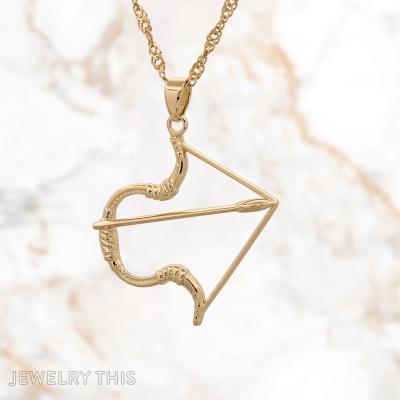
This pendant captures the timeless strength and elegance of the palintonos bow, a symbol of ...
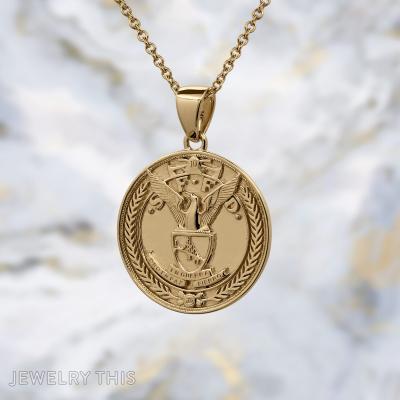
A daughter’s love for her father shines through this meaningful gift. This 1-inch pendant features ...

This beautiful cross pendant is adorned with a delicate floral design that spans the center ...

Embrace the enchanting beauty of this custom cloud-shaped pendant created for a special July birthday. ...

This custom pendant is a beautiful and sentimental tribute to a beloved daughter. Measuring 1 ...

This pendant reimagines two state outlines as one wearable design: the state of Georgia forms ...
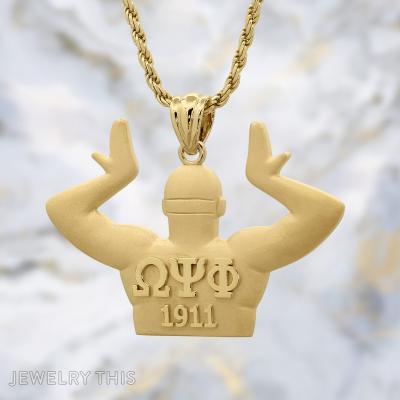
This pendant was designed around a fraternity emblem — a raised 3D figure in the ...

Capture the essence of love with this silver cross cut-out pendant, a heartfelt tribute to ...



