

Petite Dolphin Pendant in White Gold with Blue Topaz Heart
$
10K white gold, natural blue topaz, diamonds
A client asked for a larger dolphin pendant to be remade smaller and more wearable for daily use, with the heart-shaped blue topaz and diamond tail kept as close to the original proportions as possible. Getting the stone and bail sizing right took several rounds of review, and a few small requests — like fitting a diamond into the very tip of the tail — turned out to be smaller than the metal could hold. When it arrived she wrote: 'This new one is so perfect! Exactly what I wanted... I love how my blue topaz heart seems more pronounced now.'
'This new one is so perfect! Exactly what I wanted. And I'm glad I had you take down the bail loop some... It's perfect all around... I love how my blue topaz heart seems more pronounced now.' — on delivery
Quick specs
Design type
Primary Metal
Shape / Cut
Primary Stone
Accent Stones
Style
Design Complexity
Intent: Certainty
Size
Dolphin pendant approximately 3/4 inch (bottom to jump ring); total length with bail 1 inch. Heart-cut stone 5x5mm. Bail sized for 2mm chain. Chain: 1mm wheat style, 2.5mm end links.
How they made it distinctive
-
01
Heart-shaped blue topaz tucked into the open triangle between the fin and tail, preserved as a design constraint through a full rescale
-
02
Pave diamond line follows the curve of the tail and belly, carried over proportionally from a larger original design
-
03
Pendant rebuilt at 3/4 inch plus bail for a 1-inch total length specifically to be lighter and more wearable for daily use
-
04
Bail opened for a 2mm chain rather than the original 2.5mm, scaled down to match the smaller pendant proportionally
-
05
Single diamond eye and natural Swiss blue topaz center stone, heat-treated in the standard industry process
How you'd make it yours
Stone: this piece uses a natural Swiss blue topaz; a new commission could use a different blue topaz shade, sapphire, or a lab-created stone for the same color
Metal: this piece is 10K white gold; the same dolphin design works in 14K or 18K white gold, yellow gold, or sterling silver
Accent stones: currently diamonds along the tail; a new piece could use fewer or more accent stones, or substitute colored melee
Chain: this piece pairs with a fine wheat-style chain; a new commission could use a cable or box chain at a different width
Size: this piece was scaled to 3/4 inch plus bail; a new commission can be sized to its own wearer's preference
One of a kind: this exact pendant was designed and sized for one client and is not reproduced — a new commission is an original piece inspired by this one, not a copy
Design changes made
The dolphin was rebuilt at 3/4 inch (1 inch including the bail) instead of its original full-inch size, which meant resizing the heart-shaped stone from 6x6mm to 5x5mm and the bail from a 2.5mm to a 2mm chain opening to keep everything proportional. The client also asked to fit a diamond into the tip of the tail, but the team found the tip too small (under 1mm) to securely hold even the smallest available stone, so that detail was not added.
Who this is for
This piece is for someone who loves a figural, nature-inspired design but wants it sized for genuine everyday wear rather than as an occasional statement piece. It's especially right if you've found that a larger version of a design you love feels like too much for daily life, and you want the same detail and stone work scaled down to something lighter and more comfortable.
How it's made
Once the final size and proportions were confirmed, the design was 3D printed in wax and attached to a wax tree inside a flask. The flask was placed in a kiln to burn out the wax, leaving a hollow mold, and molten 10K white gold was cast into that mold under pressure. After cooling, the raw pendant was removed from the mold and prepared for finishing.
The cast pendant was cleaned and pre-polished before the stones were set. The heart-shaped blue topaz was set first into the tucked space between the fin and tail, followed by the pave diamonds set by hand along the curve of the tail and belly, with a single diamond bezel-set as the dolphin's eye last. The piece was given a final polish to bring up the shine on the white gold before quality inspection.
Key note
Scaling the pendant down by roughly a quarter inch didn't scale the stone down by the same amount — colored stones are sized in fixed calibrated increments, so the heart topaz only dropped from 6x6mm to 5x5mm even though the whole piece shrank by more.
Pricing guidance
A pendant of this kind — a cast figural design with a central colored stone and a diamond-accented tail — sits toward the lower end of custom pendant pricing. Most of the cost comes from the stone setting work along the tail and the cast detail of the dolphin shape itself, rather than the metal, since the piece uses a modest amount of white gold. Stone count and metal karat are what move the price most from there.
Moves price up ↑
- ↑ Using diamonds throughout the tail instead of smaller stones or fewer accents
- ↑ Upgrading from 10K to 14K or 18K white gold
- ↑ Choosing a larger center stone size instead of a compact 5x5mm heart cut
- ↑ Adding stones to every available detail point, including the tail tip, where space allows
- ↑ Selecting platinum instead of white gold for the setting
Moves price down ↓
- ↓ Reducing the diamond count along the tail
- ↓ Choosing a smaller overall pendant size
- ↓ Using a synthetic or lab-created colored stone instead of a natural one
- ↓ Selecting sterling silver instead of 10K white gold
- ↓ Simplifying the pave line to a single row of smaller accent stones
Questions people ask
Swiss blue topaz is one of several named shades of blue topaz, sitting between the lighter Sky Blue and the deeper London Blue in color saturation. The stone itself is a naturally mined topaz; the vivid blue color comes from a heat treatment process that has been standard in the gem industry for over a century. Heat treatment is permanent and considered an accepted practice — it's not the same as lab-growing a stone or adding color artificially. Most blue topaz sold in fine jewelry today has been treated this way.
Blue topaz ranks 8 on the Mohs hardness scale, which makes it quite durable for everyday wear and resistant to scratching from most daily activities. The bigger consideration for a pendant like this is the setting style — a stone tucked into a recessed space, like the heart between this dolphin's fin and tail, is naturally more protected than a stone set out in the open. Diamonds used as accent stones rank even higher at a 10, so the pave line along the tail holds up well over time. With normal care, a piece like this is well suited to being worn every day.
Yes, but resizing a cast design with a center stone isn't as simple as scaling a photo up or down — stone sizes come in fixed calibrated increments, and bail or chain openings have minimum sizes for durability. A design has to be rebuilt proportionally, which usually means the stone size changes by a different amount than the overall piece. This is a new design and casting process, not a simple adjustment to the original piece.
A dolphin-style pendant with a central colored stone and a diamond-accented tail falls toward the lower end of custom pendant pricing. The main cost driver is the hand-setting work for the row of diamonds and the center stone, not the amount of metal used. Choosing a higher karat gold, a larger stone, or more diamond accents would move the price up from there.
A standard custom pendant typically takes around four to six weeks from final design approval to completion, covering wax modeling, casting, cleanup, and stone setting. More involved revisions to size or proportion during the design phase can add time before production even begins. Once casting starts, the piece moves through casting, polishing, and stone setting before a final quality check and shipping.
At a smaller overall scale, the tip of a tail detail like this can end up under 1mm wide, which is too small to safely hold even the smallest commercially available diamond (around 0.6mm) while keeping it properly secured. Altering the tail's proportions to make room for a stone there would change the look of the piece in a way that no longer matches its intended design. In cases like this, leaving the detail in polished bright metal is usually the better outcome than forcing a stone into a space too tight to hold it securely.
10K white gold is the most durable of the gold karats commonly used in jewelry, since it has the highest alloy content and lowest proportion of pure gold. It's a solid choice for a piece meant for daily wear, though the rhodium plating that gives white gold its bright white finish will wear over time and can be re-plated by a jeweler. Higher karats like 14K or 18K contain more pure gold and a softer, slightly different white tone, but 10K holds up well for everyday use.
Yes, chain width is typically a separate choice from the pendant design itself, though very thin chains can raise durability concerns, especially the thinnest versions of certain styles like wheat chain. The bail opening on a pendant is sized to fit a specific chain width, so switching to a noticeably thicker or thinner chain may require the bail to be adjusted. It's worth trying a design with its intended chain for a little while before deciding whether a change is needed, since proportions that look off at first often settle in as expected.
Explore Similar Creations
Every masterpiece starts with a spark. Explore how our clients raw ideas - sketches, heirlooms, inspirations - were transformed into bespoke works of arts.
10k yellow gold pendant featuring the world globe. Pendant reads “Life Is Good” along the ...

This 14karat White gold pendant holds deep personal significance. The pendant showcases three round gemstones. ...

A birthstone pendant create in 14k white gold that includes garnet and citrine gemstones. The ...

Crafted with exquisite craftsmanship and profound symbolism, this custom pendant is a testament to faith ...
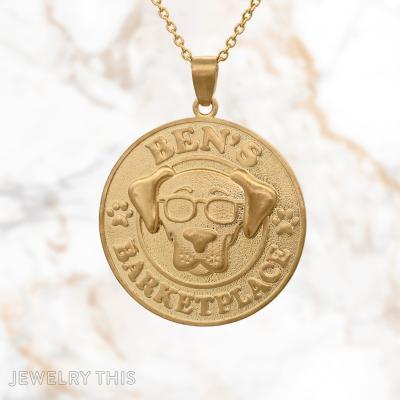
This exquisite custom pendant embodies a heartfelt story, capturing the spirit and personality behind the ...

This pendant takes a cannabis-leaf logo and turns it into a dimensional, wearable piece in ...


This yellow gold circular pendant carries deep familial significance. At its heart, the letters and ...

Capturing familial heritage, this meticulously crafted pendant adorns the family crest with dimensional detail. Made ...
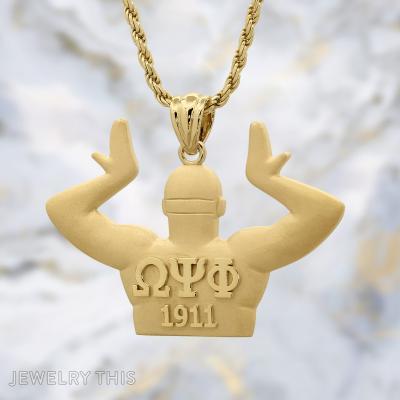
This pendant was designed around a fraternity emblem — a raised 3D figure in the ...


This magnificent white gold crucifix pendant is a masterwork of sacred symbolism and intricate detail. ...



