


Pet Memorial Pendant — Dog Portrait in Diamond Halo
$$$
14k yellow gold, lab diamonds
A client came to us wanting to keep his dog close after eleven years together. Working from his photos, the design went through a few rounds of adjustment — the angle of the head turned, the line of the mouth softened — until it matched the way he remembered his dog's face. When it arrived, he wrote: 'I am truly speechless as to how beautiful it came out. I absolutely LOVE IT.'
'This looks so good, I love it!! I think the matte finish is the right move as the diamond background will offset it nicely. I really love it - you and the team did such a nice job in creating this!' — on seeing the final render
'I am truly speechless as to how beautiful it came out!! I absolutely LOVE IT!' — on delivery
Quick specs
Design type
Primary Metal
Shape / Cut
Primary Stone
Accent Stones
Design Complexity
Intent
Intent: Certainty
Size
Pendant approximately 1 inch (25mm) diameter round.
How they made it distinctive
-
01
Portrait angled slightly rather than straight-on — refined after the client compared the sketch to his own reference photos
-
02
Matte finish applied only to the raised portrait, offsetting the high-polish pave diamond halo around it
-
03
Back engraved with a nickname in script above a paw print, adding a personal mark invisible from the front
-
04
Mouth detail softened from the first sketch so the expression read more natural and less stylized
-
05
Diamond halo chosen specifically to frame the face rather than sit as a plain border
How you'd make it yours
Stone type: this piece uses lab-created diamonds in the halo; a new commission could use moissanite for a similar look at lower cost
Metal: this piece is 14k yellow gold; the same design works in 10k or 18k yellow, white, or rose gold
Portrait finish: this piece uses a matte portrait against a polished bezel; a new piece could reverse that contrast or use an all-polish finish
Engraving: a new commission can carry a different name, phrase, or icon on the back
Size: this piece is about one inch; a new commission can be sized larger or smaller depending on the portrait detail desired
One of a kind: this exact pendant was designed from one client's photographs of his own dog and is not reproduced — a new commission is an original piece inspired by this one
Design changes made
The dog's head was angled rather than shown straight-on after the client compared the first sketch to his reference photos, and the white of the mouth was softened to read less defined and more natural. The finish was also changed from high polish to matte on the portrait itself, offsetting the pave diamond background.
Who this is for
This piece is for someone who wants to carry a pet's actual likeness with them, not just a symbol or a birthstone standing in for the memory. It's especially right if you have clear photos to work from and want the portrait to feel personal and specific rather than generic — something you'd recognize as them at a glance.
How it's made
Once the design was approved, the piece was 3D printed as a wax model, which was then attached to a wax tree and set in a flask. The flask was placed in a kiln to burn out the wax, leaving a hollow mold, and molten 14k yellow gold was cast into the mold under pressure. After cooling, the raw pendant was removed from the mold and prepared for cleaning and finishing.
The raised portrait was given a matte finish to contrast with the surrounding bezel and diamond halo, which were brought to a high polish. The lab-created diamonds were then pave-set by hand around the portrait in a continuous ring, and the back was engraved last with the script lettering and paw print.
Key note
The portrait was deliberately left matte while the bezel and diamond halo were brought to a high polish, a contrast decided late in the design phase specifically so the raised face would read clearly against the sparkle of the pave diamonds.
Pricing guidance
A one-inch memorial pendant with a raised dimensional portrait and a pave diamond halo sits toward the higher end of custom pendant work. Most of the cost comes from the sculptural modeling of the portrait and the labor of pave-setting dozens of small stones by hand, rather than from the metal itself. Stone choice and metal karat are the biggest levers on price from there.
Moves price up ↑
- ↑ Upgrading from lab-created diamonds to natural diamonds in the pave halo
- ↑ Choosing 18k gold instead of 14k or 10k
- ↑ Increasing the pendant size beyond one inch, which increases both metal weight and stone count
- ↑ Adding a two-sided engraving with additional design elements beyond text and a single icon
- ↑ Requesting hand-carved rather than 3D-modeled portrait work for a more painterly texture
Moves price down ↓
- ↓ Switching from lab diamonds to moissanite in the halo
- ↓ Choosing 10k gold instead of 14k
- ↓ Reducing the pendant diameter below one inch, lowering stone count
- ↓ Simplifying the background from a full pave halo to a partial or single-row setting
- ↓ Omitting the back engraving
Questions people ask
Yes, this is a common request and the process starts with a few clear reference photos showing the angle and expression you want captured. The design team builds a 3D model of the face with raised, dimensional detail rather than a flat engraving, and shares a render for feedback before anything is cast. Small adjustments — the angle of the head, the softness of certain features — are normal at this stage and don't add significant time. Most pet portrait pendants take about a week to finalize in the design phase.
Lab-created diamonds are chemically identical to natural diamonds, just grown in a controlled setting rather than mined, and they carry the same hardness and sparkle. Moissanite is a different mineral entirely, slightly more brilliant and fiery in direct light, and noticeably less expensive per stone. For a pave halo made up of many small stones, moissanite is a common way to bring the total cost down while keeping a similar overall look. Both options hold up well to daily wear.
A matte finish is created by lightly texturing the metal surface rather than polishing it smooth, and on 14k gold it holds up well to daily wear. Over months and years of handling, a matte surface will gradually pick up a slight sheen from skin contact and friction, which most wearers find adds character rather than looking worn. It can be re-matted by a jeweler if the owner wants to restore the original texture. It's a durable choice for a piece meant to be worn often.
A pendant with a raised, dimensional portrait and a pave diamond halo falls toward the higher end of custom pendant pricing, mainly because of the sculptural modeling work and the hand-setting of many small stones. The biggest cost factors are the complexity of the portrait, the number and quality of the stones in the halo, and the metal karat chosen. Simpler versions — a smaller size, a partial stone border, or moissanite instead of diamonds — bring the cost down while keeping the same basic design.
From approved design to finished piece, a pendant like this typically takes four to five weeks to produce, plus about a week for the initial design and render process. The timeline includes 3D printing a wax model, casting it in metal, hand-setting the pave diamonds, and finishing steps like the matte texture and back engraving. Clients usually see a photo of the piece in resin form partway through production, before it's cast in metal. Engraving details are usually confirmed early in production so they don't delay the finishing stage.
Yes, the back of a pendant like this has a flat surface that works well for an engraving — a name, a short phrase, or a small icon like a paw print. Font style can be adjusted during the design process; script and block lettering are both common choices. The engraving is typically finalized toward the end of production, after the main piece has been cast, since it's one of the last finishing steps. There's no meaningful cost difference for most short engravings on a pendant this size.
The render gives a very close approximation, but the actual color and luster of yellow gold can vary slightly from how it appears on a screen, partly due to lighting and screen calibration. In person, 14k yellow gold tends to have a warmer, richer tone than renders sometimes show. This is a normal and expected difference, not a sign of an error in production. Most clients find the real piece looks even better in hand than the digital render suggested.
Yes, a design like this can be produced in different gold karats, including 10k, 14k, or 18k yellow gold, or in white or rose gold if a different tone is preferred. The karat affects both durability and cost, with higher karats containing more pure gold and typically costing more. The sculptural portrait and pave setting process work the same way regardless of which gold karat is chosen. The choice mostly comes down to color preference and budget.
Explore Similar Creations
Every masterpiece starts with a spark. Explore how our clients raw ideas - sketches, heirlooms, inspirations - were transformed into bespoke works of arts.
This pendant takes a bold, recognizable symbol — the radioactive trefoil — and reworks it ...

Inspired by his girlfriend’s deep love for Kurt Vonnegut’s “Sirens of Titan,” this stunning 1.5-inch ...

This basketball and hoop pendant was designed for a basketball enthusiast. Crafted in sterling silver ...

This coin-style pendant was designed to hold two passions on one piece: a rearing horse ...

This pendant takes the shape of a mirrored pair of antlers, meeting at a center ...
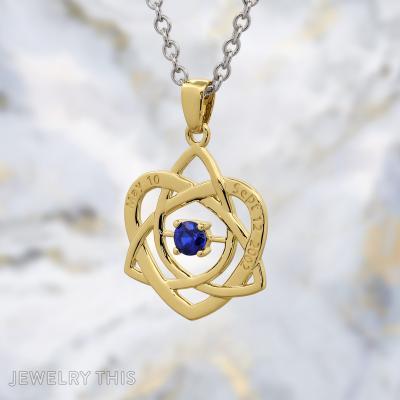
This pendant takes an interlocking Celtic-knot heart design and reworks it in 14k yellow gold, ...

This custom silver pendant is a meticulously crafted piece inspired by the client’s logo. Measuring ...

This pendant takes a classic fleur-de-lis motif and reworks it into a bolder, more masculine ...

This captivating 14karat rose gold pendant showcases the natural beauty of a kite-shaped moss agate ...

Skillfully crafted in sterling silver, this round pendant showcases a magnificent three-eyed owl in 3-dimensional ...
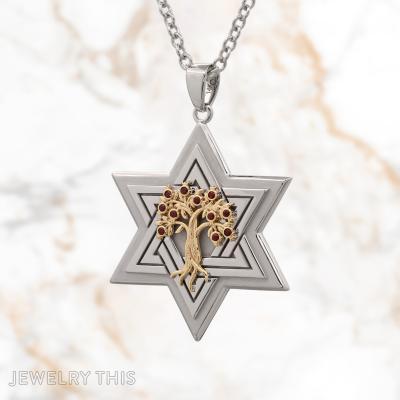
A profound expression of heritage and spiritual connection, this custom pendant is a celebration of ...
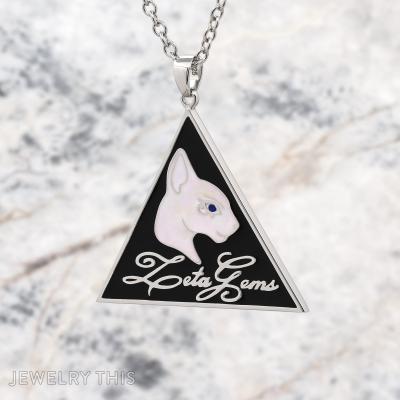
Celebrate the bond of love and creativity with this uniquely crafted pendant, designed as a ...



