

Biohazard Symbol Pendant with Initial in Sterling Silver
$
Sterling silver
P. wanted a pendant built around a radioactive symbol with his own initial worked into it — a piece of personal identity rather than a straightforward monogram. The design came together in a single render, approved without changes, and cast in polished sterling silver. When it arrived, he wrote: 'I am very happy with how my pendant turned out. It was exactly what I wanted.'
'Nice, looks great' — on seeing the first render
'I am very happy with how my pendant turned out. It was exactly what I wanted. I will definitely use your services in the future for my next creation.' — on delivery
Quick specs
Design type
Primary Metal
Primary Stone
Accent Stones
Design Complexity
Intent: Certainty
Size
Pendant approximately 1in (25mm); chain not specified (client has own chain).
How they made it distinctive
-
01
Client's initial P built directly into the negative space of the symbol rather than added as separate engraving
-
02
Fully open cut-out silhouette rather than a solid backing, which required extra structural modeling to keep thin points strong
-
03
Polished mirror finish carried consistently across every interior edge of the design, not just the outer surface
-
04
Design approved in a single render with no revisions, reflecting a clear initial brief
-
05
Sized to work with a chain the client already owned rather than requiring a new one
How you'd make it yours
Metal: this piece is sterling silver — a new commission could use 14k or 18k gold, or gold plating for a warmer tone
Finish: this piece is full mirror polish — a matte or brushed finish could give a more subdued look
Letter integration: this piece builds a single initial into the symbol's negative space — a new piece could use a different letter or a small word
Size: this piece is about one inch — a new commission could be scaled larger or smaller depending on how bold the wearer wants it
Accent: this piece has no stone — a new piece could add a small gem set into part of the symbol's structure
One of a kind: this exact pendant was designed for one client and is not reproduced — a new commission is an original piece inspired by this one, not a copy
Design changes made
Design matched the initial brief without major changes.
Who this is for
This piece is for someone who wants jewelry that reads as a personal mark, not just a decorative shape — someone drawn to bold, graphic symbols rather than traditional motifs. It's especially right if you want your own initial worked seamlessly into a design rather than engraved as an afterthought.
How it's made
Once the design was approved, the team produced a 3D digital model and then a 3D-printed wax/resin version of the pendant, which was shared with the client as a preview before any metal was committed. That model was attached to a wax tree, invested in plaster, and fired in a kiln to burn out the wax and leave a hollow mold. Molten sterling silver was then cast into the mold under pressure to form the raw pendant.
After casting, the piece was removed from the mold, cleaned, and hand-finished to bring out the open cut-out silhouette of the symbol. The entire surface was polished to a high-shine mirror finish, with particular attention paid to the interior edges of the negative-space cutouts — including the P — where the metal is thinnest and most visible against skin or clothing. No stones were set; the finishing work is entirely about clean, even edges and consistent shine across every facet of the open design.
Key note
The client's initial isn't engraved onto the surface — it's built into the negative space of the symbol itself, so it had to be modeled as part of the same continuous cut-out structure rather than added afterward.
Pricing guidance
A symbol-based sterling silver pendant of moderate design complexity like this one sits toward the lower end of custom work overall, since there is no stone setting involved. Most of the cost comes from the 3D modeling work required to turn a flat symbol into a clean, structurally sound open silhouette, plus the hand-finishing needed on all the interior cut edges. Metal choice is the main lever that would move the price from here.
Moves price up ↑
- ↑ Upgrading from sterling silver to 14k or 18k gold, or gold plating over the silver base
- ↑ Increasing the pendant size beyond one inch, which requires more metal and more finishing surface area
- ↑ Adding a gemstone accent set into part of the symbol's structure
- ↑ Adding engraving or texture to the flat surfaces of the trefoil blades
- ↑ Requesting a two-tone finish, such as black rhodium plating on part of the design
Moves price down ↓
- ↓ Reducing the pendant size to make it smaller and lighter to cast and finish
- ↓ Simplifying the cut-out pattern to reduce the number of interior edges requiring hand-finishing
- ↓ Choosing a matte finish instead of full mirror polish, which reduces finishing time
- ↓ Skipping the initial letter integration in favor of a plain symbol
- ↓ Omitting the chain and using an existing one, as this client did
Questions people ask
Yes, a graphic symbol like this translates well into jewelry because it is built from clean, bold lines that hold up as an open cut-out silhouette. The design starts as a 3D digital model so the studio can check that every section of metal is structurally sound before casting. Sharp angles and thin points, like the ones on a radioactive trefoil, need slightly thicker walls in metal than they would on paper so they don't bend or snap during daily wear. The result is a piece that reads clearly as the symbol from a normal viewing distance while still being durable enough to wear regularly.
Yes, this is done by building the letter into the negative space of the symbol itself, rather than adding it as separate engraving after casting. It requires modeling the letter and the symbol together as one continuous cut-out shape from the start, since the metal walls around the letter need to connect properly to the rest of the structure. This approach gives a cleaner look than engraving because the letter appears to be part of the symbol's original form. It does add some complexity to the 3D modeling stage compared to a plain symbol pendant.
Sterling silver (925 silver) is a solid choice for daily wear, though it will tarnish over time with exposure to air, moisture, and skin oils, especially in the recessed interior edges of an open cut-out design. Regular polishing with a silver cloth keeps the shine consistent and is a normal part of ownership rather than a sign of a problem. It's softer than gold, so a pendant with fine points or thin sections benefits from a bit of care to avoid bending. Many clients choose to have a silver piece gold-plated later if they want a different look without recasting the piece.
A symbol-based sterling silver pendant with no stones sits toward the lower end of custom pricing, since the main cost driver is the 3D design and finishing work rather than gemstones. Pendants that need a fully open cut-out silhouette, like a symbol with interior negative space, take more modeling time than a solid flat pendant because every edge needs to be checked for strength before casting. Size, metal choice, and finish (matte versus polished) are the biggest factors that would move the price up or down from there. Adding a gemstone or switching to gold would push the cost higher.
The process typically takes about one week for the design phase, where the studio builds a 3D model and sends a photorealistic render for approval before anything is cast. Once the design is approved, production takes roughly three to four weeks, covering wax modeling, casting, and hand-finishing. Complex open cut-out designs like this one may include an extra resin or wax preview step so the client can see the piece's exact form before it's committed to metal. Total turnaround from approved design to a finished, shipped piece generally lands within that four-to-five-week window.
Yes, the same open cut-out design can be cast in 14k or 18k yellow, white, or rose gold instead of sterling silver, using the same 3D model. Gold is a heavier, more valuable metal, so the cost is meaningfully higher than silver for a piece of the same size. Gold also holds a polished shine longer than silver without tarnishing, which can matter for a piece with a lot of exposed interior edges. Gold-plating a silver piece is a lower-cost middle option that gives a gold look without the full cost of solid gold.
It depends on what the client requests — some clients already own a chain they want to use, while others need one sourced as part of the order. Chain options are typically presented during the design phase, including different chain styles and widths, at an additional cost beyond the base pendant price. The bail (the loop the chain passes through) is sized during the 3D modeling stage, so it helps to confirm chain width before the design is finalized. A pendant like this, with a rounded bail, works with most standard chain styles.
Explore Similar Creations
Every masterpiece starts with a spark. Explore how our clients raw ideas - sketches, heirlooms, inspirations - were transformed into bespoke works of arts.
This pendant translates a black belt logo into a wearable, dimensional piece rather than a ...

This unique pendant feature the next2play logo with a p rise Pheonix. Measuring one inch ...


This sterling silver custom pendant was created to cherish the memory of the client’s beloved ...

This sterling silver pendant takes the classic sun-face motif and renders it with real dimension ...

This stylish Sterling Silver pendant is sure to make a statement. The pendant showcases the ...

Crafted with meticulous detail, this custom rectangular bar pendant exudes elegance and spiritual significance. Adorning ...

This custom logo pendant is a striking 2 inches in size, meticulously crafted in sterling ...
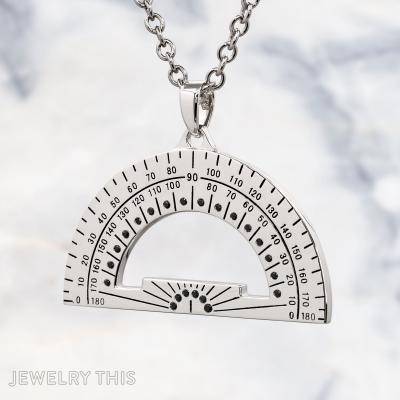
This pendant takes the recognizable shape of a classroom protractor and renders it in sterling ...

18k white gold celtic cross pendant. Personalized on back with engraving. Pendant: 1.5inches tall. Hanging ...

Behold our Silver Phoenix Pendant, a captivating embodiment of mythical elegance. In a 1.5-inch size ...

This stunning 10k white gold bar pendant holds profound significance. The pendant features coordinates on ...



