

Cut-Out Fleur-de-Lis Pendant in 10K Yellow Gold
$$$
10k yellow gold
A client wanted a large fleur-de-lis pendant reworked from a smaller piece he already owned, aiming for a bolder, more masculine version closer in spirit to a sports team emblem than the original feminine design. After an early sketch came back too heavy and too delicate for his taste, the team rebuilt it with a fully hollow back to hit the size he wanted without the weight. When it arrived, he wrote: 'It does look beautiful... Thank you all so much. I am very pleased and it even arrived early so I get to wear it for the game this weekend.'
'It does look beautiful.' — on seeing the finished piece photo before delivery
'Thank you all so much. I am very pleased and it even arrived early so I get to wear it for the game this weekend. You guys rock!' — on delivery
Quick specs
Design type
Primary Metal
Primary Stone
Accent Stones
Style
Design Complexity
Intent: Certainty
Size
Pendant 50mm x 30mm x 1mm. Bale sized for 6mm chain. Finished weight approximately 11.1 grams.
How they made it distinctive
-
01
Fully hollowed back construction chosen specifically to hit a large 2-inch size without excessive weight
-
02
Design reworked from an initial sketch the client felt was too feminine, toward a bolder, thicker-lined interpretation closer to an emblem or logo
-
03
Bale sized specifically for a 6mm chain the client already owns rather than a standard width
-
04
Left intentionally stone-free after the client saw the clean polished version and preferred it plain
-
05
Scaled up from a smaller fleur-de-lis pendant the client already owned but found too small for his chain
How you'd make it yours
Stone: this piece is left plain; a new commission could add a center stone such as black cubic zirconia or onyx
Metal: this piece is 10k yellow gold; the same design works in 14k yellow gold or a silver-with-gold-plate build at a different cost point
Size: this piece is sized to 2 inches for this wearer; a new piece is sized to the next wearer's preference
Bale: sized here for a 6mm chain; a new commission can be sized to any chain width the wearer owns
Construction: this piece uses a hollow back to manage weight; a solid back is possible but adds significant weight
One of a kind: this exact pendant was designed for one client and is not reproduced — a new commission is an original piece inspired by this one, not a copy
Design changes made
The first design direction was rejected as too feminine and too heavy; the team reworked it with a fully hollowed back construction to preserve the requested 2-inch size while cutting the weight significantly, based on the client's own lightweight cross pendant as a reference point.
Who this is for
This piece is for someone who wants a bold symbolic pendant with real presence, not a delicate ornamental one. It's especially right if you already have a design you love but it reads too small or too feminine for how you want to wear it, and you want it rebuilt bigger and bolder without ending up with something heavy or impractical for daily wear.
How it's made
Once the hollow-back design was approved, the piece was 3D printed in wax and attached to a wax tree inside a flask. The flask was invested in plaster and fired in a kiln to burn out the wax, leaving a precise hollow mold. Molten 10k yellow gold was then cast into that mold under pressure, producing the raw pendant in its rough-cast state.
After casting, the pendant was cleaned of its casting support remnants and polished to a uniform high shine across its many fine lines and angles. Because the fleur-de-lis shape has a large surface area with intricate edges, finishing required more extensive polishing than a simpler pendant would need, removing additional material in the process. No stones were set in the final piece, keeping the finish clean and unbroken across the cut-out silhouette.
Key note
The pendant's finished weight came in lighter than the initial cast estimate specifically because its many fine lines and angled surfaces required more extensive polishing than a simpler shape, removing more metal than standard finishing would.
Pricing guidance
A large-scale cut-out pendant like this sits in the mid range for custom gold pendants, mainly because size drives material cost directly in a cast piece. Labor for a hollow-back build to manage weight, plus the extensive polishing a multi-angled cut-out design requires, are the other major cost factors. Metal karat and overall scale are what move the price most from there.
Moves price up ↑
- ↑ Increasing the pendant size beyond 2 inches, which increases metal weight even with a hollow back
- ↑ Upgrading from 10k to 14k or 18k yellow gold
- ↑ Adding stones across the surface, which requires either larger stones or many smaller ones to cover the design
- ↑ Choosing a solid (non-hollowed) back, which significantly increases metal weight and cost
- ↑ Requesting a heavier-gauge bale to fit a wider chain
Moves price down ↓
- ↓ Reducing the overall pendant size, which lowers metal weight proportionally
- ↓ Choosing sterling silver with gold plating instead of solid 10k gold
- ↓ Keeping the design stone-free, which avoids setting labor and stone cost entirely
- ↓ Simplifying the cut-out detail to reduce polishing time and labor
- ↓ Choosing a thinner profile depth for the pendant body
Questions people ask
Yes, this is a common request for large cast pendants, and the solution is usually a hollow-back construction. Hollowing out the back of the piece during the wax modeling stage removes significant metal weight while preserving the full visible size and detail from the front. On this pendant, a fully hollow back brought a 2-inch piece down to roughly half the weight of an equivalent solid casting. The tradeoff is that hollow-back pieces are slightly less rigid than solid ones, though this is rarely noticeable in daily wear.
Weight estimates for cast jewelry are based on the gross weight of the 3D model before casting and finishing. During polishing, a jeweler typically removes 10-15% of that gross weight as part of standard cleanup, and pieces with a lot of fine detail or many angled surfaces can lose even more than that because they require more extensive finishing. A pendant with a large, intricate cut-out shape will generally see a bigger weight reduction than a simple smooth band. This is standard practice across cast jewelry, not a sign of a problem with the piece.
A large cut-out pendant in 10k gold sits in the mid range for custom pendant work, largely because size and metal weight are the primary cost drivers in a cast piece like this. Choosing a hollow back helps manage that cost by reducing the gold needed without shrinking the visible design. Metal karat, overall scale, and whether stones are added are the main variables that move the price from there. A smaller version of the same design, or one in silver with gold plating, would fall toward the lower end of custom pendant pricing.
Yes, 10k gold is actually one of the more durable gold alloys because it contains a higher percentage of other metals mixed with the gold, making it harder and more scratch-resistant than 14k or 18k. It is a good choice for a pendant meant for regular daily wear. The tradeoff is a slightly less rich yellow color compared to higher-karat gold, though it still reads as warm, classic gold. It also typically costs less than 14k or 18k for the same design.
Yes, the fleur-de-lis motif can be adjusted substantially in proportion and line weight to read as bolder and more masculine. On this piece, the client specifically asked for a thicker, more substantial interpretation closer to the look of an emblem or team logo rather than a traditional ornamental fleur-de-lis. This was achieved by thickening the central band and lobes and simplifying the decorative flourishes of the classic shape. The result keeps the recognizable fleur-de-lis silhouette while shifting the overall feel toward something bolder.
Yes, a center stone such as a black cubic zirconia can be set into a cut-out pendant design like this one, typically placed at a central junction point in the design. In this specific piece, the client ultimately chose to leave the pendant stone-free after seeing the plain polished version, preferring the clean look of the metal alone. Adding a stone would have required adjusting the design slightly to create a secure setting point. Stone-free designs also avoid the added cost of stone sourcing and setting labor.
A custom pendant like this typically takes about one week for the design and render approval stage, followed by three to four weeks for production once the design is approved. Production includes 3D wax printing, casting, and finishing, which for a detailed cut-out piece involves more extensive polishing time than a simpler design. Clients are usually updated with a resin or wax photo partway through production before the final cast and polish. Total turnaround from deposit to delivery generally falls within five to six weeks.
Yes, pendants are commonly designed to work with a chain the client already owns rather than ordering a new one. The key detail to confirm upfront is the chain's width, since the pendant's bale needs to be sized to fit it. On this piece, the bale was specifically sized to accommodate a 6mm chain the client planned to use, and no chain was included in the order itself.
Explore Similar Creations
Every masterpiece starts with a spark. Explore how our clients raw ideas - sketches, heirlooms, inspirations - were transformed into bespoke works of arts.
This elegant gold pendant features a timeless circular frame with a modern, artistic twist. At ...
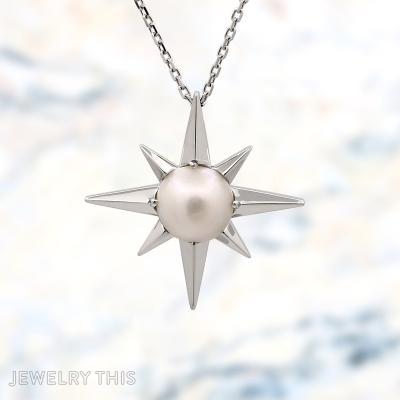
This stunning custom pendant features a striking starburst design crafted in polished silver, beautifully showcasing ...
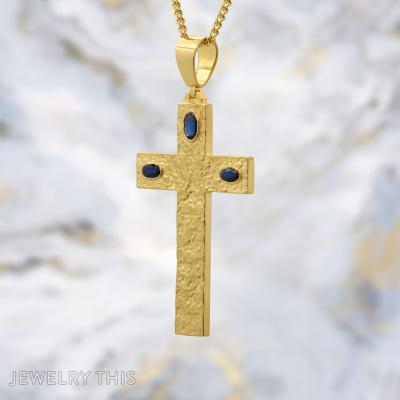
This pendant carries a story of love, memory, and faith. Created as a gift from ...


Bold and full of spirit, this “Long Live Cowgirls” pendant is a tribute to the ...

This circle pendant was designed to hold three children’s names in one continuous, unbroken shape. ...

This custom sterling silver logo pendant is a bold statement piece, measuring one inch in ...

Embrace elegance and personal significance with an 0.75-inch 18kt yellow gold delicate horseshoe charm. This ...

Inspired by his girlfriend’s deep love for Kurt Vonnegut’s “Sirens of Titan,” this stunning 1.5-inch ...

This pendant is built from two overlapping circular forms, each paired with a solid directional ...

14k yellow gold pendant with relief style viking wolf design on one side and engraved ...
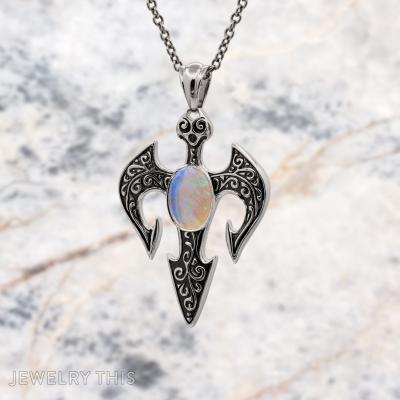
This striking men’s pendant showcases a powerful Poseidon’s trident design, expertly crafted in sterling silver ...



