


Birthstone Clover Pendant — Recreated Lost Family Piece
$$
Sterling silver, amethyst, lab-created ruby, lab-created diamond, lab-created emerald
A mother wanted to replace a birthstone pendant her daughter had given her after the original was lost, working from a photo of the piece she remembered. The design came together as a four-petal pendant holding a birthstone for each of her four children — amethyst, ruby, diamond, and emerald. She kept the compact size even after asking about larger stones, once she saw how much the cost and scale would shift.
'It looks lovely' — on seeing the first render
'Looks good' — on seeing the resin model preview
Quick specs
Design type
Primary Metal
Shape / Cut
Primary Stone
Accent Stones
Design Complexity
Intent: Certainty
Size
Pendant approximately 19mm (excluding bail); stones 3mm round.
How they made it distinctive
-
01
Four-petal flower shape chosen specifically to hold one birthstone per child in a compact cluster
-
02
Beaded milgrain edging on both the petals and the bail adds detail texture not found on a plain bar pendant
-
03
Lab-created ruby, diamond, and emerald paired with a natural amethyst to balance cost and color consistency
-
04
Oxidized finish applied to the recessed beading to make the texture stand out against the polished petals
-
05
Kept at a compact 19mm size by choice, after comparing it against a larger stone option
How you'd make it yours
Stone count: this piece uses 4 petals for 4 family members — a new commission could use 3, 5, or more petals for a different family size
Stone type: this piece uses one natural amethyst and lab-created ruby, diamond, and emerald — a new piece could use all-natural or all-lab stones
Metal: this piece is sterling silver — the same petal design works in 14k yellow, white, or rose gold
Finish: the oxidized dark detailing could be left bright polished instead for a cleaner, more modern look
One of a kind: this exact pendant was designed for one client's four children and is not reproduced — a new commission is an original piece inspired by this one, not a copy
Design changes made
The client asked to enlarge the stones from 3mm to 5mm, but after learning this would increase the pendant's overall size and cost, she chose to keep the original 19mm size and 3mm stones.
Who this is for
This piece is for someone who wants every child represented in one small, wearable symbol rather than a separate piece for each. It's especially right for someone replacing a meaningful gift they lost, who wants the sentiment restored even if the exact original can't be perfectly matched.
How it's made
Once the design was approved, a 3D-printed wax model was produced and mounted to a wax tree inside a flask, then invested in plaster and fired in a kiln to burn out the wax, leaving a hollow mold. Molten sterling silver was cast into the mold, then the piece was extracted, cleaned, and polished. A resin printed preview was shared with the client before casting so she could confirm the design held its shape at the intended scale.
After casting, the piece was given an oxidized finish to darken the recesses of the beaded milgrain edging on the petals and bail, making the detailed texture stand out against the polished high points. The four 3mm round stones — amethyst, lab-created ruby, lab-created diamond, and lab-created emerald — were then set individually into their petal settings by hand, each secured with a beaded prong border.
Key note
The oxidized finish is applied before stone setting so the darkening agent only reaches the recessed milgrain detail and never touches the stones themselves.
Pricing guidance
A small sterling silver multi-stone family pendant like this sits toward the lower end of the price range for custom birthstone pieces. Most of the cost comes from the detailed beaded edging and the hand-setting of four separate small stones rather than the metal itself. Stone size and count are the biggest levers on price from there.
Moves price up ↑
- ↑ Increasing stone size from 3mm to 4mm or 5mm, which also requires enlarging the overall pendant
- ↑ Upgrading from sterling silver to 14k gold or gold-plated silver
- ↑ Choosing natural colored gemstones instead of lab-created ones for the ruby and emerald
- ↑ Adding a fifth or sixth stone to represent additional family members
- ↑ Upgrading the chain to a solid gold or heavier-gauge silver option
Moves price down ↓
- ↓ Reducing the stone count to two or three family members instead of four
- ↓ Keeping stones at the smaller 3mm size rather than sizing up
- ↓ Choosing a simpler bail without the beaded milgrain detail
- ↓ Using cubic zirconia in place of lab-created diamond for the accent stone
- ↓ Omitting the oxidized finish step and leaving the silver bright polished throughout
Questions people ask
This pendant uses a natural amethyst, a lab-created ruby, a lab-created diamond, and a lab-created emerald, each set into its own petal. Lab-created stones share the same chemical composition and hardness as their natural counterparts, so they wear and look the same day to day. Amethyst is a relatively hard stone at 7 on the Mohs scale, making it suitable for a pendant that isn't subject to the daily impact a ring would see. Mixing one natural stone with lab-created accents is common in multi-stone family pieces where cost and color consistency both matter.
Sterling silver (.925) is durable for pendant wear since pendants see far less impact and abrasion than rings or bracelets. It can tarnish over time with air exposure, especially in humid climates, but regular wear and occasional polishing keeps it bright. This piece also has an oxidized finish in its recessed detail, which is a darkened patina that is more stable over time than bright polished silver since it's meant to look aged rather than mirror-bright. A silver polishing cloth every few months is typically enough upkeep.
Yes, a four-petal design like this is naturally suited to four stones, but the same flower or clover silhouette can be adapted to three stones by using a three-petal shape, or expanded with a different layout for five or more family members. Each additional stone adds material and setting labor. The key constraint is that the petal shape and stone count should be decided together, since a four-petal design can't simply have a fifth stone added without changing the structure.
A sterling silver multi-stone pendant with four small round stones and detailed beaded edging falls toward the lower end of the price range for custom birthstone jewelry. The main cost driver is the hand-setting of multiple individual stones rather than the silver itself. Moving to larger stones, a gold setting, or natural colored gemstones instead of lab-created ones would push the price higher.
The full process from design approval to shipping typically takes around four to five weeks on a standard timeline. The first week covers the sketch, 3D model, and rendered design for approval. Once approved, production including wax printing, casting, finishing, and stone setting takes roughly three to four more weeks before the piece ships.
Yes, but increasing stone size usually requires increasing the overall size of the piece to keep the proportions balanced, and that increases both the material cost and the price. On a piece like this, moving from 3mm to 4mm stones would have meaningfully increased both the pendant's footprint and its cost. It's worth deciding on stone scale early, since larger stones mid-design can change the whole structure rather than being a simple swap.
A four-petal or flower-shaped pendant groups the birthstones into a compact, symmetrical cluster rather than spacing them in a line, which keeps the overall footprint small even with multiple stones. This style reads more as a piece of jewelry first and a symbolic arrangement second, compared to a bar pendant where the stones are more obviously lined up to be counted. The beaded milgrain edging on a design like this also adds texture that a flat bar pendant typically doesn't have.
Yes, the same four-petal design with beaded milgrain edging can be produced in yellow, white, or rose gold rather than sterling silver. The stone setting and oxidized-finish technique both translate to gold, though an oxidized finish reads slightly differently against gold's warmer tone than against silver. Gold will increase the overall cost compared to sterling silver due to material cost alone.
Explore Similar Creations
Every masterpiece starts with a spark. Explore how our clients raw ideas - sketches, heirlooms, inspirations - were transformed into bespoke works of arts.
This pendant takes the form of a lion’s head rendered in sterling silver, with a ...

This sterling silver lighthouse pendant captures the charm of the sea. This stunning piece is ...

This double-sided pendant was designed from a client-supplied reference image, combining two distinct design languages ...

This pendant takes a classic fleur-de-lis motif and reworks it into a bolder, more masculine ...
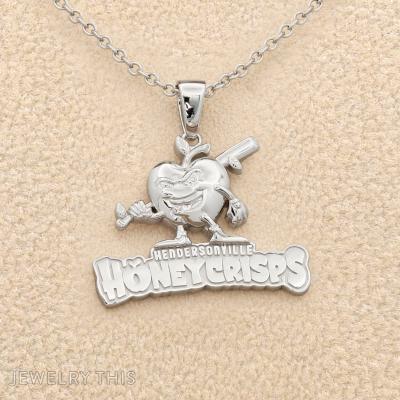
A fun pendant created for a baseball team logo, featuring the Hendersonville Honeycrisps mascot. Meticulously ...


This sterling silver custom pendant was designed to combine the client’s passions for fishing and ...

This sterling silver pendant is a unique representation of a barber shop logo. The design ...

This custom pendant was designed with deep personal significance for the client, featuring a skull ...

Crafted as a heartfelt tribute to his wife and their four children, this custom pendant ...

This simple yet stunning 14karat gold pendant features the bold look of an equilateral triangle ...

This sterling silver pectoral cross pendant is a striking symbol of faith and devotion. With ...



