


Sterling Silver Lion Head Pendant with Dreadlock Mane Detail
$$$
Sterling silver
A client wanted a specific lion-mane design style he had seen in a reference photo and worked with the team to find a version that could be made without reproducing any copyrighted artwork. Once a safe reference was found, he asked for the mane's cord-like texture to be captured in as much detail as possible and for the lion's face to look to the right. When the finished piece shipped, he wrote simply: 'Thank you again.'
'Love how it is coming out, you can do as you need to get it looking as needed.' — on seeing the first render
'Thank you again.' — on delivery
Quick specs
Design type
Primary Metal
Primary Stone
Accent Stones
Style
Design Complexity
Intent: Certainty
Size
Pendant approximately 3in (top of head to bottom); sized to fit an 8mm chain.
How they made it distinctive
-
01
Half-3D cut-out construction chosen specifically so the lion's head stands forward from an open background rather than sitting on a solid plate
-
02
Mane rendered in a dense, cord-like texture with a matte finish to maximize the level of surface detail visible
-
03
Face polished to a high shine specifically to contrast against the matte mane, sharpening the dimensional read of the piece
-
04
Sized and bailed specifically to balance with and fit an 8mm thick chain the client already owned
-
05
Final 3-inch scale and rightward-facing direction were both specified by the client during the design process rather than left as defaults
How you'd make it yours
Metal: this piece is sterling silver; a new commission could use gold-plated silver or solid gold for a different tone
Background: this piece uses a cut-out design; a new piece could use a solid backing plate instead
Finish: this piece contrasts matte mane with polished face; a new commission could use a uniform finish throughout
Size: this piece is sized at roughly 3 inches for an 8mm chain; a new piece is sized to its own wearer's chain
Facial direction: this piece faces right; a new commission could face left or center depending on preference
One of a kind: this exact pendant was designed for one client's chain and specifications and is not reproduced — a new commission is an original piece inspired by this one, not a copy
Design changes made
The client requested a strictly sterling silver build (rather than gold-plated) to match an existing silver chain, and the final size grew from an initial 2-inch concept to a full 3-inch pendant at his request. The lion's face direction was also specified during production — turned to the right rather than left or center.
Who this is for
This piece is for someone who wants a bold, sculptural statement pendant rather than something delicate or understated. It's especially right for anyone building a look around a thick chain who wants a piece substantial enough to match it, and who appreciates detailed, textured metalwork over a smooth or minimal design.
How it's made
Once the 3D design was approved, the model was 3D-printed in wax and attached to a wax tree inside a flask. The flask was invested in plaster and fired in a kiln to burn out the wax, leaving a hollow mold. Molten sterling silver was then cast into that mold under pressure and allowed to cool before the raw piece was removed for finishing.
After casting, the pendant was cleaned and prepared in two distinct finish zones: the dense, cord-like mane was given a matte texture to emphasize the dimensional locks, while the lion's face was polished to a high mirror shine for contrast. The cut-out background was then cleaned up by hand so the half-3D head stands forward from the open space behind it, and the bail was finished to comfortably fit the client's existing 8mm chain.
Key note
The matte-versus-polish contrast between the mane and the face was a deliberate finishing decision — added specifically to make the carved texture of the mane read more clearly, the same technique shown to the client in a reference example from another piece.
Pricing guidance
A large, highly textured sterling silver pendant like this sits toward the upper end of pricing for pendant work, driven mainly by size and surface detail rather than stone cost since there is no center stone. The labor-intensive texture work on the mane and the half-dimensional cut-out construction are the main cost drivers. Metal choice and overall scale are the biggest levers from there.
Moves price up ↑
- ↑ Increasing the pendant size beyond 3 inches, which requires more metal and more finishing time
- ↑ Upgrading from sterling silver to 10k or 14k gold
- ↑ Adding a fully 3D (rather than half-3D) sculptural treatment
- ↑ Adding gemstone eyes or other stone accents
- ↑ Requesting a solid (non-cut-out) backing, which increases metal weight and casting complexity
Moves price down ↓
- ↓ Reducing the pendant to a smaller size, such as 1.5–2 inches
- ↓ Choosing gold-plated sterling silver instead of solid gold for a similar look at lower material cost
- ↓ Simplifying the mane texture to a smoother or less detailed pattern
- ↓ Keeping the cut-out (rather than solid) background, which uses less metal
- ↓ Choosing a flat or engraved treatment instead of dimensional sculpting
Questions people ask
Yes, but the finished piece has to be meaningfully different from any copyrighted artwork, logo, or character. If a client brings a reference image that is protected, the design team will look for an alternative reference or work from a description and inspiration photos instead. The final design is original even when it's inspired by a specific look the client liked. This keeps the piece legally producible while still capturing the style the client wanted.
Sterling silver (.925) is a durable metal for a pendant of this size and holds fine detail well through the casting process. It will tarnish over time with air exposure, which is normal for silver, and can be restored with regular polishing. The dimensional, cut-out design does not make the piece structurally weaker as long as the connecting points are cast with enough thickness, which is confirmed during the 3D design stage. Daily wear is generally fine, though very rough handling could bend thin raised elements over time.
A pendant at this size with this level of texture and dimensional work sits toward the higher end of pendant pricing, mainly because of the size and the labor involved in the mane's detail rather than any stone cost. There is no center stone, so the price is driven by metal weight and finishing time rather than gem selection. Smaller or simpler versions of a similar design would cost meaningfully less. Exact pricing depends on final size and metal choice.
The design phase typically takes about a week, during which a 3D render is created and refined based on feedback. Once the design is approved, production takes roughly three to four weeks, including 3D printing a wax model, casting, and hand-finishing. A resin preview of the printed model may be shared partway through production so the client can see the piece before it's cast in metal. Total time from deposit to shipping is usually five to six weeks.
Yes, the bail (the loop the chain passes through) can be sized to fit an existing chain. It helps to send a photo of the chain next to a coin or ruler so the exact link width can be measured and the bail built to match. This is especially important for thicker chains, like 8mm or larger link styles, where a standard bail would be too narrow. Confirming chain width before the piece is cast avoids needing to rework the bail afterward.
A flat pendant is engraved or has raised detail on a single plane, similar to a coin or medallion. A half-3D design, like this lion head, has the face and features sculpted with real depth and dimension while the piece still sits relatively close to the chest, rather than being a free-standing fully round sculpture. This gives a more lifelike, dimensional look without the extra weight and cost of a fully 3D piece. It's a common middle ground for animal and portrait pendants where realism matters but the piece still needs to be wearable.
Yes, this is called a cut-out design, where the background around the main figure is open rather than a solid metal plate. It reduces the overall metal weight, which can bring the cost down slightly, and gives the piece a lighter, more sculptural look since the figure appears to float rather than sit on a backing. The trade-off is that cut-out designs require careful casting to make sure thin connecting points are strong enough for daily wear. This style works particularly well for detailed subjects like an animal head, where the open space helps the main shape stand out.
Yes, a sterling silver piece can be gold-plated after the fact, though it's more efficient to decide on plating before the piece is cast and finished. Gold plating over silver wears down gradually with daily use, especially at points of contact, and will eventually need to be reapplied to stay bright. If a bright gold look is wanted long-term without replating maintenance, solid gold is the more permanent option. Choosing solid sterling silver, as in this piece, avoids the plating-maintenance question entirely.
Explore Similar Creations
Every masterpiece starts with a spark. Explore how our clients raw ideas - sketches, heirlooms, inspirations - were transformed into bespoke works of arts.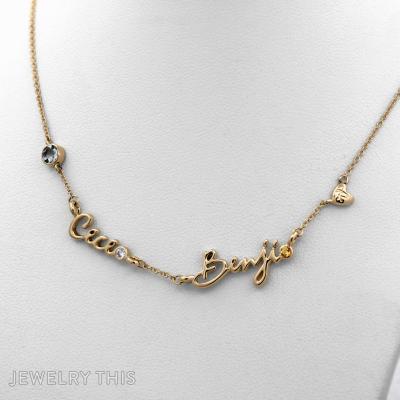
This exquisite necklace, a birthday gift for a cherished wife, elegantly intertwines her children’s names ...

This 14k yellow gold trinity knot pendant is a beautiful symbol of everlasting love and ...

This sterling silver pendant features the striking logo of a Motorcycle Club. The design focus ...

This custom pendant features a beautifully crafted Filipino sun, symbolizing hope and unity, with a ...
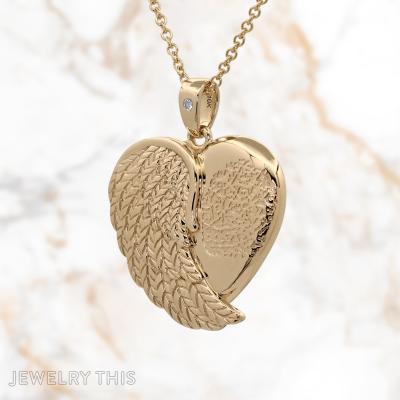
This exquisite custom pendant is a heartfelt tribute to a cherished family patriarch and veteran. ...

In a gleaming dance of elegance, behold the captivating custom pendant that celebrates the cherished ...

Introducing this striking 1-inch unicursal hexagram cut out pendant, crafted with precision in silver and ...

This crescent moon pendant was designed as a family piece — each birthstone marking a ...

This custom-made pendant is a truly unique piece of jewelry that perfectly blends technology and ...

This double heart pendant commemorates a daughter’s loss of her father. The 1 inch Silver ...

This stunning pair of Sterling Silver pendants celebrates feminine energy and empowerment. One pendant features ...

This minimalist gold pendant is a simple yet elegant design, featuring the word ‘Just’ in ...



