


Two-Tone Wolf Pendant with Engraved Geometric Reverse
$
Sterling silver, gold plating
J. came to us with a reference image of a wolf design and a separate geometric sun motif, wanting both combined into a single pendant he could wear every day. He went back and forth on exactly how the gold plating should be distributed across the two faces before landing on his original instinct — raised elements in gold, textured background in silver. When it arrived, he wrote simply: 'This looks awesome! Thank you!'
'This looks awesome! Thank you!' — on seeing the finished piece shipped
'Yes! I received it yesterday, looks great!' — on delivery
Quick specs
Design type
Primary Metal
Secondary Metal
Primary Stone
Accent Stones
Design Complexity
Intent: Certainty
Size
Pendant 38mm diameter. Chain: cable style, 20 inches, sterling silver.
How they made it distinctive
-
01
Double-sided design combining a 3D raised wolf head with a flat geometric sunburst motif on the reverse
-
02
Selective gold plating applied only to raised elements, leaving the textured background in natural silver for contrast
-
03
Textured matte finish chosen specifically over high polish to give the piece a more rustic feel
-
04
Based directly on a client-supplied reference image rather than a stock design
-
05
XL pendant size chosen to let both detailed designs read clearly at a glance
How you'd make it yours
Metal: this piece uses sterling silver with gold plating; a new commission could use solid gold throughout for a more permanent finish
Plating placement: this piece plates only the raised elements; a new design could reverse that or use a different contrast metal like black rhodium
Finish: this piece uses a textured matte background; a new piece could use an all-polish finish instead
Size: this piece is made at XL (38mm); a new commission is sized to its own wearer's preference
Chain: this piece uses a sterling silver cable chain; a new piece could use a box chain or a different length
One of a kind: this exact pendant was designed around one client's reference image and is not reproduced — a new commission is an original piece inspired by this one, not a copy
Design changes made
The client requested a textured rather than high-polish background after seeing the first render, and spent several rounds refining exactly which raised elements should be gold-plated versus left in textured silver before settling on his original concept — gold on the raised wolf and raised geometric shapes, silver on the textured background and framing.
Who this is for
This piece is for someone who has two meaningful images or symbols in mind and doesn't want to choose between them. It's especially right if you want a design translated faithfully from a reference image you already have, rather than picking from an existing catalog of pendant styles.
How it's made
Once the design was approved, the piece was 3D printed in wax and attached to a wax tree inside a flask. The flask was invested in plaster and fired in a kiln to burn out the wax, leaving a hollow mold. Molten sterling silver was then cast into the mold under pressure and allowed to cool before the raw pendant was removed for finishing.
After casting, the piece was cleaned and polished before a textured matte finish was applied to the background areas on both faces. The raised wolf head on one side and the larger raised geometric shapes on the reverse were then gold plated, while the textured silver background and the narrower framing elements were left unplated to create contrast between the two finishes.
Key note
The gold plating is applied only to the raised surface elements, so the textured silver background works as a deliberate contrast rather than an unfinished area.
Pricing guidance
A medium-complexity double-sided sterling silver pendant with gold plating sits toward the lower end of custom pendant pricing. Most of the cost comes from the dual-sided 3D modeling and the hand-finishing needed to apply plating selectively to raised elements while preserving a separate textured finish elsewhere. Chain choice and plating coverage are the next biggest variables.
Moves price up ↑
- ↑ Upgrading from gold-plated silver to solid 14k gold for the raised elements
- ↑ Adding a second metal plating treatment, such as black rhodium, as a third contrast finish
- ↑ Increasing the pendant diameter beyond the XL size
- ↑ Choosing a heavier-gauge box chain instead of a standard cable chain
- ↑ Adding engraved text or a date to either face
Moves price down ↓
- ↓ Reducing the pendant to a single-sided design instead of two distinct faces
- ↓ Choosing a smaller pendant size
- ↓ Selecting an all-polish finish instead of a textured matte background
- ↓ Omitting gold plating in favor of an all-silver piece
- ↓ Selecting a thinner, more basic chain style
Questions people ask
Yes, double-sided pendants are a common custom request. One face can carry a dimensional, raised design while the other carries a flatter engraved or relief pattern, as seen in this piece's 3D wolf head paired with a flat geometric sunburst. The two sides are modeled separately in the 3D design phase so each can have its own level of detail. This approach works well when a client wants to combine two meaningful symbols without choosing just one.
Gold plating is a thin layer of gold applied over the base metal, in this case sterling silver, and it is not permanent. With regular daily wear, plating will gradually show signs of wear, especially on areas that experience the most friction or contact. Most people get one to two years of good wear before a re-plating service is worth considering. Re-plating is a standard jewelry service and is not difficult to have done.
A textured or matte finish roughens the metal surface instead of polishing it to a mirror shine, which gives the piece a more rustic, less reflective look. It is also a practical design choice when a piece has raised or plated elements, since the contrast between a textured background and a smooth, gold-plated foreground makes the design stand out more clearly. This finish is applied after casting and before any plating is added. It does not affect the durability of the metal itself.
A sterling silver pendant of this size and complexity, with gold-plated detailing on both sides, falls toward the lower end of custom pendant pricing. The main cost driver is the labor involved in modeling two distinct faces and finishing them differently rather than the material itself, since sterling silver and gold plating are both relatively accessible materials. Chain selection and the extent of gold plating coverage are the next factors that shift the price. Choosing a single-sided design or a smaller size would bring the cost down further.
The design phase typically takes about one week, during which a 3D render is created and refined based on feedback. Once the design is approved, production takes approximately three to four weeks, covering wax printing, casting, cleaning, texturing, and plating. Pieces with more finishing steps, like a dual-finish design with selective plating, can land toward the longer end of that window. The full process from deposit to shipping typically runs five to six weeks total.
Yes, a client-provided photo or reference image is a common and effective starting point for a custom design. The design team translates the reference into a 3D model, which is then shared as a render for approval before anything is cast. This process works well for both dimensional designs, like a raised animal head, and flatter engraved or relief-style motifs. Minor interpretation is sometimes needed to translate a 2D reference into a wearable 3D form, and that is addressed during the render review stage.
A 3D raised design is built up above the surface of the metal so it has real depth and dimension, like the wolf head on this pendant. A flat or engraved design sits at or below the surface and reads more like a pattern or line drawing, like the geometric sunburst on the reverse of this piece. Combining both styles on a single pendant, one per side, lets a client get the visual impact of a dimensional design alongside a simpler, more graphic one. Each style is modeled and finished differently during production.
Yes, selective plating is possible, where only certain raised or recessed elements are plated while the rest of the piece keeps its natural metal finish. This pendant uses that approach, with the raised wolf head and raised geometric shapes gold plated while the textured background is left in silver. Deciding exactly which elements to plate usually takes a round or two of back-and-forth with a render to confirm, since it is easy to visualize differently than how it photographs. The result is a two-tone piece without needing two different base metals.
Explore Similar Creations
Every masterpiece starts with a spark. Explore how our clients raw ideas - sketches, heirlooms, inspirations - were transformed into bespoke works of arts.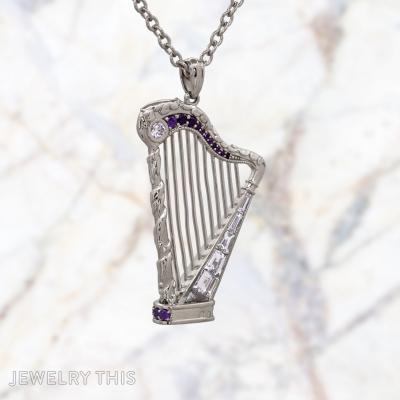
This pendant reimagines a pedal harp in miniature, cast in platinum and built with genuine ...

This logo pendant is a true testament to the one who wears it- the “world’s ...

This custom pendant is a personal statement of elegance and style. Crafted in radiant 14k ...

This pendant, inspired by a logo originally found on a hat, is a striking and ...
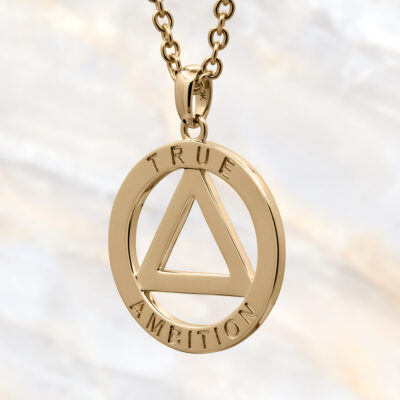
This pendant takes the recognizable circle-and-triangle recovery symbol and renders it in solid 10k yellow ...


A timeless message captured in 10k gold. This 1.5 inch long flat bar pendant with ...

This design splits a single yin-yang circle into two separate pendants — one cast in ...

This custom pendant is a beautiful and sentimental tribute to a beloved daughter. Measuring 1 ...

This art nouveau style pendant is a stunning recreation of a lost family piece. The ...

10k yellow gold pendant featuring championship logo. Personalized with client’s team details. Bail custom made ...




