

Interlocking Yin Yang Bracelet Set — Two-Tone Gold Pair
$$$
14k yellow gold, 14k white gold, natural emerald, natural alexandrite
A. wanted to give his girlfriend a birthday gift built around the yin-yang symbol, split into two matching pendants that only complete each other when the couple is together. He worked through several rounds of stone and metal choices — swapping which side carried which gem, then choosing a natural alexandrite over a pearl — before approving a design with a natural emerald and alexandrite in the interlocking circles. When it arrived in time for the May birthday, he wrote: 'Thank you so much! It turned out great!'
'Hi Tricia! Thank you so much! It turned out great!' — on delivery
Quick specs
Design type
Primary Metal
Secondary Metal
Shape / Cut
Primary Stone
Accent Stones
Style
Design Complexity
Intent: Certainty
Size
Two pendants, approximately 0.75in each; 7in cable link bracelets, 2.5mm chain width.
How they made it distinctive
-
01
Yin-yang circle split into two separate wearable pendants rather than kept as one piece, so each half can be worn independently
-
02
Natural emerald and natural alexandrite chosen over lab equivalents or a pearl, adding a color-change stone to the pair
-
03
Mixed yellow and white gold halves, each pendant cast in the opposite metal from its matching bracelet chain
-
04
Two-letter initials engraved on the back of each pendant to personalize the matching set
-
05
Bezel settings used on both stones to protect them during daily bracelet wear
How you'd make it yours
Stone type: this piece uses natural emerald and natural alexandrite; a new commission could use lab-created equivalents for a similar look
Metal: this piece mixes 14k yellow and white gold; the same interlocking design works in a single matching metal instead
Pendant size: this piece is sized at about three-quarters of an inch; a new piece could be made larger or smaller
Engraving: the back of each pendant can carry different initials, a date, or a short symbol on a new commission
Chain style: this piece uses a 2.5mm cable-link bracelet; other chain styles could carry the same pendant design
One of a kind: this exact pair of pendants was designed for one client's gift and is not reproduced — a new commission is an original piece inspired by this one, not a copy
Design changes made
The gemstone placement was flipped from the first render (moving the emerald to the white-gold side), and the second stone was changed from a pearl to a natural alexandrite after discussing rarity and cost. The bracelet chain style was also revised once to a cable-link design available in matching yellow and white gold.
Who this is for
This piece is for someone who wants to give a partner something that only feels complete when they're together — a matching set built around a shared symbol rather than a single standalone gift. It suits a couple who likes the idea of each wearing one half of something, with personal touches like birthstones and initials making it specific to them rather than a generic his-and-hers set.
How it's made
Once the design was approved, the two interlocking yin-yang halves were built as 3D CAD models and cast separately in 14k yellow gold and 14k white gold using the lost-wax method, producing two raw pendant halves sized to nest together into a single circle. The cable-link bracelet chains were sourced separately in matching 2.5mm yellow and white gold to pair with each pendant.
After casting, each pendant half was cleaned up and polished to a mirror finish, with the flat curved edge of each half finished smoothly so the two pieces sit flush when brought together. The natural emerald and natural alexandrite were bezel-set into their respective circles to protect the stones during daily wear, and each pendant back was engraved with a two-letter initial set before the bail was attached to the bracelet chain.
Key note
The curved dividing edge of each yin-yang half has to be finished to match its partner almost exactly, since any mismatch in that seam is immediately visible when the two pendants are brought together.
Pricing guidance
A two-piece interlocking pendant set on matching bracelets, with natural colored stones bezel-set into each half, sits toward the upper mid range for custom pendant work of this complexity. Producing two separate cast pieces plus two bracelet chains roughly doubles the modeling and finishing labor of a single pendant. Stone choice — natural versus lab-created — is the next largest driver after the doubled production cost.
Moves price up ↑
- ↑ Choosing natural emerald and natural alexandrite over lab-created equivalents
- ↑ Increasing the pendant size beyond three-quarters of an inch, which increases metal and stone-setting labor
- ↑ Adding engraving to both the front and back of each pendant rather than one small initial set on the back
- ↑ Upgrading from 14k to 18k gold on both pendants and both bracelet chains
- ↑ Selecting a wider or more elaborate bracelet chain style
Moves price down ↓
- ↓ Using lab-created emerald and lab-created alexandrite instead of natural stones
- ↓ Making both pendant halves in the same metal rather than mixed yellow and white gold
- ↓ Reducing the pendant size below three-quarters of an inch
- ↓ Choosing a simpler, thinner bracelet chain
- ↓ Omitting the back engraving on one or both pendants
Questions people ask
Yes, this is done by designing each half of the circle as its own pendant with a flat curved edge where the two pieces meet, so they physically nest together into one complete circle when placed side by side. Each half is modeled and cast separately, then finished so the meeting edge lines up cleanly between the two pieces. The pendants can be worn on separate chains or bracelets, letting two people each carry one half. This approach works well for couples or matching-pair gifts where each person wears one piece independently.
Natural and lab-created alexandrite share the same color-change optical property, shifting from green in daylight to red or purple under incandescent light, but natural alexandrite is mined and quite rare, which makes it significantly more costly at larger sizes. Lab-created alexandrite is grown in a controlled setting and offers the same visual color-change effect at a lower cost. Many custom jewelers recommend lab-created alexandrite specifically because natural stones in the needed size can be difficult to source. The choice mostly comes down to whether natural origin matters to the wearer versus prioritizing value.
A bezel setting wraps a continuous rim of metal around the stone's edge, which protects it from chips and knocks better than a prong setting would. Emerald is a relatively included stone that can be prone to chipping under impact, so a bezel setting is a sensible choice for daily wear. The metal rim also means the stone sits slightly recessed rather than proud of the surface, reducing the chance it catches on clothing or hair. Regular gentle cleaning and avoiding harsh chemicals will keep a bezel-set emerald looking good over time.
A matching pair of pendants designed to interlock, each on its own bracelet and set with natural colored stones, generally falls toward the upper mid range for custom pendant projects. The cost reflects that two separate pieces are being modeled, cast, and finished rather than one, plus two bracelet chains. Stone choice has a significant effect — natural stones cost meaningfully more than lab-created equivalents of a similar size. Metal karat and pendant size are the next largest variables.
A custom pendant set like this typically takes about a week for the design phase, covering the 3D model and render approval, followed by roughly three to four weeks for production once the design is approved. Producing two pendants and two bracelets adds some time compared to a single piece, since each component is modeled, cast, and finished individually. Rush timelines are possible when a specific delivery date, such as a birthday, is communicated early. Sourcing natural colored stones can also add a few days if a specific size or quality is needed.
Yes, mixing metals between the two halves is a common request for this design, most often one half in yellow gold and the other in white gold. Each half is cast separately in its chosen metal, so there is no technical obstacle to using two different golds side by side. The bracelet chains are typically sourced to match each pendant's metal so the full set is coordinated. This mixed-metal approach also makes each half distinct enough to be worn and recognized separately.
Yes, a small pendant like this can carry a short engraving, such as a two-letter initial set, on the flat back surface. Engraving is typically added as one of the final steps after the stone is set and the piece is polished, so the surface is fully finished first. Because the pendant is compact, the engraving is usually kept small and simple rather than a long inscription. This is a common way to personalize a matching-pair gift without changing the visible front design.
Explore Similar Creations
Every masterpiece starts with a spark. Explore how our clients raw ideas - sketches, heirlooms, inspirations - were transformed into bespoke works of arts.
This custom pendant features a distinctive cross design with a pyramid-inspired aesthetic. The cross is ...

This sterling silver pendant recreates a compass-rose design the client had worn for years, rebuilt ...

Celebrate cosmic love with our whimsical astronaut-inspired pendants, each cradling half a heart. Crafted in ...
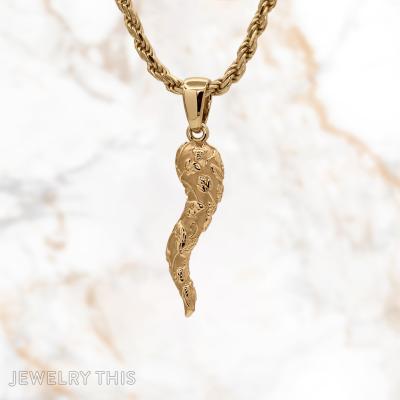
Steeped in tradition and personalized with exquisite detail, this custom Italian horn pendant is a ...
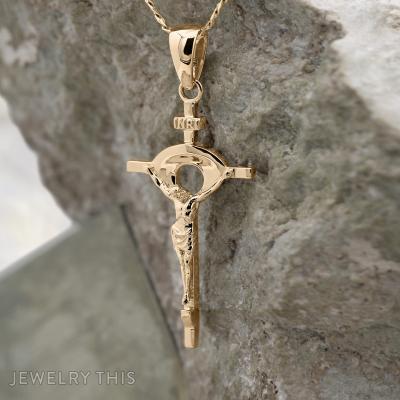
This custom cross pendant is a heartfelt recreation of a cherished lost piece. Crafted from ...

This sterling silver pendant features a cut-out design that is a recreation of a lost ...

This sterling silver pendant is a unique representation of a barber shop logo. The design ...


This pendant is a captivating piece engraved with intricate details of the revered Seal of ...
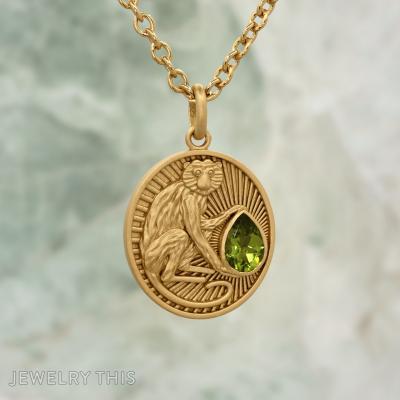
This circular pendant is cast in 14k gold-plated sterling silver with a matte, satin finish ...

A timeless message captured in 10k gold. This 1.5 inch long flat bar pendant with ...

This sterling silver custom pendant was designed to combine the client’s passions for fishing and ...



