


Ballroom Dance Shoe Pendant — 14k Gold with Hidden Initial
$$
14k yellow gold
A mother wanted to mark her daughter's life as a ballroom dancer by recreating the first shoe she ever danced in, scaled down to a pendant small enough not to get in the way. An initial was tucked inside the sole near the heel, visible only to the person who knows it is there. When it shipped, she wrote: 'This is absolutely gorgeous. I can't wait to get it! And my Daughter to see it!'
'hello Luc its amazing!!! go ahead and lets move forward with this design.' — on design approval
'This is absolutely gorgeous. I can't wait to get it! And my Daughter to see it!' — on delivery
Quick specs
Design type
Primary Metal
Primary Stone
Accent Stones
Style
Design Complexity
Intent: Certainty
Size
Pendant approximately 19mm. Chain style and length not specified.
How they made it distinctive
-
01
Modeled directly from a photo of the actual first shoe the dancer wore, not a generic dance shoe silhouette
-
02
Sized up slightly from the client's original request specifically to keep the thin straps and heel structurally sound
-
03
Letter A engraved inside the sole near the heel, hidden from view when worn
-
04
Scaled to just larger than a penny so it would not interfere with the recipient's dancing
-
05
Fully dimensional 3D form rather than a flat engraved silhouette
How you'd make it yours
Metal: this piece is 14k yellow gold; a new commission could use gold-plated silver, white gold, or rose gold for a different tone
Engraving: this piece carries a single hidden initial inside the sole; a new piece could carry a different letter, short word, or date
Size: this piece is scaled just larger than a penny; a new commission is sized to its own object and wearer preference
Chain: this piece hangs on a standard sourced chain; a new commission could specify a different chain style or length
One of a kind: this exact shoe pendant was modeled from one client's specific photo and is not reproduced — a new commission is an original piece inspired by this one, not a copy
Design changes made
The piece was sized slightly larger than the client's original dime-or-penny request after the goldsmiths advised the extra size was needed to properly support the straps and heel detail; the client agreed as long as it stayed as small as possible.
Who this is for
This is for someone who wants to mark a specific passion or milestone in a loved one's life with an object that represents it literally, not just symbolically. It's especially right if that passion is physical and worn, like dance or sport, and you want a piece small and light enough that the person it's for can actually wear it while doing the thing it celebrates.
How it's made
Once the client approved the photorealistic render and 3D model, a resin model of the shoe was 3D-printed as the first physical version of the design, shared with the client as a production preview. That resin was then used to create an investment mold, which was fired to remove the resin and leave a hollow cavity, into which molten 14k yellow gold was cast to form the pendant.
After casting, the piece was cleaned of excess metal and the fine strap and buckle details were refined by hand to keep the crisscross pattern crisp at such a small scale. The surface was polished to a high shine across the shoe's rounded forms, and the letter A was engraved into the interior sole near the heel as the final step before the pendant was attached to its bail and chain.
Key note
The pendant was deliberately sized larger than the client's original penny-sized request because, at true miniature scale, the thin straps and heel would not have held their shape through casting and handling.
Pricing guidance
A small dimensional 3D pendant like this sits toward the lower end of the mid-range for custom pendant work, since the piece is compact but requires fine hand-finishing to keep intricate details crisp at a small scale. Metal choice is the single biggest factor in the final cost, with the design and engraving work holding fairly steady regardless of material.
Moves price up ↑
- ↑ Upgrading from gold-plated silver to solid 14k or 18k gold
- ↑ Increasing the pendant's overall size to show more strap and heel detail
- ↑ Adding gemstone accents, such as a small stone on the ankle strap or buckle
- ↑ Engraving additional text or a date alongside the single initial
Moves price down ↓
- ↓ Choosing gold-plated silver instead of solid gold
- ↓ Simplifying the strap pattern to reduce hand-finishing time
- ↓ Omitting the interior engraving
- ↓ Keeping the design to a single smooth finish rather than contrasting textures
Questions people ask
Yes, a dimensional pendant like this is built from a 3D design based on a reference photo, then cast in metal rather than stamped flat. At small sizes, like just larger than a penny, the design has to be slightly scaled up from the client's original size request so the straps and heel hold their shape through casting. The result is a fully three-dimensional miniature object rather than a flat silhouette. Fine details like crisscross straps and a buckle are achievable at this scale with careful hand-finishing after casting.
There's a practical lower limit driven by the thinnest structural elements in the design, such as straps or a heel. For this shoe pendant, the goldsmiths recommended going slightly larger than a dime or penny size specifically because the straps and heel needed more metal to stay structurally sound. Going smaller than that risks straps that are too thin to cast cleanly or that bend out of shape during wear. A good rule of thumb is that the smallest safe size depends on the thinnest line in the design, not the overall silhouette.
A compact dimensional pendant with this level of detail sits toward the lower end of mid-range custom pendant pricing. The main cost driver is metal choice. Gold-plated silver comes in lower than solid gold, while 14k or 18k solid gold increases the price because of material cost rather than labor. Design complexity and hand-finishing time stay fairly consistent regardless of which metal is chosen.
Gold-plated silver gives the same gold appearance at a lower material cost, which makes it a reasonable option for smaller sentimental pieces. The tradeoff is that the gold plating is a surface layer that will gradually wear with daily contact, particularly in high-friction spots. Solid 14k or 18k gold holds its color permanently since the gold runs through the entire piece. For a pendant meant to be worn for years as a keepsake, some clients prefer solid gold specifically to avoid replating down the line.
The process typically starts with about one week for the 3D design phase, during which a render is created from the reference photo and description for approval. Once the design is approved, production takes approximately three to four weeks, including casting, hand-finishing, and engraving. So the full timeline from deposit to shipping runs roughly four to five weeks total. Minor scheduling shifts can occur depending on finishing detail and metal sourcing.
Yes, engraving can be placed in a discreet spot that isn't visible when the piece is worn normally, such as the interior sole of a shoe-shaped pendant. This lets the piece carry a personal detail, like a single initial, without it being obvious to anyone who sees the pendant from the outside. The engraving is applied as one of the final steps after casting and polishing. It's a good option for anyone who wants a personal touch without making the design itself about the text.
Fine cast details like crisscross straps and a buckle are durable once cast in solid metal, since they're structural rather than applied decoration. The main wear consideration is the thickness of the thinnest elements, which is why sizing is adjusted upward slightly on very delicate designs. Normal daily wear and occasional contact won't damage a properly cast and finished piece. Avoiding harsh impacts or bending the thin strap areas will keep the detail looking crisp long-term.
Many small, recognizable objects can be translated into a dimensional pendant using a reference photo and a detailed description of proportions and features. The design team builds a 3D model and shares a render for approval before anything is cast, so adjustments can be made before production starts. Objects with very thin or delicate elements, like straps or thin handles, may need to be scaled up slightly from the client's ideal size to survive casting. The process works well for shoes, tools, instruments, or other meaningful small objects.
Check what our clients say about us

Emilia Kreczman
3 years ago
JewelryThis is an amazing company who I hired to make a custom gold pendant for my daughter. She is a dancer so the pendant represented her first dance shoes (latin dance heels) The quality of details is amazing. It looks like a real thing even though its a size of dime. I had a great experience communicating with the designer and even better with the outcome of the product! Couldn't be happier!!!
Explore Similar Creations
Every masterpiece starts with a spark. Explore how our clients raw ideas - sketches, heirlooms, inspirations - were transformed into bespoke works of arts.
A delicate moth pendant symbolizing transformation and light. Crafted in silver with 14kt yellow and ...

This rectangular pendant pairs a polished 10k yellow gold plaque with raised 10k white gold ...

This round sterling silver pendant features the word ‘Cat’ spelled out entirely in round lab-grown ...

This pendant was designed to embrace the power of faith. This custom sterling silver cross ...

Show off your Raider Nation pride with this stunning gold-plated silver pendant. The 2-inch pendant ...

This pendant reinterprets the Trinacria, the ancient three-legged symbol at the center of the Sicilian ...

14 karat white gold wishbone pendant with personal engraving “Only Good Things Happen”. Pendant: 1 ...

This phoenix pendant was built from a single reference photo into a fully dimensional 3D ...

This custom initial pendant features a harmony of letters. The pendant showcases a set of ...
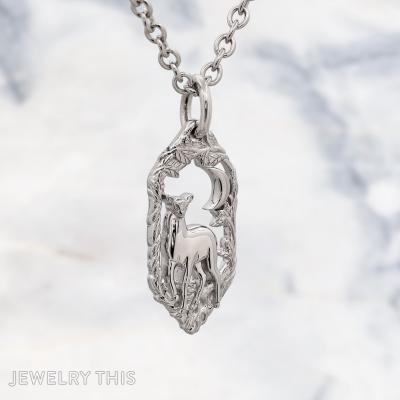
This pendant centers a dimensional doe standing within an open, branch-framed silhouette, with a crescent ...

This oval Sterling Silver pendant tells the story of courage and companionship. At the heart ...

This whimsical multi-piece necklace features a beautifully designed wreath adorned with graceful butterflies, each delicately ...



