
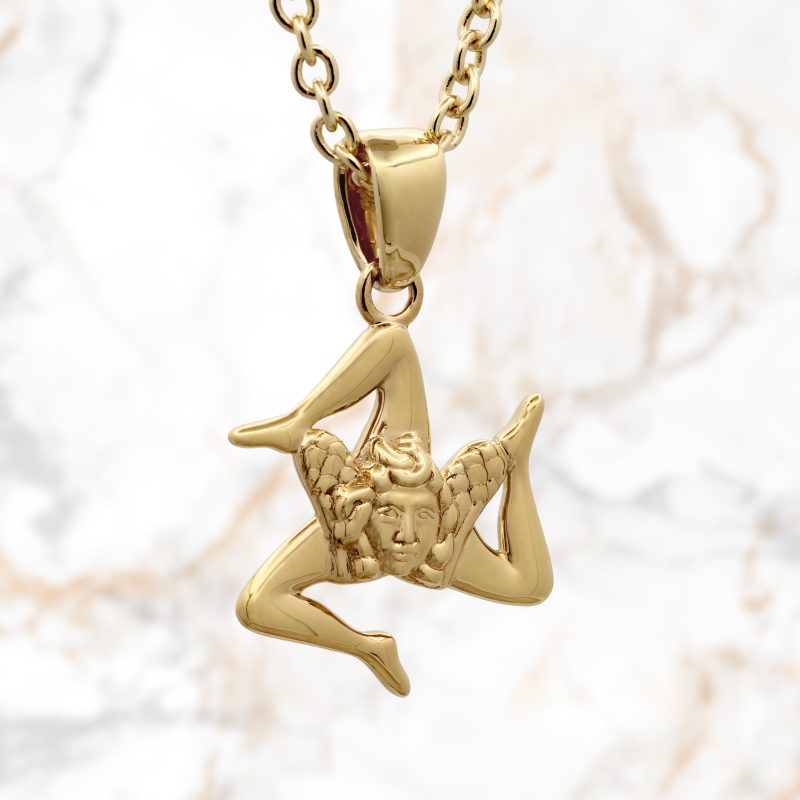
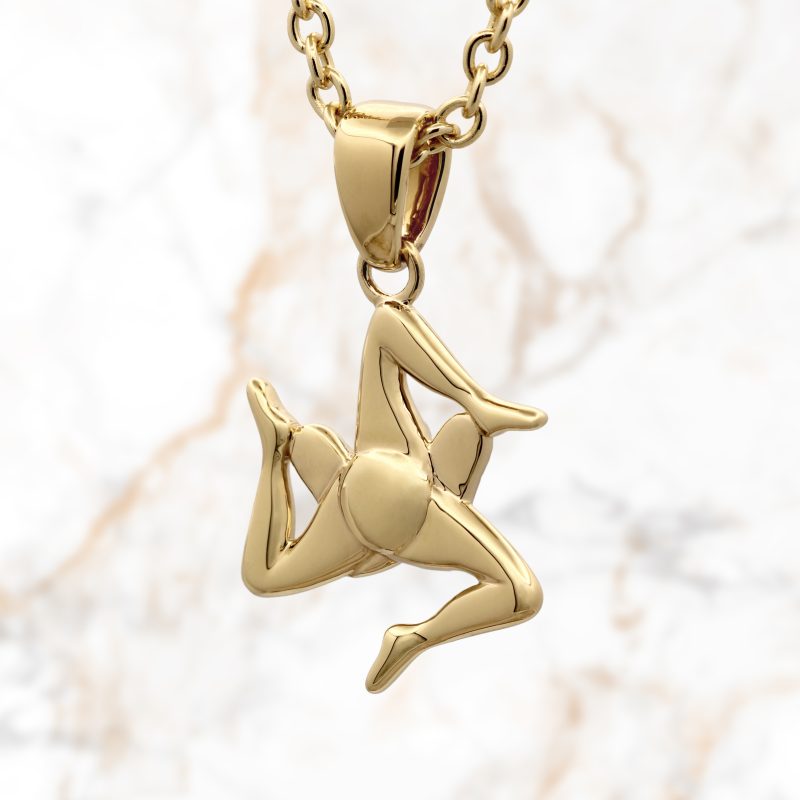


Dainty Gold Trinacria Pendant — Sicilian Symbol Necklace
$
Gold-plated silver
A client wanted a wearable version of the Trinacria, the three-legged symbol from the Sicilian flag, after finding the traditional thick medallion version too bulky for everyday wear. She asked for something no bigger than a dime that kept the full detail of the design but in a slimmer, daintier form. When it arrived, she confirmed it was exactly what she wanted.
'Yes! I love it, lets move forward' — on seeing the first 3D render
Quick specs
Design type
Primary Metal
Primary Stone
Accent Stones
Design Complexity
Intent: Certainty
Size
Pendant approximately 19mm (3/4 inch).
How they made it distinctive
-
01
Thinned and lightened from the thick reference medallion specifically so it could be worn every day, not just for special occasions
-
02
Kept to a dainty, coin-sized scale (about 3/4 inch) per the client's request for something no bigger than a dime
-
03
Full facial, wing, and leg detail preserved despite the reduced scale and slimmer profile
-
04
Gold-plated silver chosen partway through the process to keep the piece within budget without changing the design
How you'd make it yours
Metal: this piece is gold-plated silver; a new commission could use solid 10k or 14k yellow gold for permanent color
Size: this piece is dainty, about 3/4 inch; a new piece could be made larger or smaller to taste
Finish: this piece is high-polish throughout; a matte or brushed finish could be used for a more subdued look
Chain: this piece uses a simple cable chain; a new commission could pair the pendant with a different chain style
One of a kind: this exact pendant was designed for one client and is not reproduced — a new commission is an original piece inspired by this one, not a copy
Design changes made
The client requested gold-plated silver instead of solid gold partway through the process to stay within budget, which did not change the design itself — only the material. The design was otherwise approved as first rendered, with the main adjustment being an overall thinner, lighter profile than the reference image from the outset.
Who this is for
This piece is for someone who wants to wear a piece of their heritage every day, not just save it for special occasions. It's especially right if you've admired a traditional, bulkier version of a cultural symbol but wanted something lighter and more wearable for daily life.
How it's made
Once the design was approved, the pendant was first 3D printed in wax, which was then attached to a wax tree and set inside a flask. The flask was placed in a kiln to burn out the wax, leaving a hollow mold of the piece. Molten metal was then cast into that mold under pressure, producing the raw pendant once it cooled and was removed from the mold.
After casting, the piece was cleaned to remove any casting texture, then polished to bring out the detail in the face, wings, and three bent legs. Because the design is dimensional but slimmer than the reference piece, careful hand-finishing was needed to keep the facial and wing detail crisp at a reduced scale. The final gold plating was applied over the polished silver base to achieve the yellow gold finish.
Key note
Keeping the Medusa face and wing detail crisp while thinning the overall pendant required extra hand-finishing after casting, since reducing scale on a dimensional design risks softening fine detail.
Pricing guidance
A small dimensional pendant like this sits toward the lower end of the price range for custom symbolic pieces, since its size keeps material and labor costs modest. The main cost driver is the hand-finishing needed to preserve detail at a small scale, not the metal itself. Choosing gold-plated silver over solid gold brings the price down further within that range.
Moves price up ↑
- ↑ Casting in solid 10k or 14k yellow gold instead of gold-plated silver
- ↑ Increasing the pendant's size beyond a dainty, coin-sized scale
- ↑ Adding more surface texture or deeper relief to the face and wing details
- ↑ Requesting a two-sided or reversible design
- ↑ Adding a matching chain in solid gold rather than a standard sourced chain
Moves price down ↓
- ↓ Choosing gold-plated silver over solid gold
- ↓ Keeping the pendant at a small, dainty scale
- ↓ Simplifying surface detail to a flatter, less dimensional design
- ↓ Using a standard sourced chain rather than a custom one
- ↓ Choosing a single-sided design
Questions people ask
The Trinacria is an ancient symbol made up of a central head, often depicted with wings and snake-like hair, surrounded by three bent legs radiating outward. It appears at the center of the Sicilian flag and is strongly associated with Sicilian heritage and identity. The three legs are traditionally said to represent the three points of the triangular island of Sicily. This pendant reproduces the symbol in a smaller, more wearable scale than the traditional thick medallion version.
Gold plating is a thin layer of gold applied over a sterling silver base, and like any plating it will gradually wear with daily contact, especially at points that rub against skin or clothing. Higher-karat plating tends to last longer before the base metal starts to show through. Most plated pieces hold their color well for a year or more of regular wear before re-plating might be worth considering. Keeping the piece dry and avoiding harsh chemicals or lotions on the metal will extend how long the plating lasts.
A small, dimensional custom pendant like this one sits toward the lower end of the price range for custom symbolic jewelry, since the compact size keeps both material and labor costs down. The main cost factor is the hand-finishing required to keep fine detail — like a face or wings — crisp at a small scale, rather than the raw material cost. Choosing a plated metal over solid gold brings the price down further. Size, metal choice, and level of surface detail are the three biggest variables in cost for a piece like this.
Yes, though it takes extra hand-finishing work after casting. When a dimensional design with fine facial or textural detail is scaled down, that detail can soften or blur if it isn't carefully cleaned up by hand post-casting. For this pendant, the original reference was a thicker, bulkier medallion, and the final piece was intentionally made slimmer and more dainty while keeping the face, wings, and leg details clearly defined. It is a more labor-intensive process than simply scaling a flat design down proportionally.
The design phase for a pendant like this typically takes about one week, during which a 3D render is created and refined with your feedback before anything is cast. Once the design is approved, production — wax printing, casting, and finishing — generally takes another two to three weeks. In total, most custom pendants of this scale are completed within about three to four weeks from deposit to shipping. Rush timelines are sometimes possible if there's a specific date you're working toward.
Solid gold is gold alloy all the way through, while gold-plated silver is a sterling silver base with a thin layer of gold applied over the surface. Visually, the two look identical when new, but gold-plated pieces will show wear over time as the plating gradually thins, while solid gold keeps its color permanently. Gold-plated silver is also significantly lighter on cost than solid gold or lower-karat gold alloys. For a small, detailed piece like this one, either option preserves the fine detail equally well — the choice mainly comes down to budget and long-term maintenance.
Yes, pendants like this are typically designed to work with a standard sourced chain, and many clients already have a chain they plan to use. The pendant's bail — the loop the chain passes through — can be sized to accommodate most standard chain widths, so it's worth confirming the chain width before the piece is finalized. If you don't have a chain yet, a simple cable or box chain is usually recommended to let the pendant remain the visual focus.
No, the Trinacria is a cultural and regional symbol rather than a religious one — it represents Sicily and Sicilian heritage, not a specific faith tradition. The imagery, including the central winged head, has roots in ancient mythology rather than any one religion. It's commonly worn as an expression of heritage or regional pride rather than religious devotion. The design works well as an everyday identity piece for that reason.
Explore Similar Creations
Every masterpiece starts with a spark. Explore how our clients raw ideas - sketches, heirlooms, inspirations - were transformed into bespoke works of arts.
This pendant is created in gold-plated sterling silver and is inspired by the American Association ...

Celebrate artistic expression with our 0.75-inch round pendant. Crafted in 14kt yellow gold, it features ...

This round pendant is cast in 14k gold-plated silver and engraved with a half-profile portrait ...

This sterling silver pendant features a unique cut out four leaf clover style design. The ...

Sterling silver star pendant set around perimeter with alternating diamonds and sapphires. Pendant: 1 inch ...

This custom oval pendant is a beautiful expression of faith. The striking centerpiece features intricately ...
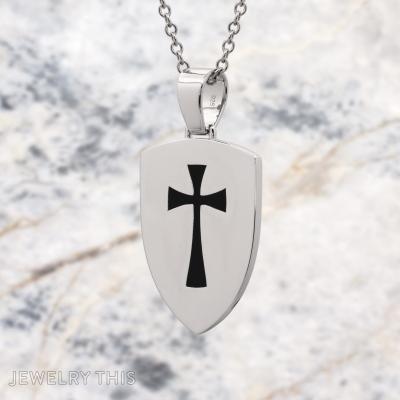
This pendant takes the classic crusader shield shape and pairs it with a single black ...

Crafted in sterling silver, this striking pendant captivates with its mesmerizing design. Fashioned into a ...

This sterling silver skull pendant was created to unleash an edgy style with. Crafted with ...

This beautifully crafted 14K yellow gold pendant captures the unique shape of Kauai, the lush ...

This custom logo pendant was meticulously crafted in radiant 10k yellow gold. This one-inch pendant ...
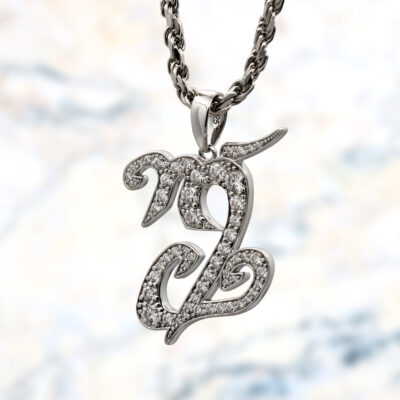
This sterling silver pendant was thoughtfully created to honor the achievements of a recent graduate. ...



