

Triangle Drop Earrings — Companion to an Anniversary Pendant
$$
Sterling silver, natural sapphire
A client commissioned these earrings as a companion to a pendant he'd already had made for his partner, wanting the same triangular geometry without the pendant's lettering and numbers. Getting the proportions right took several rounds of adjustment — balancing the curved corners against the center so they felt like a true match to the pendant rather than a smaller, thinner version of it. When the finished pair shipped before the holidays, he wrote back simply: "they look great."
'That’s good news—and they look great!' — on delivery
Quick specs
Primary Metal
Shape / Cut
Primary Stone
Accent Stones
Design Complexity
Intent: Certainty
Size
Triangle drop approximately 0.5in (12.7mm) per side, on ear wires.
How they made it distinctive
-
01
Open triangular wire outline directly echoes a matching pendant's geometry, scaled down for the ear
-
02
Connecting rods, lettering, and numerals deliberately omitted to keep the smaller piece from feeling cluttered
-
03
Center sapphire sized up slightly to fill the negative space left by the simplified design
-
04
Curved corner proportions fine-tuned through multiple rounds of revision to balance visually against the interior sections
-
05
Bezel setting chosen for the center stone to keep the open wirework clean and catch-free
-
06
High-polish finish selected as a deliberate contrast to the paired pendant's matte-and-polish combination
How you'd make it yours
Stone: this piece uses natural sapphire; a new commission could use a lab sapphire or a different colored gem
Metal: this piece is sterling silver; the same open-wire design works equally well in 14k white or yellow gold
Finish: this piece is high polish; a new piece could use a matte-and-polish contrast instead
Detail level: a new commission could reintroduce connecting rods or lettering if a closer match to a companion pendant is wanted
One of a kind: this exact pair was designed to companion one specific pendant and is not reproduced — a new commission is an original piece inspired by this one, not a copy
Design changes made
The curved corner sections were adjusted twice after the first render — first enlarged because they looked too thin relative to the pendant's proportions, then scaled back slightly after going too far the other way, settling on a balance close to the original pendant design. The sapphire size was also increased slightly to fill the extra negative space left by removing the pendant's lettering.
Who this is for
This is for someone who already has a meaningful piece and wants a companion that echoes it without duplicating it exactly. It especially suits a gift-giver who's particular about proportion and detail, and who wants the smaller piece to feel like it belongs with the larger one rather than just resembling it from a distance.
How it's made
Once the design was finalized in a 3D model and approved, it was printed in wax using a 3D printer and attached to a wax tree inside a flask. The flask was placed in a kiln to burn out the wax, leaving a hollow mold, and molten sterling silver was poured into that mold. After cooling, the raw earrings were removed from the mold and prepared for finishing.
Following the pendant's lead, the client chose a single high-polish finish for the earrings rather than the pendant's matte-and-polish contrast, since the smaller scale and simpler open-wire design had less surface area to play with. The round blue sapphire was set into a bezel at the center of each triangle, and the ear wires were attached last.
Key note
The curved corner wires were measured and adjusted in 0.5mm increments during revisions — a tolerance small enough that further refinement would have been visually imperceptible.
Pricing guidance
Open-wire geometric drop earrings with a single bezel-set center stone sit toward the lower end of the mid-range for custom silver jewelry. Most of the cost comes from the 3D modeling and revision work needed to get open, symmetrical wirework looking precise at a small scale, rather than from the materials themselves. Metal choice and stone size are the main levers that move the price from there.
Moves price up ↑
- ↑ Upgrading from sterling silver to 14k white or yellow gold
- ↑ Choosing a larger or higher-grade natural sapphire over the small center stones used here
- ↑ Adding the connecting rods, lettering, or numerals back into the design for a closer match to the companion pendant
- ↑ Requesting a matte-and-polish contrast finish rather than a single high-polish finish
- ↑ Switching from bezel to a more complex multi-prong setting for the center stone
Moves price down ↓
- ↓ Simplifying to a solid triangle shape rather than an open-wire outline
- ↓ Using a lab sapphire or cubic zirconia instead of a natural sapphire
- ↓ Reducing from a dangle design to a stud mounted directly on the ear
- ↓ Omitting the center stone setting entirely for a plain open outline
- ↓ Choosing a single simpler curve per corner instead of the balanced double-curve detail
Questions people ask
Yes, this is a common request and these earrings were designed exactly this way — built from the same triangular geometry as a matching pendant, simplified for the smaller scale. Getting the proportions to feel like a genuine match rather than a shrunken copy usually takes a round or two of comparing renders side by side with the original piece. Removing certain elements, like lettering or connecting rods, also helps the smaller piece read cleanly rather than looking cluttered at a reduced size. The result can complement the original piece without being an exact miniature of it.
Sterling silver (.925) is a durable choice for earrings that get occasional to regular wear, though it will tarnish over time with air exposure and needs periodic polishing to stay bright. It's softer than gold or platinum, so very fine wirework can bend if handled roughly, but a design like this with moderate wire thickness holds up well under normal use. Routine cleaning with a silver polishing cloth is usually enough to maintain the finish. For earrings worn daily rather than occasionally, 14k white gold is a common upgrade for added durability and tarnish resistance.
A pair of open-wire triangular drop earrings with a single bezel-set sapphire in each sits toward the lower end of the mid-range for custom silver jewelry. The main cost driver is the design and modeling work required to get the open wirework symmetrical and precise, not the raw materials. Choosing gold instead of silver, or upgrading the stone size or grade, would push the price higher from there.
Yes, bezel settings are a common and secure way to set a round sapphire, since the metal rim wraps fully around the stone's girdle and holds it without any prongs to catch on hair or clothing. This earring design uses a bezel for exactly that reason — practical security combined with a clean, minimal look that doesn't distract from the open triangular wirework. Bezel settings also offer slightly more protection for the stone's edges during daily wear compared to prong settings. Sapphire is a hard stone (9 on the Mohs scale), so it holds up well in either setting style.
From design approval to shipping, a custom pair like this typically takes several weeks once the 3D model is finalized, since the process includes wax 3D printing, kiln burnout, casting, cooling, cleanup, polishing, and stone setting. Design revisions before approval can add additional time if the client wants multiple rounds of adjustment to get proportions exactly right. Once the design is locked and approved, production itself generally runs on a standard timeline. Rush timelines are available for clients with a specific deadline.
Yes, a design like this can be made in 14k white or yellow gold as well as sterling silver, and pricing is typically quoted for both so the client can compare before deciding. Gold will cost more than silver but offers better tarnish resistance and a different visual warmth or brightness depending on which gold color is chosen. The design itself — the open triangular wirework and bezel-set center stone — translates directly to either metal without needing structural changes. The choice usually comes down to budget and whether the wearer prefers silver-tone or gold-tone jewelry.
Yes, but it usually requires removing some detail rather than just shrinking everything proportionally. In this case, lettering, numerals, and structural connecting rods that worked on a larger pendant were left out of the smaller earring version, leaving just the essential curved outline and center stone. This keeps the smaller piece from feeling cluttered while still reading clearly as related to the original design. A good rule of thumb is that the smaller the piece, the fewer individual elements it can carry before it starts to look crowded.
Explore Similar Creations
Every masterpiece starts with a spark. Explore how our clients raw ideas - sketches, heirlooms, inspirations - were transformed into bespoke works of arts.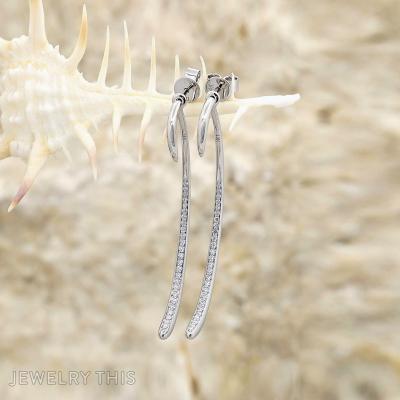
These drop earrings reinterpret a celebrity-inspired tusk silhouette as a two-part design: a small front ...

This pair of drop earrings recreates a lost earring’s open web pattern in polished sterling ...

These drop earrings turn a teenager’s own sketch into a wearable monogram. Each circular disc ...

These drop earrings pair a sculpted 14k yellow gold fan element — its surface finished ...

These drop earrings take the curved, horn-like shape of an existing favorite earring and rework ...
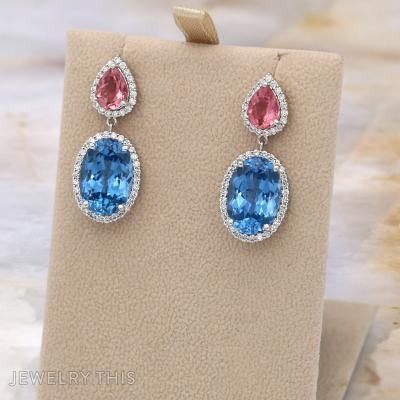
This two-tier drop earring design rebuilds a stolen pair as closely as possible from photographs, ...

These drop earrings were built around a reference photo the client loved, translated into three ...
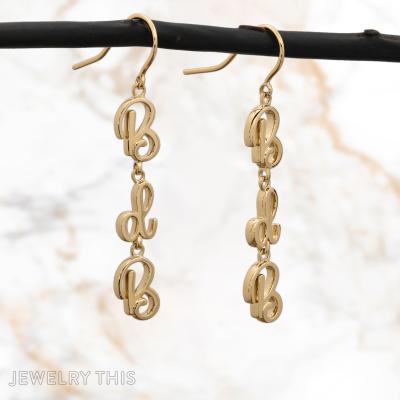
These dangle earrings spell out a set of initials in cursive script, with three letter ...



