

Champagne Diamond Teardrop Drop Earrings in White Gold
$$$$
14k white gold, champagne diamonds, white diamonds
A husband set out to recreate a pair of earrings from a photo his wife loved, working through the design over several months to get the proportions and stone density right. He asked for more diamonds after the first render felt too metal-heavy, and had the finished piece rushed to arrive for the holidays. He held onto them for months afterward, writing later: 'I think they're beautiful. So impressed that you were able to get it all done and to me by Christmas.'
'I think they're beautiful. So impressed that you were able to get it all done and to me by Christmas.' — on delivery
Quick specs
Primary Metal
Shape / Cut
Primary Stone
Accent Stones
Style
Design Complexity
Intent: Certainty
Size
Total earring length approximately 2.5 inches.
How they made it distinctive
-
01
Three concentric teardrop tiers built to echo a reference photo the client provided, rather than a standard drop earring silhouette
-
02
Over 100 champagne and white diamonds added after client feedback that the first design read as too metal-heavy
-
03
14k white gold chosen specifically over platinum to manage weight for a large dangle design
-
04
Individual bezel settings used across all three tiers rather than a single dominant setting style
-
05
Dangle length confirmed at approximately 2.5 inches to suit the wearer's proportions rather than copying the reference image exactly
How you'd make it yours
Stone type: this piece uses champagne diamonds with white diamond accents; a new commission could use garnets or other colored stones for a different tone
Metal: this piece is 14k white gold; the same tiered design works in yellow or rose gold, or platinum for those comfortable with the added weight
Tier count: this piece has three concentric rings; a new commission could use two tiers for a lighter, less complex silhouette
Length: this piece hangs approximately 2.5 inches; a new piece can be scaled shorter or longer to suit the wearer
One of a kind: this exact pair was designed around one client's reference photo and is not reproduced — a new commission is an original piece inspired by this one, not a copy
Design changes made
After the first render, roughly 25 additional diamonds per earring were added because the initial design felt short on stones, with the metal setting overpowering the gems. The dangle length was also confirmed at approximately 2.5 inches to suit the wearer's proportions.
Who this is for
This piece is for someone who found a reference image they love and want translated faithfully into a real, wearable piece, not just approximated. It suits someone comfortable with a statement-length dangle earring set with significant stone detail, worn for occasions where a layered, sparkling design can stand out.
How it's made
Once the design was approved, the earrings were modeled in 3D and the champagne diamonds were sourced to match the design's stone count before casting began. The pieces were cast in 14k white gold, then each of the three concentric ring elements per earring was cast, polished, and prepared separately before assembly, since the tiers are joined by small connecting links rather than cast as one solid unit.
After casting and polishing, the components were assembled into the finished tiered form, with the round stud top, connecting post, and three linked teardrop rings joined together. Each of the round champagne and white diamonds was then hand-set into individual bezel settings across all three tiers, a sequential process given the stone count involved. The high-polish white gold finish was applied last, after all setting work was complete.
Key note
The three teardrop tiers are cast and finished as separate elements before being joined by small connecting links, which is what allows each ring to move slightly rather than sit rigid as one fused piece.
Pricing guidance
A multi-tier dangle earring set with over 100 diamonds sits toward the higher end for custom earring commissions of this complexity. The cost is driven primarily by stone count and the labor of hand-setting each one individually across several linked, moving elements, rather than by the metal itself. Complexity of this kind — multiple cast components joined and finished separately — adds meaningfully to production time and cost compared to a single-piece design.
Moves price up ↑
- ↑ Increasing stone count further to fully cover the open metal areas with diamonds
- ↑ Upgrading from 14k white gold to platinum, despite the added weight on the ear
- ↑ Using natural diamonds in place of lab-grown or treated stones at the same size and color
- ↑ Adding a fourth tier or additional decorative elements to the design
Moves price down ↓
- ↓ Reducing the number of concentric tiers from three to two
- ↓ Using a lower stone count with larger, fewer diamonds instead of many small ones
- ↓ Choosing sterling silver instead of 14k white gold
- ↓ Selecting a smaller overall earring length to reduce the number of stones needed
Questions people ask
Yes, a reference photo is a common and effective starting point for a custom design. The process starts with a sketch based on the image, followed by a 3D render that you can review and request changes to before anything is cast. Multiple rounds of revision are normal — proportions, stone density, and metal-to-stone balance often need adjusting to match a reference image closely. The goal is to get as close as possible to the original inspiration while working within the practical realities of casting and setting.
Champagne diamonds are natural diamonds with a warm brown-to-gold color caused by trace elements or structural characteristics during formation. They have the same hardness as colorless diamonds, rating a 10 on the Mohs scale, making them just as durable for daily wear. They are generally more affordable than colorless diamonds of comparable size and clarity. In a design with multiple stones, they can be combined with white diamonds for tonal contrast, as seen in layered or clustered settings.
Comfort depends heavily on weight and length. Earrings around 2.5 inches long with many small stones, like this design, are lighter than a solid design of the same size would be, since diamonds and open metalwork weigh less than a solid cast form. Metal choice matters too — platinum is noticeably heavier than white gold at the same size, which is why white gold is often recommended for larger dangle designs. Earrings of this scale are generally better suited to special occasions or selective daily wear rather than constant use, depending on the wearer's tolerance.
A tiered dangle earring design set with over 100 diamonds sits toward the higher end of custom earring pricing due to the sheer volume of stone-setting labor involved. Cost is driven primarily by stone count and the complexity of assembling multiple linked, separately finished components, more than by the metal choice itself. Reducing the number of tiers or the total stone count are the most effective ways to bring the price down while keeping a similar overall look.
A design of this complexity, involving sourcing over 100 individually matched gemstones, typically takes about four to six weeks from approved design to completion. The stone sourcing step alone can take a week or more, since matching color and size across that many stones takes time. Casting, assembly, and hand-setting each stone individually add additional time beyond a simpler single-stone design. Rush timelines are sometimes possible but depend on gemstone availability and production scheduling at the time of the order.
Yes, dangle length is one of the more flexible elements of a design like this and can be shortened or lengthened before production begins. A reference design's proportions are often scaled to suit the individual wearer rather than copied exactly, since neck length and personal preference vary. Confirming the desired length during the design review stage, before casting, is the most straightforward way to get this right. Adjustments after a piece is fully cast and set are more limited than adjustments made during design.
Yes, requesting additional stones after an initial render is a common revision. Adding stones does affect the total cost, since it increases both material and hand-setting labor, but it is a straightforward change to make before the piece moves into production. It's easiest to identify stone density concerns by comparing the render side-by-side with a reference image, which often reveals areas that look sparse. Once the design is finalized with the updated stone count, it moves forward to casting and setting.
White gold is a common choice for larger or more elaborate earring designs specifically because it is significantly lighter than platinum at the same volume. For a multi-tier dangle design with many stones, that weight difference matters for all-day or evening comfort. White gold also provides a bright, cohesive backdrop for diamonds and colored stones alike. It does require occasional rhodium replating over time to maintain its bright white finish, which is a normal part of white gold maintenance regardless of the design.
Explore Similar Creations
Every masterpiece starts with a spark. Explore how our clients raw ideas - sketches, heirlooms, inspirations - were transformed into bespoke works of arts.
These drop earrings pair a sculpted 14k yellow gold fan element — its surface finished ...

This pair of drop earrings recreates a lost earring’s open web pattern in polished sterling ...
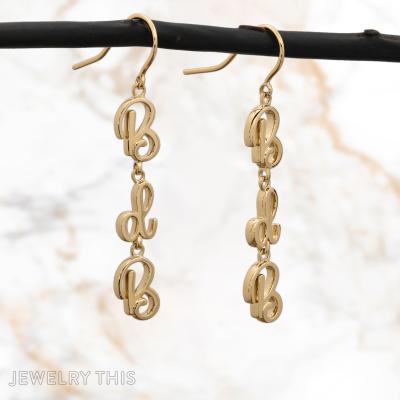
These dangle earrings spell out a set of initials in cursive script, with three letter ...
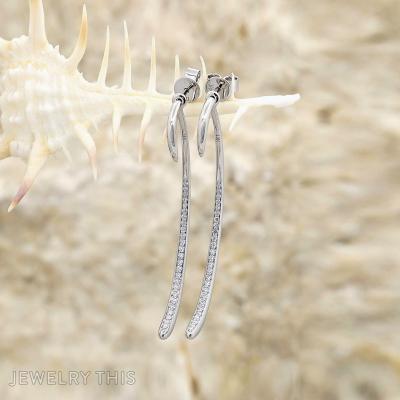
These drop earrings reinterpret a celebrity-inspired tusk silhouette as a two-part design: a small front ...
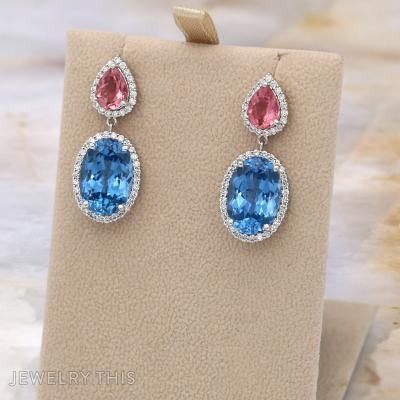
This two-tier drop earring design rebuilds a stolen pair as closely as possible from photographs, ...



