


Silver Web Drop Earrings — Open Lattice Design
$$
Sterling silver
K. lost one of a pair of earrings with an open web-like design and came to us hoping to recreate a match. When the earring intended as a reference went missing in shipping, the design was rebuilt entirely from photographs, capturing the organic lattice pattern and the slight convex curve of the original. She ultimately ordered two pairs so the design could become a regular part of her jewelry wardrobe.
Quick specs
Primary Metal
Primary Stone
Accent Stones
Design Complexity
Intent
Intent: Certainty
Size
Earring drop diameter 38mm; polished sterling silver; leverback-style hook closure.
How they made it distinctive
-
01
Open lattice pattern cut directly into a rounded disc shape, rather than a solid or faceted surface
-
02
Slightly convex curvature preserved from the original earring, confirmed by the client before the design was finalized
-
03
Recreated entirely from photographs after the original reference earring was lost in shipping
-
04
Lever-back style hooks chosen specifically for secure, comfortable wear
-
05
Final 38mm size confirmed using physical resin models the client could compare by hand rather than estimate from measurements alone
How you'd make it yours
Metal: this piece is sterling silver; a new commission could use 14k or 18k gold for a warmer tone at a different weight
Size: this piece is 38mm in diameter; a new piece is sized to the wearer's own preference
Lattice density: this piece uses an open, irregular web pattern; a new commission could use a denser or sparser cut-out arrangement
Hook style: this piece uses leverback-style hooks; a new commission could use fishhook wire, screw-back, or omega clip closures instead
One of a kind: this exact pair was designed and cast for one client and is not reproduced — a new commission is an original piece inspired by this one, not a copy
Design changes made
The earrings were remade in a larger 38mm size after the first version came out smaller than the original — a size that was difficult to specify from photos alone and was refined using physical resin models the client could compare by hand.
Who this is for
This piece is for someone who wants an everyday earring with texture and movement rather than a plain solid shape, and who values getting a beloved design back after it's been lost. It's especially right for anyone who has a favorite pair of earrings they can't imagine replacing with something totally different.
How it's made
The approved design was 3D printed in wax, then attached to a wax tree and set in a flask. The flask was placed in a kiln to burn out the wax, leaving a hollow mold, and molten sterling silver was poured into the mold under heat. Once cooled, the raw casting was removed from the mold and prepared for finishing.
Each earring was cleaned and polished to bring out the open lattice cut-out pattern, with attention paid to keeping the thin web lines crisp and even after casting. Lever-back style hooks were then attached to each disc, chosen specifically for secure, comfortable wear. No stones were set, so the finishing focused entirely on achieving a smooth, consistent polish across the raised lattice lines and the disc's slightly convex surface.
Key note
The finished earrings measure roughly 1.3mm thick — thinner and lighter than the 3D printed model suggested, since the STL preview file used for approval is intentionally scaled larger than the actual cast piece.
Pricing guidance
An open cut-out drop earring design in sterling silver sits toward the lower end of custom earring pricing. Most of the cost comes from the 3D modeling of the lattice pattern and the finishing work needed to keep the thin cut-out lines clean after casting, rather than from material cost. Ordering a second identical pair typically costs less than the first, since the design work is already complete.
Moves price up ↑
- ↑ Upgrading from sterling silver to 14k or 18k gold
- ↑ Adding a denser or more intricate lattice pattern requiring more modeling and finishing time
- ↑ Increasing the earring diameter beyond 38mm, which increases material and casting complexity
- ↑ Adding stone accents within the open lattice sections
- ↑ Requesting a non-standard hook style such as a secure screw-back or omega clip
Moves price down ↓
- ↓ Ordering multiple identical pairs at once, since the 3D design work is reused
- ↓ Reducing the earring diameter to a smaller, simpler size
- ↓ Simplifying the lattice pattern to fewer, larger openings
- ↓ Choosing a standard leverback hook rather than a custom security closure
- ↓ Sticking with sterling silver rather than upgrading the metal
Questions people ask
Yes, recreating a single missing earring to match an existing one is a common request. The process typically starts with the original earring shipped in for direct reference, so the design team can build an accurate 3D model of its shape and proportions. If the original earring becomes unavailable, clear photographs can be used instead, though this makes exact size and thickness estimation more difficult. Either way, you'll review a 3D render before anything is cast so you can confirm it matches your memory of the original.
Sterling silver is a durable metal for everyday jewelry, and a cut-out lattice design like this is cast as one solid piece rather than assembled from separate wires, which helps it hold its shape well. The open areas do mean there's less metal overall, so it's lighter in weight than a solid disc of the same size. With normal wear, occasional cleaning with a silver polishing cloth keeps the finish bright. Avoid bending or applying pressure across the thin lattice lines, since very fine cut-out details can be more prone to distortion than a solid surface.
A design like this, with an open lattice pattern in sterling silver, falls toward the lower end of custom earring pricing. The main cost driver is the 3D modeling work required to create the lattice pattern and the careful finishing needed to keep the cut-out lines crisp after casting, not the metal itself. Ordering additional identical pairs is typically less expensive than the first, since the design and modeling are already complete. Larger diameters, denser patterns, or upgrading to gold would all move the price higher.
Estimating size from a photo alone is approximate at best, since there's often nothing in the image with a known, reliable scale. A more reliable approach is to send precise measurements in inches or millimeters, or to compare a printed or physical resin model directly against the original for a side-by-side check. Resin models are especially useful because they let you hold the actual proposed size in your hand before any metal is cast. Confirming a final measurement before production avoids the need for a costly and time-consuming remake.
For a design of this complexity, the process usually takes about one week for the 3D design and render to be created and approved, followed by another two to three weeks for casting, finishing, and quality inspection. Complications like needing to resolve a sizing question or wait on a lost shipment can extend this timeline. Once the final design and size are approved, production moves fairly quickly since no stone-setting is involved. Rush timelines are sometimes possible but depend on the complexity of the specific design.
Yes, an open cut-out design like this can be cast in yellow, white, or rose gold instead of sterling silver, using the same 3D model. The main consideration is weight and cost, since gold is denser and significantly more expensive than silver, so the same size earring will weigh more and cost more in gold. Because the design is already an open lattice with less overall metal than a solid disc, it's a reasonably practical design to consider upgrading to gold if desired. The lattice pattern itself doesn't need to change to accommodate the metal switch.
Common options include a standard fishhook wire, a leverback closure (a hinged wire that clips securely shut), and a screw-back or omega clip for those who want extra security or don't have pierced ears. Leverback closures are a popular choice for drop earrings of this size and weight because they distribute the weight securely without being difficult to put on. The choice mostly comes down to personal preference for security versus ease of use. Any of these closures can typically be added to a cast lattice-style earring design like this one.
Yes, making a single earring is a common request, especially when the goal is to match an existing earring from a lost pair. The single earring is designed and produced the same way as a full pair, using either the surviving original or clear photographs as reference. Pricing for a single earring is lower than for a full pair, since there's typically an additional cost for each extra earring produced from the same design. This is a standard option and doesn't require any different process than ordering two.
Explore Similar Creations
Every masterpiece starts with a spark. Explore how our clients raw ideas - sketches, heirlooms, inspirations - were transformed into bespoke works of arts.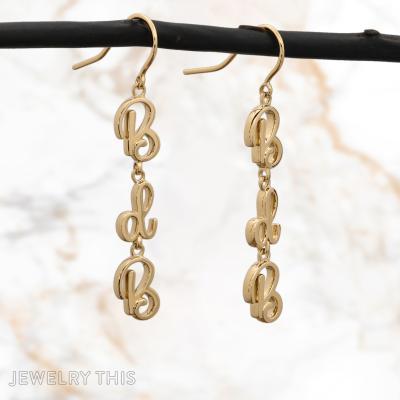
These dangle earrings spell out a set of initials in cursive script, with three letter ...
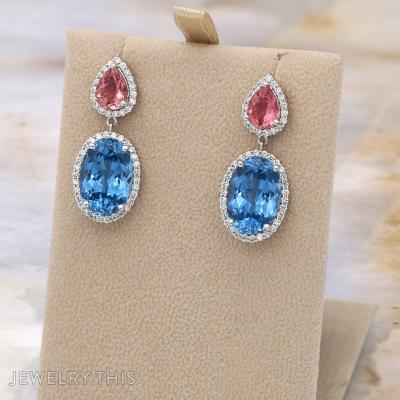
This two-tier drop earring design rebuilds a stolen pair as closely as possible from photographs, ...

These drop earrings pair a sculpted 14k yellow gold fan element — its surface finished ...
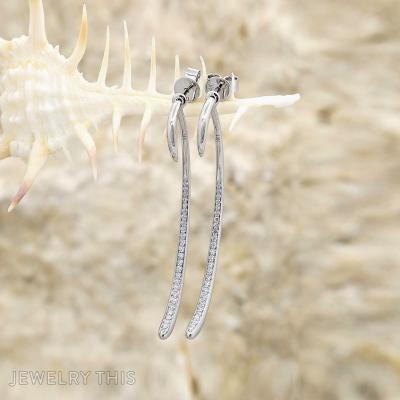
These drop earrings reinterpret a celebrity-inspired tusk silhouette as a two-part design: a small front ...



