


Monogram Drop Earrings — Initials Reborn in Silver
$$
Sterling silver, turquoise
A husband wanted to turn his wife's own high-school sketch of her initials into a real pair of earrings. He worked through several rounds of revisions with the design team — adjusting the outer shape to a full circle and confirming turquoise studs — until he wrote: 'I love them!' On delivery, he said: 'I do! Thank you! Just waiting for the right time to give them to my wife.'
'I love them!' — on design approval
'I do! Thank you! Just waiting for the right time to give them to my wife.' — on delivery
Quick specs
Primary Metal
Shape / Cut
Primary Stone
Accent Stones
Design Complexity
Intent: Certainty
Size
Drop diameter approximately 0.75in (19mm); turquoise stud 3mm round cabochon.
How they made it distinctive
-
01
Monogram cut from the wife's own high-school sketch rather than a studio-designed initial — preserves the original handwriting-like structure
-
02
Outer frame changed from oval to full circle specifically to match how the original sketch was drawn
-
03
Turquoise cabochon studs chosen to match the wife's stated stone preference
-
04
Open cut-out letterforms create a light, airy look despite the dense overlapping E-E-H design
-
05
Non-mirrored correction ensures the monogram reads the same way on both ears, not as a mirror-image pair
How you'd make it yours
Stone: this piece uses turquoise cabochons; a new commission could use onyx, sapphire, or a synthetic stone for a different look or lower maintenance
Metal: this piece is sterling silver; the same cut-out monogram design works in 14k or 18k white gold for added durability
Disc size: this piece is approximately 0.75in in diameter; a new commission could be made smaller for a more delicate look or larger for a bolder statement
Outer frame: this piece uses a full circle; an oval or other geometric outline could be used instead on a new piece
One of a kind: this exact pair of earrings was designed around one wife's own teenage sketch and is not reproduced — a new commission is an original piece inspired by this one, not a copy
Design changes made
The outer frame was changed from an oval to a full circle after the client felt that better matched his wife's original sketch. The turquoise stone was also moved from a flat front placement to the stud top after an early review of the render.
Who this is for
This piece is for someone who wants a deeply personal detail — a sketch, a set of initials, a private joke — turned into something that actually looks like fine jewelry rather than a craft project. It's especially right if the person receiving it drew or made the original design themselves, and the goal is to honor that without changing what made it theirs.
How it's made
The approved 3D design was first 3D-printed in wax, then attached to a wax tree inside a flask. The flask was invested in plaster and placed in a kiln to burn out the wax, leaving a hollow mold. Molten sterling silver was then cast into that mold under pressure, producing the two raw monogram discs before cooling and removal from the mold.
After casting, each disc was cleaned up and polished to a high-shine finish, since the open letterwork has no textured or matte zones to sequence separately. The turquoise cabochons were bezel-set into the stud tops, and the discs were attached below with jump rings so they swing freely. A later correction mirrored one disc so the monogram reads the same direction on both ears.
Key note
Monogram earring pairs are typically mirrored so the design looks symmetrical from the front on both ears — this pair was intentionally re-made non-mirrored so the same initials read correctly on each side.
Pricing guidance
A cut-out monogram drop earring in sterling silver with small gemstone studs sits toward the lower end of the price range for custom earrings. Most of the cost comes from the fine open-cut detail work required to keep thin letterforms structurally sound, rather than from the stone or metal itself. Moving to a precious metal or adding more gemstone detail is where the price increases most from there.
Moves price up ↑
- ↑ Upgrading from sterling silver to 14k or 18k white gold
- ↑ Using a larger or higher-grade turquoise, or switching to a diamond or sapphire accent
- ↑ Adding stones into the monogram cut-out itself rather than just the stud
- ↑ Increasing the disc diameter beyond the current size
- ↑ Adding a two-tone finish between the frame and the letterforms
Moves price down ↓
- ↓ Reducing the disc size for a more delicate, lower-profile look
- ↓ Using a simulated or synthetic stone instead of natural turquoise
- ↓ Simplifying the monogram to fewer overlapping letters
- ↓ Omitting the gemstone stud entirely for a plain post
Questions people ask
Yes. A hand-drawn monogram or sketch can be used as the starting reference for a 3D design, which is then refined through sketches and renders until it matches the original drawing as closely as possible. The design team typically produces a rough sketch first, followed by a photorealistic 3D render for approval before anything is cast. Minor adjustments, like changing an oval outline to a full circle, are normal during this process. The final piece is cast in metal from the approved 3D model, not scanned directly from the drawing.
Turquoise is a relatively soft stone, ranking around 5 to 6 on the Mohs hardness scale, which makes it more prone to scratching or absorbing oils than harder stones like sapphire or diamond. For a small bezel-set stud like this, the metal rim around the stone offers good physical protection during daily wear. It should still be kept away from harsh chemicals, perfumes, and prolonged water exposure, which can affect its color over time. Many wearers get years of use from turquoise with basic care, like removing earrings before showering or swimming.
Sterling silver and white gold can look very similar when white gold is rhodium-plated, but they differ in durability and maintenance. White gold is generally more resistant to tarnishing and holds its finish longer, while sterling silver may need occasional polishing to stay bright. White gold is also a precious metal with a higher material cost, which is reflected in the price difference between the two options. For a design with fine open cut-out detail, both metals can hold the letterforms structurally, so the choice mostly comes down to budget and preference.
A cut-out monogram drop earring in sterling silver with small gemstone accents generally falls toward the lower end of custom earring pricing. The main cost driver is the labor involved in cutting and finishing fine letterform detail so it holds up structurally, rather than the metal or stone itself. Switching to a precious metal like white gold, or upgrading the gemstone, moves the price up from there. Simpler monograms with fewer overlapping letters tend to cost less than more intricate designs.
The full process from approved design to finished piece typically takes about four to five weeks. This includes design refinement and render approval, followed by wax printing, casting, polishing, and stone setting. Sourcing standard gemstones like turquoise does not usually add extra time. Shipping is handled separately once the final payment and quality check are complete.
Yes, though it requires specific attention during design. Monogram or lettered earrings are often mirrored by default, so the design looks symmetrical when viewed from the front on both ears, but this can mean the lettering reads backward on one side when worn. If you want both earrings to read identically rather than mirrored, this needs to be confirmed explicitly before production, since mirroring is the standard approach otherwise.
Yes, the outer frame shape is one of the more flexible elements in a cut-out design like this. Changing from an oval to a full circle, or vice versa, is a straightforward adjustment at the sketch or render stage before casting begins. It's easier and less costly to make this kind of change early in the design process rather than after the piece has been cast.
Small round cabochon stones like turquoise work well for stud accents because they sit low and secure in a bezel setting. Other options in a similar size and setting style include sapphire, onyx, or synthetic alternatives if a lower-maintenance option is preferred. The best choice usually depends on the color story of the piece and how durable the wearer needs the stone to be for daily wear. Faceted stones can also work in this position but require a different setting style than a cabochon.
Explore Similar Creations
Every masterpiece starts with a spark. Explore how our clients raw ideas - sketches, heirlooms, inspirations - were transformed into bespoke works of arts.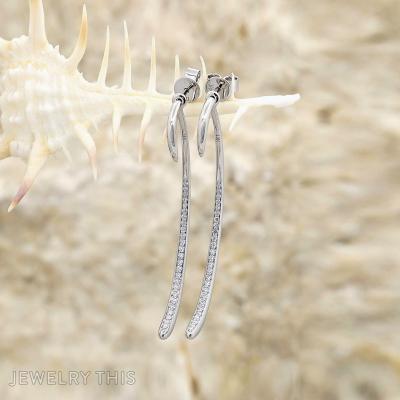
These drop earrings reinterpret a celebrity-inspired tusk silhouette as a two-part design: a small front ...
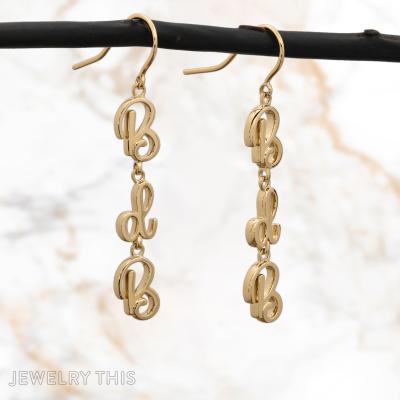
These dangle earrings spell out a set of initials in cursive script, with three letter ...

These drop earrings pair a sculpted 14k yellow gold fan element — its surface finished ...

This pair of drop earrings recreates a lost earring’s open web pattern in polished sterling ...
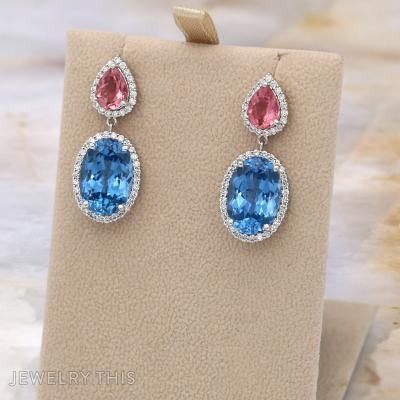
This two-tier drop earring design rebuilds a stolen pair as closely as possible from photographs, ...

These drop earrings take the curved, horn-like shape of an existing favorite earring and rework ...

These drop earrings were built around a reference photo the client loved, translated into three ...

These drop earrings take their geometry directly from a matching pendant design, scaled down and ...



