


Two-Tone Braided Twist Ring with Montana Sapphire
$$$
14k white gold, 14k rose gold, Montana sapphire, sapphire, amethyst, peridot, green tourmaline, diamond
For their 20th anniversary, a husband set out to recreate the spirit of his wife's three-metal wedding band in a new ring, built around her love of Montana sapphires and understated, durable designs suited to their life with horses. The final piece centers a Montana sapphire in a bezel setting, flanked by birthstones for the two of them and their three children. He wrote afterward that he loved the setting, the stones, and the two-tone look, with only the cast twist reading a little different than the hand-twisted wire of the original band.
'This is going in a great direction. I particularly like the braided twist in the band. This is really excellent.' — on seeing an early design mockup
'I love the setting and the stones in the bezel, the band, the way that the setting sits up, and the two-tone. I'm a little reserved with the look of the twisted casting — it just looks a little more artificial than I had envisioned it.' — on delivery
Quick specs
Design type
Primary Metal
Secondary Metal
Shape / Cut
Primary Stone
Accent Stones
Design Complexity
Intent: Certainty
Size
Ring size 11.75 US (21.39mm reference). Band width 4mm. Center stone 5mm. Small unpatterned section built into the back of the band for future resizing.
How they made it distinctive
-
01
Rose gold twisted band paired with white gold rails and setting — a simplified two-tone take on an original three-metal wedding band concept
-
02
Bezel setting chosen for the center sapphire to withstand an active, hands-on lifestyle around horses
-
03
Five birthstones set into the sides of the bezel, one for each parent and each of the couple's three children, split three on one side and two on the other
-
04
A smooth, unpatterned section built into the back of the band specifically to allow for future resizing on a heavily patterned design
-
05
Montana sapphire selected as the center stone to reflect the wife's known preference for the region's stones
-
06
Green tourmaline substituted for October's traditional opal or amethyst-adjacent softness concerns, chosen to match a specific child's favorite color
How you'd make it yours
Center stone: this piece uses a Montana sapphire; a new commission could use a different colored sapphire, ruby, or lab-created stone for the same durability with a different hue
Metal combination: this piece pairs rose gold and white gold; the same twisted design language could be done in yellow and white, or a single metal tone to simplify construction
Birthstone accents: this piece carries five family birthstones; a new piece could use more, fewer, or none depending on the family being represented
Band texture: the twisted braid pattern is central to this design and would need to be simplified or replaced entirely to change the labor and cost structure
Resizing allowance: the smooth back section is a functional design choice that could be widened or repositioned on a new commission
One of a kind: this exact ring was designed for one client's wife and is not reproduced — a new commission is an original piece inspired by this one, not a copy
Design changes made
The design shifted from a full three-metal twist to a rose gold twisted band with white gold outer rails and setting, after the team explained that casting all three metals together would significantly increase labor and cost. Birthstones for the couple and their three children were added into the sides of the bezel, split three on one side and two on the other, and a smooth unpatterned section was built into the back of the band to allow for future resizing.
Who this is for
This piece is for someone who wants an anniversary ring that carries real family meaning without looking delicate or fussy. It's especially right for someone with an active, hands-on lifestyle who still wants a piece with sentimental depth — durable enough for daily life, but personal enough that every element means something specific to the people it represents.
How it's made
Once the design was approved, a 3D digital model was built and reviewed with the client from every angle before any metal was committed. The ring's rails and setting were cast as separate components using a wax model burned out of an investment mold, then the pieces were assembled and soldered together — small locating marks placed during modeling helped align the rose gold twist section with the white gold rails during this step.
After casting and assembly, the piece was cleaned, polished, and finished in its two metal tones — white gold rails and setting, rose gold twist. The Montana sapphire was bezel-set at the center in white gold, and five small birthstones, one for each family member, were set into the sides of the bezel where it meets the band, split three stones on one side and two on the other.
Key note
The small raised dots visible near the center of the band aren't decorative — they're alignment marks used to solder the separately cast rose gold and white gold sections together into one piece.
Pricing guidance
A two-tone twisted band with a bezel-set colored stone and multiple small accent stones sits toward the upper end of the mid range for custom ring work. Constructing the band from separately cast metal sections that are later soldered together adds meaningfully more labor than a single-metal casting, and that assembly labor is the main cost driver here. Stone sourcing and the number of accent stones move the price further from that baseline.
Moves price up ↑
- ↑ Casting the band in three metal colors instead of two, which requires an additional cast component and more soldering
- ↑ Sourcing a certified-origin sapphire (such as a verified Yogo-mine stone) rather than a general Montana sapphire
- ↑ Increasing the number or size of the accent birthstones set into the bezel sides
- ↑ Using a larger center stone that requires a reinforced bezel
- ↑ Adding fine surface detailing, such as filigree or etching, at the points where the setting meets the band
Moves price down ↓
- ↓ Casting the entire band in a single metal color rather than two-tone construction
- ↓ Reducing the accent stone count or omitting the birthstone detail
- ↓ Choosing a smaller center stone
- ↓ Using a simpler polished bezel without side detailing
- ↓ Selecting a widely available blue Montana sapphire rather than a rarer color variant
Questions people ask
Yes, Montana sapphires are sourced directly from cutters who work with Montana rough. They come in a range of colors beyond blue, including teal, yellow, green, and purple tones. Origin-verified stones from specific mining locations, such as Yogo Gulch, are rarer and typically cost more because supply is limited. A general Montana-sourced sapphire without that specific provenance is more readily available and budget-friendly.
Sapphire rates a 9 on the Mohs hardness scale, just below diamond, making it one of the most durable gemstones available for daily wear. A bezel setting adds further protection because the metal rim surrounds the stone's edge completely, shielding it from knocks better than a prong setting would. This combination is a common choice for people with active or hands-on lifestyles. It is a solid choice for someone who works with their hands regularly.
Amethyst and peridot are both on the softer end of the durability scale and can scratch or chip more easily with daily wear. Opal is even softer and is not commonly available in the very small sizes needed for accent stone work. For birth months tied to these stones, a more durable substitute in a similar color family, such as tourmaline for an October birthstone, is often recommended instead. This keeps the sentimental representation intact while improving long-term wearability.
A ring combining a cast twisted band, a bezel-set center stone, and multiple small accent stones generally falls in the upper mid range for custom ring work. The main driver is labor: casting metal sections separately and soldering them together takes considerably more time than a single-piece casting. Stone selection, especially the center stone and any origin-specific sourcing, is the other major variable. Simplifying to a single metal tone or fewer accent stones brings the cost down noticeably.
It depends on the construction. A fully patterned twisted band is difficult to resize because there's no plain section to cut and rejoin without disrupting the pattern. Many designs solve this by building in a small smooth, unpatterned section at the back of the band specifically for future resizing. If that detail isn't included, resizing a heavily patterned band can require more extensive rework.
The full process typically takes about six to eight weeks from approved design to delivery. After the design is approved and stones are sourced, a wax model is 3D printed and cast, which usually takes one to two weeks. Assembly, soldering multiple metal sections together, stone setting, and finishing typically add another two to four weeks depending on complexity. Shipping time is separate and depends on the destination.
No, they are different processes with a different look. A hand-twisted wire band is made by physically twisting two wires together and soldering them in place, which produces slightly more organic, irregular texture. A cast twisted design is modeled digitally and cast as a single piece, which is more efficient and less labor-intensive but can read as a bit more uniform or precise compared to a hand-twisted original.
Yogo sapphires come specifically from the Yogo Gulch mining area in Montana and are known for a distinctive cornflower-blue color with no need for heat treatment. General Montana sapphires can come from other deposits within the state and occur in a wider range of colors, including teal, yellow, green, and purple. Because Yogo-specific stones are harder to verify and lower in supply, they typically carry a higher price than sapphires simply labeled as Montana-sourced. Some sellers use the terms interchangeably without proof of origin, so verified provenance matters if authenticity is important to you.
Explore Similar Creations
Every masterpiece starts with a spark. Explore how our clients raw ideas - sketches, heirlooms, inspirations - were transformed into bespoke works of arts.
This Yellow gold and Diamond ring captures a symphony of brilliance. This whimsical masterpiece features ...

Platinum ring featuring a unique and intricate twisted design. The top portion of the ring ...
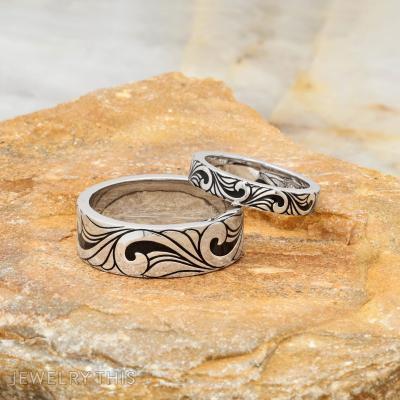
Celebrate your journey with these sterling silver wedding bands, featuring a soulfully crafted Western-inspired design. ...

This stunning wedding set is crafted from 18karat and features a breathtaking 2.8carat Round Diamond ...

This elegant three-stone engagement ring features a classic design. A dazzling round diamond sits at ...

This chunky, rectangular-top ring was remade in solid 14k yellow gold from a plastic original ...

This exquisite engagement ring showcases a striking teal-colored emerald-cut sapphire as its centerpiece. The vibrant ...

This custom ring is a heartfelt recreation of a beloved grandmother’s ring, meticulously crafted to ...
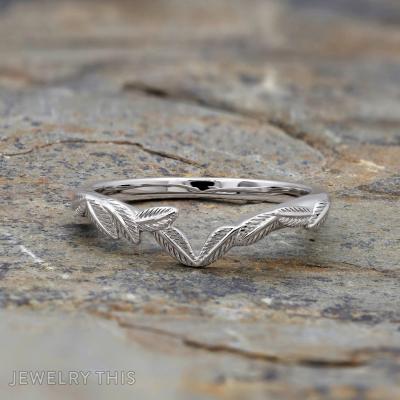
This elegant sterling silver wedding band features a subtle v-shape, designed to fit perfectly alongside ...

This engagement ring began as two heirloom pieces — an original engagement ring and anniversary ...

This custom engagement ring is a breathtaking solitaire, set in platinum with a unique and ...

This custom ring is a stunning tribute to heritage and elegance, centered around the client’s ...



