


Ruby Flower Cluster Ring in White Gold — Anniversary Design
$$$
14k white gold, lab-created ruby, lab-created diamond
A husband set out to mark his 15th wedding anniversary with a ring built around rubies and diamonds clustered together, working from a reference photo he brought to the design team. Partway through, he asked for the edge stones to angle outward rather than sit flat, a small change that gave the clusters more depth. When sourcing showed the natural rubies would run well above budget, he chose lab-created stones instead to keep the design intact for the May deadline.
Quick specs
Design type
Primary Metal
Shape / Cut
Primary Stone
Accent Stones
Style
Design Complexity
Intent: Certainty
Size
Ring size 8.25 US (18.95mm inner diameter).
How they made it distinctive
-
01
Three flower-shaped clusters of rubies and diamonds rather than a single center stone, giving the ring a bold, dimensional cocktail-ring presence
-
02
Outer rubies set at an angle rather than flush with the band, a mid-design change that gives each cluster more depth and movement
-
03
Lab-created rubies and diamonds chosen over natural stones to keep the full eighteen-stone design within the original budget range
-
04
Open, split-shank gallery beneath the clusters keeps the ring from feeling heavy despite the high stone count
-
05
Designed specifically to mark a 15th wedding anniversary rather than as an everyday band
How you'd make it yours
Stone type: this piece uses lab-created rubies and diamonds; a new commission could use natural stones for a higher cost at the same look
Cluster count: this piece uses three flower clusters; a new design could use two larger clusters or a single center stone with a halo
Metal: this piece is 14k white gold; the same cluster language works in yellow or rose gold, or platinum
Band structure: this piece uses a split-shank open gallery; a new piece could use a solid band for a different profile
One of a kind: this exact ring was designed for one client's anniversary and is not reproduced — a new commission is an original piece inspired by this one, not a copy
Design changes made
The outer ring of stones was angled outward to match a reference photo the client provided, rather than sitting flush with the band as in the first sketch. The stone sourcing also shifted from natural to lab-created rubies and diamonds after natural stone costs came in higher than estimated, keeping the same design at the originally quoted price range.
Who this is for
This piece is for someone who wants a cocktail ring with real visual weight for a milestone occasion, not a quiet everyday band. It's especially right if you're drawn to a cluster of stones over a single solitaire, and you want the option to use lab-created stones to get a bigger, bolder design without stretching the budget.
How it's made
Once the design was approved, the team built a 3D CAD model and printed a resin version to confirm the proportions of the three flower clusters before any metal was committed. The resin was reviewed internally, then the piece was cast in 14k white gold using the lost-wax casting method, producing the open, split-shank band and the raised settings for each cluster.
After casting, the band was cleaned up and polished to a bright finish, with extra attention to the open gallery underneath the clusters where the structure is most visible. The fifteen rubies were set first into their individual prong settings across the three flower clusters, followed by the three center diamonds, each set to sit slightly proud of the ruby petals around it.
Key note
The outer rubies were deliberately set at an angle rather than flush with the band, which is why each cluster reads as a dimensional flower rather than a flat pattern when viewed from the side.
Pricing guidance
A multi-stone cluster ring like this, with fifteen colored stones and three accent diamonds set in white gold, sits in the mid range for custom cocktail rings of this complexity. Most of the cost comes from the labor of setting eighteen individual stones across three raised clusters rather than from any single stone. Whether the stones are natural or lab-created is the biggest lever on price at this stone count.
Moves price up ↑
- ↑ Using natural rubies instead of lab-created rubies at this quantity and size
- ↑ Increasing the center diamonds' carat weight or clarity grade
- ↑ Adding a fourth stone cluster or extending the design further around the band
- ↑ Upgrading from 14k to 18k white gold or platinum
- ↑ Adding hand engraving to the open gallery or band shoulders
Moves price down ↓
- ↓ Reducing the total stone count from eighteen to a smaller cluster arrangement
- ↓ Choosing a single larger center stone instead of three diamond accents
- ↓ Using a simpler band without the split-shank gallery structure
- ↓ Selecting smaller millimeter rubies to reduce per-stone setting labor
- ↓ Using sterling silver with rhodium plating instead of 14k white gold
Questions people ask
Lab-created rubies have the same chemical composition, hardness, and optical properties as natural rubies — they are not simulants like glass or cubic zirconia. Rubies rate 9 on the Mohs hardness scale, making them one of the most durable gemstones for daily wear regardless of origin. The main difference is formation: natural rubies form in the earth over millions of years, while lab rubies are grown in a controlled environment in a fraction of the time. Visually, a trained jeweler needs lab equipment to reliably tell them apart, and to the naked eye they look identical.
This particular ring uses eighteen stones total — fifteen round rubies arranged in three flower-shaped clusters, each centered with one of three round diamonds. Cluster rings like this are typically built from multiple smaller stones rather than one large center stone, which lets the design achieve a bold, dimensional look at a lower cost than a single large stone of equivalent visual impact. The stone count and arrangement can be adjusted significantly depending on the desired scale and budget.
A multi-stone cluster ring with this many individually set stones sits in the mid range for custom cocktail rings. The primary cost driver is labor — setting eighteen stones by hand across three raised clusters takes considerably longer than setting a single center stone. Choosing lab-created stones over natural ones at this stone count is the single biggest factor in keeping the cost down without changing the design.
A ring of this complexity typically takes about one week for the design phase — sketch, 3D model, and render — followed by three to five weeks for production once the design is approved. Sourcing can add time if a stone type needs to be reconfirmed, as happened here when natural ruby pricing came in higher than expected and the design shifted to lab-created stones. From deposit to shipping, a project like this typically spans five to six weeks total under standard timing.
Yes — this exact ring was adjusted during the design phase so the outer stones sit angled outward rather than flush with the band, based on a reference photo the client provided. Angling the outer stones gives each cluster more visual depth and makes the flower shape read more three-dimensionally from the side. This kind of adjustment is made at the 3D modeling stage, before casting, so it is confirmed in the render before any metal is committed.
14k white gold is a strong, practical choice for a multi-stone ring like this because it balances durability with weight — important when eighteen stones and three raised clusters already add visual and physical weight to the hand. White gold is rhodium-plated to achieve its bright white finish, and that plating will wear gradually with daily use, typically needing re-plating every one to two years depending on wear. The 14k alloy is harder than 18k, which helps the prongs holding the stones resist wear over time.
Yes, the flower-cluster format could be redesigned around a single larger center stone with the remaining rubies used as a surrounding halo or side accents instead of three separate clusters. This would shift the visual weight toward one focal point rather than three balanced clusters. The choice comes down to preference — some wearers want the dimensional, scattered-cluster look, while others prefer a clear single focal point.
Multi-stone cluster rings with many prongs benefit from an annual prong check, since each stone is held independently and heavy daily wear can gradually loosen individual prongs over time. This isn't unique to lab-created stones — it applies to any ring with eighteen separately set stones, natural or lab-grown. Regular inspection by a jeweler is the simplest way to catch a loose prong before a stone is at risk of falling out.
Explore Similar Creations
Every masterpiece starts with a spark. Explore how our clients raw ideas - sketches, heirlooms, inspirations - were transformed into bespoke works of arts.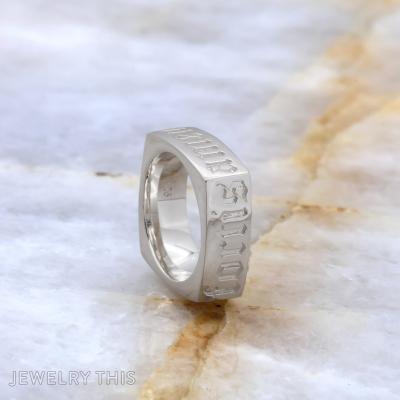
This custom silver ring showcases a bold, square design with beautifully engraved Old English script ...

This sterling silver ring blends delicate beauty with symbolic meaning. The ring features a heart-shaped ...

Meticulously crafted in 14K gold, this men’s ring is a stunning combination of classic style ...

This beautiful White gold ring is brimming with symbolism to celebrate a marriage of 20 ...

This custom wedding set is a celebration of everlasting love and elegance. The engagement ring ...
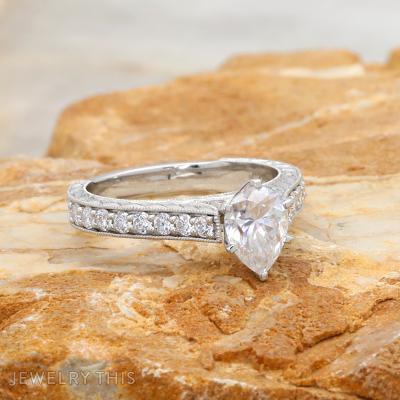
This engagement ring replica was built to stand in for a treasured original the client ...


This 5mm wide 14k rose gold anniversary ring is a one-of-a-kind piece. It features three ...


This engagement ring was recreated to resemble a vintage three-ring set from the early 1980s, ...
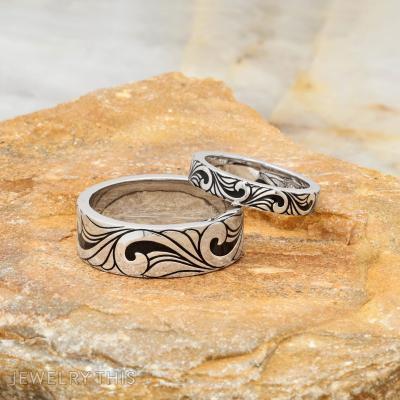
Celebrate your journey with these sterling silver wedding bands, featuring a soulfully crafted Western-inspired design. ...

A self gift to replace her wedding ring and commemorate her divorce. This captivating yellow ...



