


Organic Three-Stone Engagement Rings with Black Diamonds
$$$
14k white gold, salt and pepper diamond, black diamond
A couple designing matching engagement rings together wanted something that didn't look like anything in a typical case — a rose-cut salt and pepper diamond center, flanked by raw black diamonds, in a free-form organic setting. The design evolved significantly along the way: moonstone gave way to raw black diamond for durability, a faceted center stone became an unconventional rectangular cut, and the prongs were reshaped to look hand-formed rather than machine-set. When the rings arrived, she wrote: 'We got the rings and are so pleased with them!'
'They are absolutely beautiful!' — on seeing the sourced center diamonds
'We love them!' — on seeing the wax resin prototypes
'We got the rings and are so pleased with them!' — on delivery
Quick specs
Design type
Primary Metal
Shape / Cut
Primary Stone
Accent Stones
Design Complexity
Intent
Intent: Certainty
Size
Two rings, matching design. Ring 1: size 9 US, center stone 0.69 carat (5.8mm x 5.09mm). Ring 2: size 7 US, center stone 0.79 carat (6.94mm x 5.45mm). Each flanked by two raw black diamond side stones.
How they made it distinctive
-
01
Rose-cut salt and pepper diamonds chosen for a peppery, heavily-included look rather than a clean colorless stone
-
02
Side stones switched from moonstone to raw black diamond specifically for durability under daily, hands-on use
-
03
Wax settings hand-carved around the actual scanned stones rather than built from a standard template, since the rough diamonds have no uniform shape
-
04
Prongs filed and shaped after casting to read as organic, claw-like forms instead of standard faceted prongs
-
05
Made as a coordinated pair in two different ring sizes, with stones matched for consistent size, shape, and color across both rings
How you'd make it yours
Stone type: this piece uses a rose-cut salt and pepper diamond center; a new commission could use a different diamond cut or a colored stone such as sapphire
Side stones: this piece uses raw black diamonds; a new commission could use faceted diamonds or a colored gem for more durability trade-offs
Metal: this piece is 14k white gold; the same organic hand-carved style works in yellow gold, rose gold, or platinum
Prong style: this piece uses hand-filed organic free-form prongs; a new commission could use a more traditional claw or bezel setting
One of a kind: this exact pair of rings was designed and carved around one specific pair of diamonds for one couple, and is not reproduced — a new commission is an original piece inspired by this one, not a copy
Design changes made
The side stones shifted from faceted moonstone to raw black diamond for durability, and the setting style moved from standard prongs to a free-form, organic metal treatment that mirrors the rough texture of the stones. The center stone diamonds were also re-sourced more than once to get a closer shape and color match between the pair.
Who this is for
This pair is for a couple who wants engagement rings that look hand-formed rather than catalog-made — low-profile, textured, and built around the natural irregularity of raw stone rather than hiding it. It's especially right for two people in hands-on work who need something durable and petite enough not to get in the way, but who still want their rings to feel distinctly their own.
How it's made
Because the center and side stones were irregular, rough-cut material rather than standard calibrated stones, the design process started with sourcing and scanning the actual diamonds before any model was built. The master jeweler hand-carved the wax for each ring around the scanned stones so the settings would fit their exact shapes, rather than designing a setting first and sourcing stones to match. Once the wax carvings were approved, the rings were cast in 14k white gold using the lost-wax casting method, producing the raw metal rings ready for stone setting.
After casting, the jeweler cut a seat for each stone directly into the metal and folded the prongs over by hand, then filed and textured them to read as organic, claw-like forms rather than standard prongs. The band surface was given a hammered, matte finish to carry that same raw, hand-worked character through the whole piece. The rose-cut diamonds and raw black diamonds were set last, once all of the shaping and surface finishing was complete.
Key note
The wax models for these rings were hand-carved around the actual scanned diamonds rather than built from a generic setting, since the rough, irregular shape of each stone meant no standard prong setting would fit.
Pricing guidance
A pair of organic, hand-carved engagement rings set with rough diamond material sits toward the higher end for custom engagement work of this complexity. Sourcing and hand-shaping settings around irregular raw stones takes considerably more jeweler time than setting standard calibrated stones, and that labor — not the metal — is the main driver of cost here. Because two rings were made as a matched set, the cost reflects two individually carved and finished pieces rather than one.
Moves price up ↑
- ↑ Sourcing matched sets of rough or rose-cut diamonds that need to be shape- and color-paired across multiple stones
- ↑ Hand-carving wax settings around irregular stones rather than using a standard setting template
- ↑ Adding a second ring to create a matching set, which doubles the carving and finishing labor
- ↑ Upgrading the band metal from 14k white gold to 18k white gold or platinum
Moves price down ↓
- ↓ Choosing a single ring instead of a matching pair
- ↓ Using standard calibrated round or faceted stones instead of rough, uniquely shaped diamonds
- ↓ Simplifying the prong style to a standard claw setting rather than a hand-textured organic form
- ↓ Selecting lab diamonds or moissanite instead of natural salt and pepper and black diamonds
Questions people ask
A salt and pepper diamond is a natural diamond with visible white and black inclusions scattered through the stone, giving it a speckled, peppery look instead of a clear, colorless appearance. It is chemically identical to any other natural diamond, so it carries the same 10 hardness rating on the Mohs scale and is just as durable for daily wear. The inclusions are purely cosmetic and do not weaken the stone structurally in typical use. Many people choose salt and pepper diamonds specifically because no two look alike, unlike graded colorless diamonds.
Yes, raw diamonds can be set securely for daily wear, but the setting has to be built around the stone's natural shape rather than forced into a standard prong template. In this style, the jeweler cuts a seat into the metal that matches the stone's exact contours and then folds the metal prongs over it by hand. Raw diamond is still diamond, so it resists scratching extremely well, though an irregular surface can be slightly more prone to chipping at thin edges than a faceted stone. Anyone considering raw stones for a ring worn daily, especially in a hands-on job, should ask the jeweler about the specific seating method being used.
Moonstone is a beautiful stone but it only rates about 6 to 6.5 on the Mohs hardness scale, which makes it prone to chipping and scratching with regular wear, especially in a side-stone position where it takes more daily impact. Black diamond, by contrast, has the same 10 hardness rating as any other diamond and holds up to hands-on work far better. The visual trade-off is that black diamond reads as a deep, opaque black rather than moonstone's pale, glowing blue sheen. For anyone who works with their hands often, durability concerns like this are a common reason to swap a softer stone for a harder one late in the design process.
A matched pair of hand-carved, organic-style engagement rings with rough diamond center and side stones sits toward the higher end of custom engagement work, largely because of the labor involved. The jeweler has to source stones that are shape- and color-matched to each other, then hand-carve a wax setting around each stone individually rather than using a repeatable setting template. Making two rings as a set essentially doubles that hand-finishing work compared to a single ring. Metal choice, stone count, and the complexity of the organic prong work are the biggest variables in the final cost.
Sourcing irregular or rough-cut stones takes longer than pulling a standard calibrated stone from inventory, since the jeweler is often looking for a specific shape or inclusion pattern and sometimes needs multiple rounds of options before finding a good match. Once stones are secured, hand-carving the wax model around the actual scanned stone, rather than a generic setting, adds additional time compared to a standard cast ring. All together, a project like this can take considerably longer than a standard engagement ring timeline, especially when a matching pair with coordinated stones is involved. Anyone working on a design like this should expect the sourcing stage, not the casting stage, to be the longest part of the process.
Yes, the hand-carved, free-form prong technique used here is a wax-carving and metalworking method rather than something specific to white gold, so it can be executed in yellow gold, rose gold, or platinum as well. The main consideration is that platinum is a harder metal to hand-file and texture compared to gold, which can add time to the finishing stage. The organic, claw-like prong look comes from how the metal is cut, folded, and filed around the stone after casting, not from the metal type itself. Color and warmth will shift depending on the metal chosen, but the technique translates across all of them.
Yes, making a matching set in two different sizes is a standard request and doesn't change the design process, since each ring is modeled and cast to its own wearer's measurements from the start. The challenge is usually in keeping the stones visually consistent across both rings, since center and side stones for one ring need to be a comparable size, shape, and color to the stones in the other. The ring shanks themselves are simply sized individually like any other ring. This approach works well for couples who want a shared design language without wearing identical-sized pieces.
Yes, especially with rough or rose-cut diamonds, where no two stones are naturally alike. A jeweler working with irregular material will often scan and compare candidate stones side by side before committing, because a visibly mismatched pair in a matching set is noticeable in the final piece. This can mean going through a few rounds of sourcing before landing on a pair that reads as a true match in size, shape, and color depth. It takes longer than picking two stones off a standard inventory sheet, but it protects the overall look of a matched set.
Explore Similar Creations
Every masterpiece starts with a spark. Explore how our clients raw ideas - sketches, heirlooms, inspirations - were transformed into bespoke works of arts.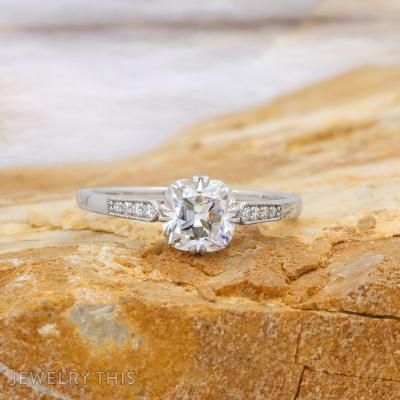
This engagement ring draws on Victorian-era design language, built around a cushion-shaped old mine cut ...

Introducing our elegant Gold-Plated Silver Oval Engagement Ring, adorned with a stunning 7x5mm oval lab-grown ...

This enchanting white gold engagement ring is designed to capture a botanical-inspired motif. The centerpiece ...

This unique yellow gold engagement ring celebrates the allure of the color green with its ...
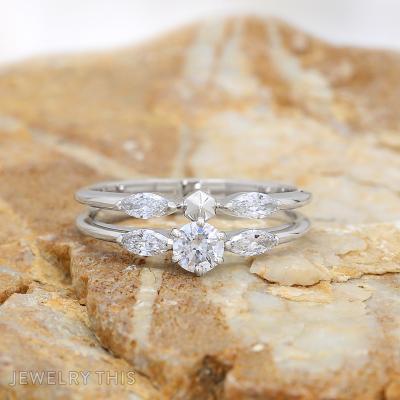
This two-band engagement and wedding set was recreated in 14k white gold from a single ...
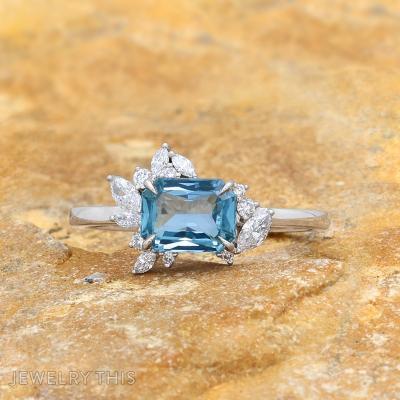
This captivating white gold engagement ring features a striking emerald-cut sapphire at its center, showcasing ...
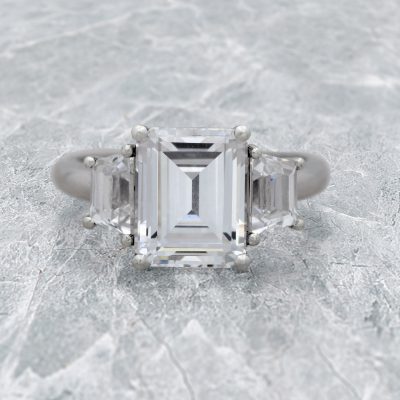
Modern three stone engagement ring set with a center 10 x 8 mm emerald cut ...

Celebrate your love with this stunning 14k yellow gold engagement ring, designed to make a ...

Bold and captivating, this engagement ring is a striking symbol of individuality and elegance. At ...

This is a custom-designed travel ring created to replicate the client’s original engagement ring. The ...

This engagement ring pairs a 2-carat-class radiant cut lab diamond, set horizontally across a wide ...
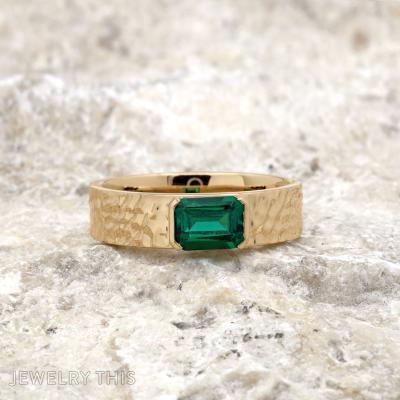
This striking 14-karat yellow gold band offers a bold, handcrafted aesthetic that balances rugged texture ...



