
Black & Silver Engagement Ring With Trillion Center Stone
$
Sterling silver, black rhodium plating, cubic zirconia
J. came to us with a reference photo of a ring she liked, but wanted the small center stones replaced with a single triangle-shaped stone and the option of an all-black or silver band. Working from two different reference images, we combined the structure of one with the more rectangular stone framing of the other to land on the final design. When it arrived, she wrote: 'It came in and I absolutely LOVE it!!'
'Thank you!!! I love it!!!!' — on seeing the first render
'It came in and I absolutely LOVE it!! Thank you so much!!' — on delivery
Quick specs
Design type
Primary Metal
Shape / Cut
Primary Stone
Accent Stones
Design Complexity
Intent: Certainty
Size
Ring size 12 US (21.39mm). Center stone 6.5mm trillion cut.
How they made it distinctive
-
01
Single trillion-cut center stone replaces the small clustered stones from the original reference photo, at the client's request
-
02
Two-tone finish combines black rhodium-plated edges with a polished silver center channel for graphic contrast
-
03
Design blended from two different reference rings — the base structure of one and the more rectangular stone framing of the other
-
04
Bezel setting chosen for the trillion stone's sharp corners, protecting them while keeping a low, catch-free profile
How you'd make it yours
Stone type: this piece uses CZ; a new commission could use a lab diamond or moissanite for more durability and sparkle
Metal: this piece is sterling silver; the same two-tone design language works in white or yellow gold
Finish: this piece is two-tone black rhodium and silver; a new piece could be single-tone black or all-silver
Stone shape: this piece uses a trillion cut; a new commission could use a different center shape with the same bezel approach
One of a kind: this exact ring was designed for one client and is not reproduced — a new commission is an original piece inspired by this one, not a copy
Design changes made
The original reference ring had small clustered center stones; the client asked for those replaced with a single trillion-cut stone and a more rectangular stone-framing shape blended in from a second reference image she sent.
Who this is for
This piece is for someone who knows they don't want a conventional engagement ring but doesn't have one single reference image that captures it. It's especially right if you're drawn to graphic contrast and clean geometry over a traditional diamond cluster, and you're comfortable blending ideas from more than one inspiration photo into something new.
How it's made
Once the design was approved, the ring was 3D printed in wax and attached to a wax tree inside a flask. The flask was placed in a kiln to burn out the wax, leaving a hollow mold, and molten sterling silver was poured into the mold under pressure. After cooling, the raw casting was removed from the mold and prepared for finishing, cleaning, and polishing.
The band's outer edges were plated in black rhodium while the center channel was left in high-polish silver, creating the two-tone contrast visible on the finished ring. The trillion-cut CZ center stone was then bezel-set low into the band, keeping the profile smooth and catch-free. Final polishing and quality control followed before the ring was packaged for shipping.
Key note
The black rhodium plating is applied only to the outer edges of the band, with the center channel masked off and left in polished silver — a two-step finishing process rather than a single uniform plating pass.
Pricing guidance
A sterling silver engagement ring with black rhodium plating and a bezel-set trillion CZ center stone sits toward the lower end of custom engagement ring pricing. Most of the cost is in the two-tone finishing process and the precision bezel setting required for a trillion-shaped stone, which is more labor-intensive to set than a round stone. Moving to a precious metal or a larger center stone would shift the price upward from there.
Moves price up ↑
- ↑ Upgrading the band metal from sterling silver to 14k white or yellow gold
- ↑ Replacing the CZ center stone with a lab diamond or moissanite of the same cut
- ↑ Increasing the center stone size beyond 6.5mm
- ↑ Adding accent stones along the band in addition to the center stone
- ↑ Extending the black rhodium plating into a more complex multi-zone pattern
Moves price down ↓
- ↓ Reducing the center stone size below 6.5mm
- ↓ Using a round or cushion cut stone instead of a trillion, which is simpler to set
- ↓ Choosing a single-tone finish instead of the two-tone black rhodium and silver combination
- ↓ Simplifying the band profile to a plain rounded or flat shank
- ↓ Omitting the bezel in favor of a simpler prong setting
Questions people ask
Yes, trillion cut stones have sharp corners that are more vulnerable to chipping than a round stone's curved girdle, so they require a setting style that protects those points. A bezel setting, like the one used here, wraps metal around the entire edge of the stone including the corners, which both protects the stone and keeps the profile low. Round stones can be set in simpler prong configurations because they don't have vulnerable corner points. The extra care needed to set a trillion stone safely does add some labor time compared to a round stone of the same size.
Cubic zirconia (CZ) and lab-grown diamonds are both man-made, but they are chemically different materials. A lab diamond has the same hardness (10 on the Mohs scale) and the same optical properties as a natural diamond, since it is chemically identical carbon. CZ is softer, around 8 to 8.5 on the Mohs scale, and has a different refractive index, which gives it a slightly different sparkle pattern than a diamond. CZ is a common choice for a lower-cost ring where the visual effect of a bright, colorless stone matters more than the material itself.
Black rhodium is a surface plating, not a solid metal, so it will gradually wear with daily contact, especially on areas that rub against other surfaces. Most wearers see a year or two of solid wear before the color starts to fade or thin in high-contact spots. Re-plating is a standard jewelry service and can restore the original black finish when it wears down. The underlying sterling silver stays intact underneath the plating the whole time, so wear affects the color, not the structure of the ring.
A sterling silver ring with black rhodium plating and a CZ center stone sits toward the lower end of custom engagement ring pricing. The main costs are the two-tone finishing process and the precision setting work for the trillion-shaped stone. Switching to a precious metal like gold or upgrading the center stone to a lab diamond would move the price up from this baseline. Sterling silver with CZ is generally one of the most accessible combinations for a fully custom design.
The full process typically takes around four to five weeks from approved design to shipping. The first week is spent developing and refining the 3D render based on client feedback, and once that's approved, production takes another three to four weeks. Production includes wax printing, casting, two-tone finishing, stone setting, and quality control before the piece ships. Rings with more complex finishing, like a two-tone plating pattern, stay within this same general timeframe since the extra finishing step is built into the standard process.
Yes, combining elements from multiple reference images is a common part of custom ring design. The process typically starts with the client sharing a few reference photos and describing which specific elements they like from each one. The design team then builds a single 3D render that blends those elements, and the client reviews and requests adjustments before anything is cast. This approach works well when a client likes the overall shape of one ring but prefers a specific detail, like the stone shape, from a different one.
Yes, a band like this can be finished in a single tone rather than the two-tone black rhodium and silver combination. An all-black version would extend the rhodium plating across the entire band rather than masking off a center channel. An all-silver version would skip the rhodium plating step entirely and leave the whole band in its natural polished finish. Either single-tone option simplifies the finishing process compared to the two-tone version.
Bezel settings are generally considered one of the most secure setting styles because the metal fully surrounds the stone's girdle rather than holding it with a few prong tips. This makes bezel-set stones less likely to loosen or snag compared to prong settings, which is part of why it was chosen for the trillion-cut stone's vulnerable corners. Daily wear can still cause gradual wear on any setting over years of use, so periodic inspection by a jeweler is a good practice regardless of setting style. Overall, bezel settings require less maintenance concern than most other setting types.
Explore Similar Creations
Every masterpiece starts with a spark. Explore how our clients raw ideas - sketches, heirlooms, inspirations - were transformed into bespoke works of arts.
Introducing Our Timeless Three Stone Moissanite Engagement Ring. Make a statement of eternal love with ...

This 14k yellow gold ring reinterprets the traditional Claddagh design — hands cradling a crowned ...
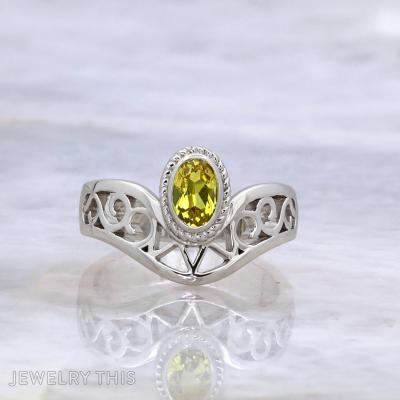
This stunning white gold engagement ring features an oval yellow brilliant-cut sapphire, radiating warmth and ...

This captivating 14K white gold engagement ring features a center 0.75 carat round moissanite.The center ...

This exquisite platinum art-deco inspired engagement ring features a stunning 2.02carat asscher cut diamond set ...

This engagement ring was built around a request for a masculine design that still felt ...

This stunning sapphire and diamond wedding band combines timeless elegance with a touch of color. ...

This yellow gold ring features a captivating oval rose cut diamond at its center, delicately ...

This engagement ring recreates a design originally made nearly three decades ago, rebuilt entirely from ...
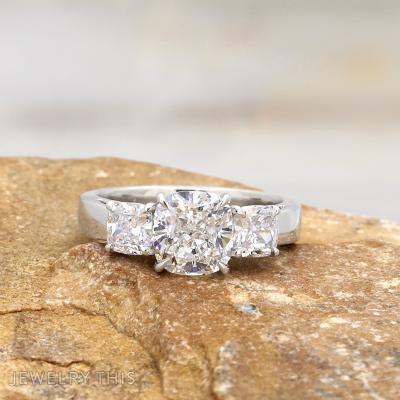
This exquisite custom engagement ring features a stunning 2-carat lab-created cushion cut diamond as the ...
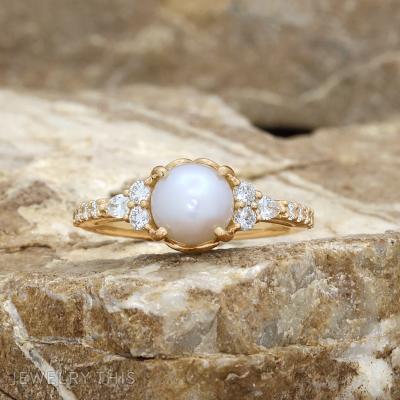
This custom engagement ring features a luminous 7mm pearl as its centerpiece, beautifully embraced by ...

This engagement ring centers a 1.5 carat emerald-cut moissanite, flanked on each side by a ...