


Aquamarine Halo Ring in White Gold with Baguette Accents
$$
14k white gold, aquamarine, lab-grown diamonds
V. had a loose aquamarine she'd purchased years earlier with no paperwork and no measurements, plus a pendant in the same stone she already loved wearing. She asked for a ring that would complement the pendant's baguette diamond detailing, and chose a halo design with lab diamonds to get the look of her pendant without complicating the budget. When it arrived, she wrote: 'Love it! Turned out better than I thought. Stone looks huge too.'
'Love it! Turned out better than I thought. Stone looks huge too. Thank you for giving me what I was looking for.' — on delivery
Quick specs
Design type
Primary Metal
Shape / Cut
Primary Stone
Accent Stones
Design Complexity
Intent: Certainty
Size
Ring size 7 US (17.32mm). Center stone approximately 9x6mm oval.
How they made it distinctive
-
01
Built entirely around a client-supplied loose aquamarine with no prior paperwork or measurements
-
02
Halo and baguette diamond layout chosen specifically to complement an aquamarine pendant the client already owned
-
03
Lab-grown diamonds selected over moissanite for a closer visual match to natural stones in the matching pendant
-
04
Technical drawing and 3D model built only after the physical stone arrived, ensuring an exact fit
How you'd make it yours
Center stone: this piece uses a client-supplied aquamarine — a new commission could use a sapphire, morganite, or other colored gemstone
Accent stones: currently lab-grown diamonds — moissanite is available as a lower-cost alternative with a different sparkle quality
Metal: this piece is 14k white gold — the same halo design works in 14k yellow or rose gold
Setting style: this piece uses a halo with baguette shoulders — a simpler prong setting without a halo is also possible on a similar design
One of a kind: this exact ring was designed around one client's own stone and is not reproduced — a new commission is an original piece inspired by this one, not a copy
Design changes made
The client switched from moissanite to lab-grown diamonds for the accent stones after asking whether lab diamonds would look believable, wanting a closer match to the diamond baguettes in her existing pendant.
Who this is for
This piece is for someone who already owns a loose gemstone — inherited, purchased, or set aside for years — and wants it finally made into something wearable. It's especially right if you have a piece of jewelry you already love and want a companion piece designed to match it rather than clash with it.
How it's made
Once the client's loose aquamarine arrived at the studio, the design team built a technical drawing and 3D model around the stone's exact measurements and proportions. A wax model was 3D-printed from the approved design, then attached to a tree and invested in plaster. The mold was fired in a kiln to burn out the wax, leaving a cavity that was then cast in 14k white gold.
After casting, the ring was cleaned, polished, and finished before stone setting began. The client's aquamarine was prong-set at the center within a halo of small round lab diamonds, while a baguette-cut lab diamond was channel-set on each shoulder of the band to echo the detailing on her matching pendant. The final piece was polished to a bright finish throughout.
Key note
Because the center stone was client-supplied rather than pre-measured, the entire 3D model had to be built around the aquamarine's exact physical dimensions only after it physically arrived at the studio.
Pricing guidance
A halo engagement-style ring with a center colored gemstone and diamond accents sits in the mid range for custom work of this complexity. Most of the cost comes from the labor of hand-fabricating a halo and channel-set baguettes around a client-supplied stone rather than a pre-made setting. Accent stone choice is the biggest lever on the final price.
Moves price up ↑
- ↑ Upgrading the halo and baguette accents from lab-grown to natural diamonds
- ↑ Increasing the size or number of baguette side stones
- ↑ Using platinum instead of 14k white gold for the band
- ↑ Adding a matching wedding band designed to nest against the halo
- ↑ Increasing the center stone size, which requires a larger halo and more hand-fitting
Moves price down ↓
- ↓ Using moissanite instead of lab-grown diamonds for the halo and baguettes
- ↓ Reducing the halo to fewer, larger accent stones instead of a full pave ring
- ↓ Choosing a simple prong setting without a halo
- ↓ Using 10k white gold instead of 14k
- ↓ Omitting the baguette side stones and keeping only the halo
Questions people ask
Yes. This ring was built entirely around a client-supplied loose aquamarine with no prior paperwork or measurements. The stone is shipped to the studio, physically measured, and the 3D model is built around its exact proportions before any metal is cast. This approach works for most transparent colored gemstones as long as the stone arrives safely and is in good condition for setting.
Aquamarine rates 7.5–8 on the Mohs hardness scale, which is harder than many colored gemstones but softer than sapphire or diamond. It holds up well to daily wear but benefits from a protective setting like a halo, which this ring uses, to shield the girdle edge from knocks. Avoid ultrasonic cleaners for extended periods and remove the ring before heavy manual work to minimize chip risk.
Lab-grown diamonds are chemically, physically, and optically identical to natural diamonds — the only differences are origin and price. A trained gemologist generally cannot tell them apart without specialized equipment. For small accent stones like a halo or baguettes, lab-grown diamonds offer the same appearance and durability as natural stones at a lower cost. Moissanite is a different, less expensive mineral that can look more reflective or glassy in comparison.
A halo-style ring built around a client's own center stone, with diamond or diamond-alternative accents, generally falls in the mid range for custom work. The biggest cost driver is the labor of hand-building a setting around a stone with non-standard measurements, plus the accent stone choice. Opting for moissanite instead of lab-grown diamonds is the most effective way to bring the price down without changing the design.
Once your stone arrives at the studio, the design phase — technical drawing, 3D model, and rendered preview — typically takes about one week. After you approve the design and the balance is largely paid, production runs approximately three to four weeks. Total turnaround from the stone's arrival to a finished ring is usually five to six weeks.
Moissanite has a higher refractive index than diamond, which means it can throw more rainbow-colored flashes of light, sometimes read as more sparkly or glassy than a diamond's whiter brilliance. Some wearers love this extra fire, while others feel it looks less like a natural diamond up close. Lab-grown diamonds avoid this effect entirely since they are chemically identical to natural diamonds and sparkle the same way.
Yes — this exact ring was designed to complement a client's existing aquamarine pendant that featured baguette diamond detailing. The baguette side stones on the ring were chosen specifically to echo that existing piece. Sharing a photo of jewelry you already own and love is a good way to guide a cohesive design across multiple pieces.
A pre-made setting is manufactured in bulk to standard stone sizes, while a custom setting has to be designed, modeled, and hand-fit around your stone's unique and often non-standard measurements. This requires a technical drawing and 3D model built after the stone physically arrives, plus hand-finishing to ensure the prongs and halo fit the stone precisely. The result is a setting made only for that specific stone rather than a generic size.
Explore Similar Creations
Every masterpiece starts with a spark. Explore how our clients raw ideas - sketches, heirlooms, inspirations - were transformed into bespoke works of arts.
This client came to us with her stunning engagement ring and requested a custom made ...

Introducing our captivating Vintage-Inspired 14k White Gold Custom Oval Engagement Ring, a timeless embodiment of ...

This engagement ring pairs a round blue sapphire center stone with delicate marquise leaf motifs ...
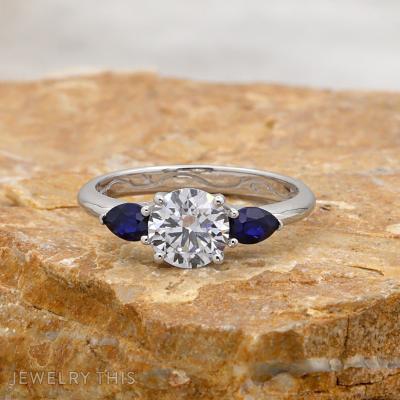
This engagement ring centers a round lab-grown diamond flanked by two pear-shaped sapphires, chosen in ...
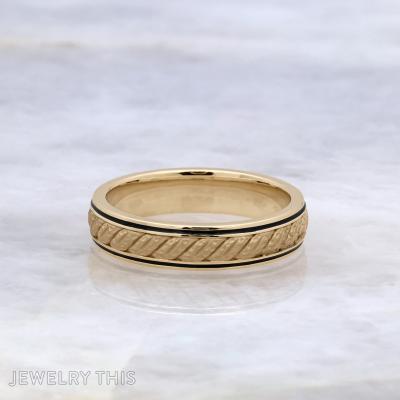
This unique gold ring was inspired by the delicate artistry of uni sushi, transforming a ...

This engagement ring is built around a twisting infinity-wave band in 14k yellow gold, with ...

This enchanting vine-inspired engagement ring showcases a nature-inspired design, with a 1ct pear-shaped moss agate ...

This yellow gold engagement ring is a mesmerizing blend of grace and sophistication. The focal ...
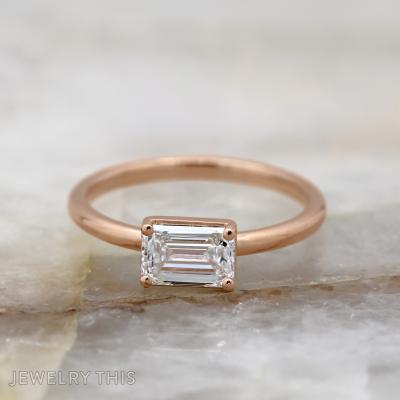
This Rose gold solitaire ring is a timeless symbol of elegance and grace. This ring ...

This ring recreates a beloved family heirloom that was stolen, rebuilt from two photographs and ...

This enchanting rose gold engagement ring features a pear-shaped center diamond set at a graceful ...

This engagement ring was designed around a client-supplied morganite cut into an elongated, shield-like shape ...



