


Winged Crest Pendant in Gold with Enamel Accents
$$$
Sterling silver, gold plating, green enamel, blue enamel
C. wanted to give his wife a piece inspired by an emblem from a fantasy game they both knew well, working from a single reference image rather than an existing piece of jewelry. The design proved more intricate to translate into metal than expected, and the stones shifted from faceted gems to enamel to keep the piece within reach. When it arrived, he wrote simply: "It looks great."
'Thank looks great!' — on seeing the first render
'I did receive it. It looks great; thanks!' — on delivery
Quick specs
Design type
Primary Metal
Secondary Metal
Shape / Cut
Primary Stone
Accent Stones
Design Complexity
Intent: Certainty
Size
Pendant approximately 2 inches (51mm) across. Chain bail sized to fit client-provided chain measuring 0.6mm to 1.5mm thick.
How they made it distinctive
-
01
Translated directly from a single flat reference image into a dimensional pendant, with no original jewelry piece to copy from
-
02
Two-tone finish achieved by gold plating only the raised flame and wing elements against a polished silver base
-
03
Enamel used in place of faceted gemstones specifically to keep the detailed three-stone design within budget
-
04
Bail sized to fit the recipient's own existing chain rather than requiring a new one
-
05
Dense carved linework across the flame petal and wing elements reflects the layered detail of the original artwork
How you'd make it yours
Stone treatment: this piece uses blue and green enamel; a new commission could use faceted gemstones or different enamel colors
Metal: this piece is sterling silver with gold-plated accents; a new design could be cast fully in gold or stay silver throughout
Size: this piece is sized at 2 inches; a new commission is sized to its own wearer's preference and chain
Motif: the flame-and-wing design can be reinterpreted around a different reference image or symbol entirely
One of a kind: this exact pendant was designed for one client's chain and vision and is not reproduced — a new commission is an original piece inspired by this one, not a copy
Design changes made
The three center stones were changed from faceted gemstones to colored enamel after the first cost estimate came in well above budget — this kept the detailed flame-and-wing design intact while bringing the price down significantly.
Who this is for
This piece is for someone who wants a specific image or symbol that matters to them turned into real jewelry, not a generic design pulled from a catalog. It's especially right if you have a single reference picture to work from and want the finished piece to feel personal rather than mass-produced.
How it's made
Once the 3D design was approved, the model was 3D-printed in wax and attached to a wax tree inside a flask. The flask was placed in a kiln to burn out the wax, leaving a hollow mold shaped exactly like the approved pendant. Molten sterling silver was then poured into that mold under heat, and once cooled, the raw casting was removed and prepared for finishing.
After casting, the piece was cleaned and polished, then select raised surfaces — the flame-like upper petal and the wing elements — were gold plated to create contrast against the polished silver base. The three recessed stone settings were filled with blue and green enamel rather than set gemstones, fired to cure and bond the color permanently to the metal before the final polish.
Key note
The gold plating was applied only to selected raised surfaces rather than the whole piece, so the two-tone contrast between silver and gold reads clearly even though the pendant is a single cast metal body.
Pricing guidance
A two-inch, densely detailed two-tone pendant like this sits toward the upper end of pendant pricing because of the sheer amount of 3D modeling and hand-finishing a complex emblem design requires, independent of stone choice. Switching the stone treatment from faceted gemstones to enamel is one of the biggest single levers available to bring a piece like this back into a lower range. Size and metal weight are the other major drivers once the design itself is fixed.
Moves price up ↑
- ↑ Using faceted natural or lab gemstones instead of enamel for the three stone positions
- ↑ Increasing the pendant size beyond 2 inches, which increases metal weight and casting cost
- ↑ Plating the entire piece in gold rather than selected raised surfaces only
- ↑ Adding more intricate surface detail or additional dimensional elements to the design
- ↑ Upgrading from sterling silver to solid 14k gold as the base metal
Moves price down ↓
- ↓ Using colored enamel in place of faceted gemstones, as was done here
- ↓ Reducing the overall size of the pendant
- ↓ Simplifying the flame and wing detailing to fewer carved elements
- ↓ Limiting gold plating to a smaller portion of the piece
- ↓ Choosing a single stone color accent instead of two colors across three settings
Questions people ask
Yes. This pendant was built entirely from a single reference image of a fantasy game emblem, with no original piece of jewelry to work from. The process starts with a 3D design phase where the flat image is translated into a dimensional wearable object, and the client reviews a photorealistic render before anything is cast. Complex illustrated designs with a lot of linework or layered elements take longer to model than simple shapes, since every detail has to be converted into something that can actually be cast in metal.
Enamel is colored glass-like material fired onto the metal surface, while a faceted gemstone is a cut stone physically set into a prong or bezel. Enamel is significantly less expensive than natural or lab-created gemstones of a comparable size, which makes it a common way to bring down the cost of a large, stone-heavy design. Visually, enamel gives a solid, saturated color field rather than the sparkle or transparency of a cut stone. It is also more resistant to chipping than you might expect once properly fired and polished, though it can wear over many decades of daily contact.
A pendant at this size with this level of detail sits toward the higher end of pendant pricing, mainly because of the 3D modeling and hand-finishing time a complex design requires. The stone treatment is one of the largest cost variables — swapping faceted gemstones for enamel can bring the total down substantially without changing the design itself. Metal weight also scales with size, so a 2-inch pendant costs meaningfully more to cast than a 1-inch version of the same design.
The design phase for a detailed custom pendant typically takes about a week to produce a 3D render for approval. Once the design is approved and any remaining balance is paid, production — casting, finishing, and stone or enamel work — generally takes another two to three weeks. A design with heavy detail or multiple finish zones, like two-tone plating and multi-color enamel, can take longer to perfect in the 3D phase than a simpler piece.
Yes, this is a standard technique called two-tone plating, where a piece is cast in one base metal — usually sterling silver — and then select raised or recessed areas are gold plated afterward. It allows a design to show contrast between warm and cool metal tones without the cost of casting the whole piece in solid gold. The plated areas will show wear over time with heavy daily contact, similar to any gold plating, and can be professionally re-plated later if needed.
It will be very close, but some variation should be expected. Metal finishes and enamel colors can shift slightly between a digital render and the physical cast piece, since lighting and material properties don't translate perfectly from a screen image. The overall design, proportions, and stone placement will match what was approved in the render. Any significant difference would typically come from a last-minute design change rather than normal production variation.
Yes, pendants are commonly designed with a bail sized to fit an existing chain rather than requiring a new one. The jeweler will need the chain's width or gauge measurement before finalizing the bail opening, so it's worth measuring with calipers if you have a few chains to choose from. This approach is common when the recipient already wears a chain regularly and the goal is to add a new pendant to it rather than replace what they have.
On detailed custom pieces, the exact price often isn't known until the 3D model is finished, because that's when the actual metal weight and stone requirements become clear. A design that looks simple in a reference photo can turn out to be more metal- and labor-intensive once it's modeled in three dimensions. When that happens, a jeweler may offer alternative material choices, like enamel instead of faceted stones, to bring the piece back within the original budget without changing the overall design.
Explore Similar Creations
Every masterpiece starts with a spark. Explore how our clients raw ideas - sketches, heirlooms, inspirations - were transformed into bespoke works of arts.
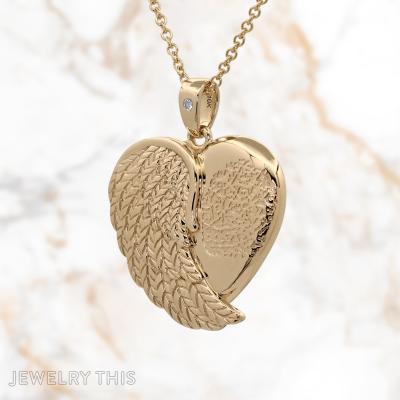
This exquisite custom pendant is a heartfelt tribute to a cherished family patriarch and veteran. ...

This custom pendant, a miniature mathematical compass, is a tribute to a cherished poem that ...

14k white gold pendant featuring symbols to represent religions of the world. Personal initial in ...
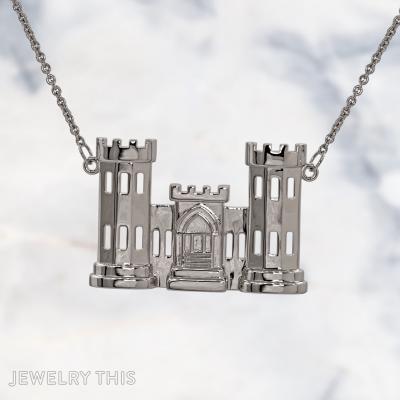
This pendant recreates a castle emblem in dimensional sterling silver, built from reference photos of ...

Embark on a journey of personalized elegance with this exquisite custom pendant. A meticulously crafted ...

Celebrate the bond of love and creativity with this uniquely crafted pendant, designed as a ...
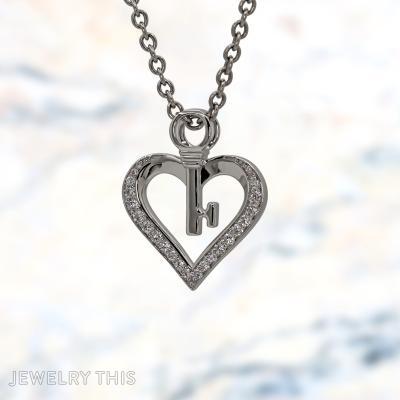
This pendant pairs a classic heart silhouette with a key motif set inside it, the ...

Crafted with intricate artistry, this pendant features two shield shapes united by a central cross, ...

Sterling silver cut out pendant featuring design of swan and lilly. Pendant: 1.5inches in size. ...

This pendant reimagines the classic Walking Liberty coin design in sterling silver, surrounded by a ...

This pendant reinterprets the Trinacria, the ancient three-legged symbol at the center of the Sicilian ...



