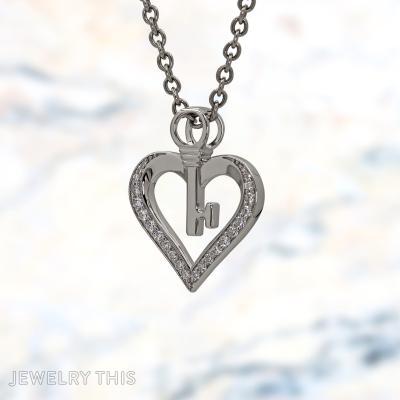
Key-in-Heart Diamond Pendant in 14K White Gold
$$
14k white gold, lab-created diamonds
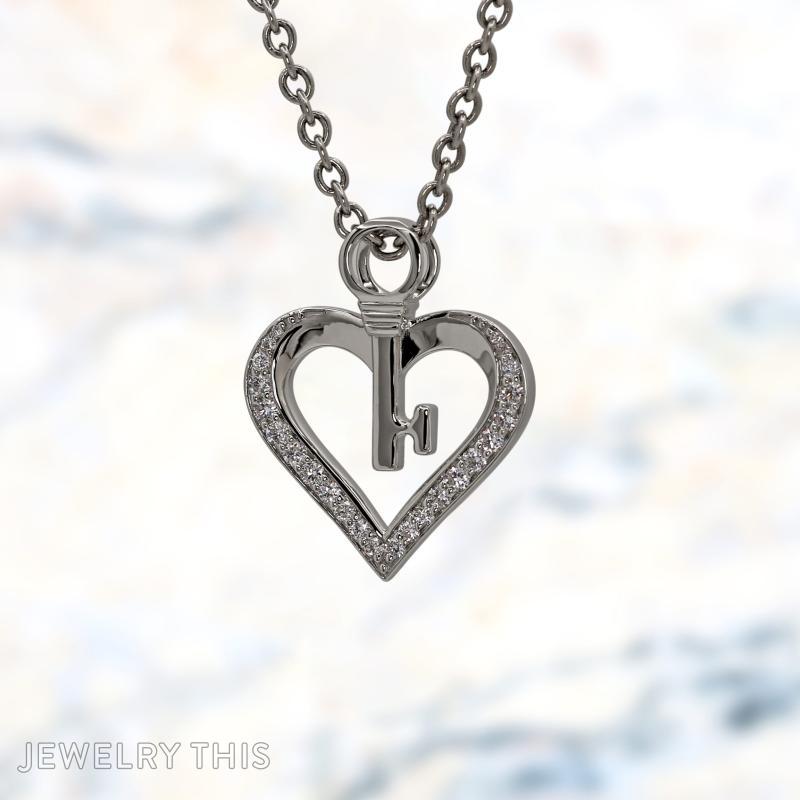
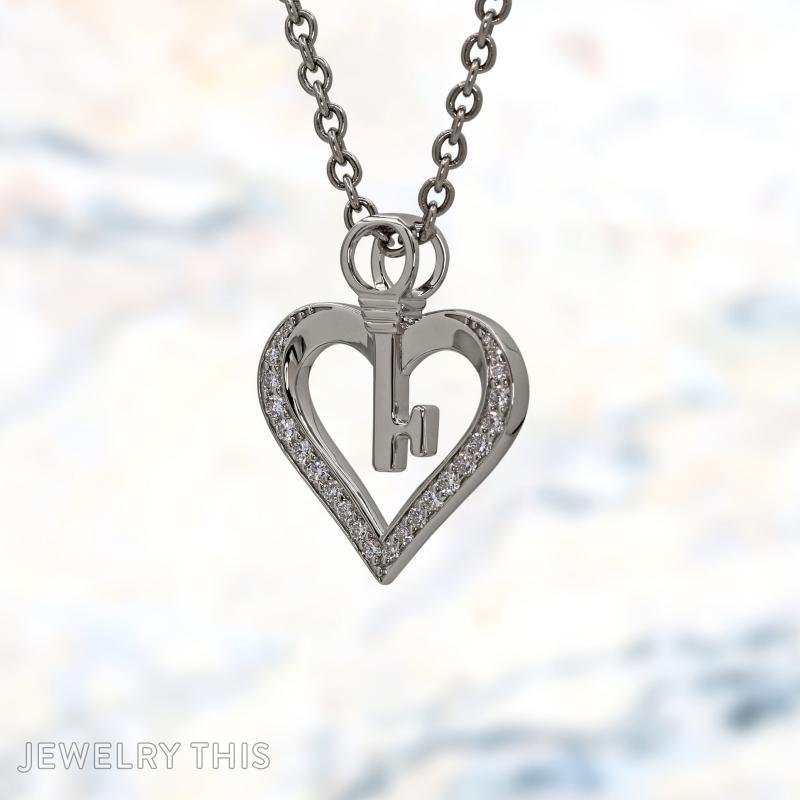
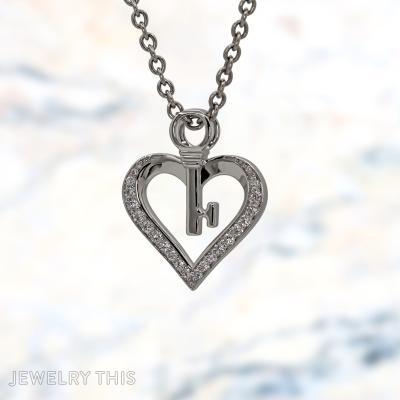
A client wanted a pendant to mark a relationship that has mattered to her for more than a decade — a heart with a key at its center, the key stamped with a single initial. She was budget-conscious throughout, moving between metal and stone options before settling on 14k white gold with lab-created diamonds. When it arrived, she wrote: 'I did receive my beautiful key to my heart necklace. Love it.'
'Wow love it' — on seeing the first render
'I did receive my beautiful key to my heart necklace. Love it.' — on delivery
Quick specs
Design type
Primary Metal
Shape / Cut
Primary Stone
Accent Stones
Style
Design Complexity
Intent: Certainty
Size
Pendant approximately 25mm (1 inch).
How they made it distinctive
-
01
Open heart silhouette designed so the key sits as its own layered element rather than a flat engraving
-
02
Key's bow carved with a single initial, giving the piece a private, personal meaning not obvious at a glance
-
03
Diamond pave setting traces both sides of the heart outline rather than using a single center stone
-
04
Lab-created diamonds chosen specifically to keep the piece within budget while keeping the same look as natural stones
-
05
14k white gold selected over 10k specifically because the diamonds needed a metal durable enough to hold pave settings securely
How you'd make it yours
Stone type: this piece uses lab-created diamonds — a new commission could use natural diamonds for the same look at a higher cost
Metal: this piece is 14k white gold — the same design works in 18k white gold or rose gold
Initial: the letter on the key's bow is specific to this piece — a new commission would carry its own chosen letter or symbol
Size: this piece is sized at about 1 inch — a new piece can be scaled larger or smaller to the new wearer's preference
One of a kind: this exact pendant was designed for one client and is not reproduced — a new commission is an original piece inspired by this one, not a copy
Design changes made
Design matched the initial brief without major changes. The main adjustments during the process were material choices — settling on 14k white gold and lab-created diamonds after comparing options against 10k and 18k gold.
Who this is for
This piece is for someone who wants a sentimental detail built into the design itself, not just written on the back. It's especially right for marking a long relationship with something quietly personal — an initial or private meaning only the wearer and the people close to them will recognize.
How it's made
Once the design was approved, a 3D-printed resin model of the pendant was produced first — a preview of the exact form before any metal was involved. That resin was used to create an investment mold, which was fired in a kiln to burn out the pattern, leaving a hollow cavity. Molten 14k white gold was then cast into the mold, cooled, and the raw pendant was removed for finishing.
After casting, the pendant was cleaned up and polished to bring out the contrast between the smooth key element and the diamond-lined heart outline. The pave-set diamonds were set by hand along both sides of the heart's open frame, seated close together to create a continuous line of sparkle against the polished metal. The key's single-letter detail was finished with the same high-polish treatment as the rest of the piece.
Key note
The heart is left open in the center rather than solid, so the key motif reads as a separate layered element rather than a flat engraving on a closed heart shape.
Pricing guidance
A diamond-outlined heart pendant with a sculptural key motif at this size sits in the mid range for custom pendant work. Most of the cost comes from the pave diamond setting along the heart's open frame, which requires more labor than a single center stone. Metal choice and diamond origin (lab versus natural) are the next biggest factors in the final price.
Moves price up ↑
- ↑ Choosing natural diamonds instead of lab-created diamonds for the pave setting
- ↑ Upgrading from 14k to 18k white gold
- ↑ Increasing the pendant size beyond 1 inch, which requires more diamonds to line the heart outline
- ↑ Adding a matching chain in the same metal rather than sourcing separately
- ↑ Adding engraving on the back of the pendant
Moves price down ↓
- ↓ Reducing the diamond count by leaving portions of the heart outline plain metal
- ↓ Choosing a smaller pendant size, which needs fewer diamonds
- ↓ Selecting a lower diamond clarity grade
- ↓ Using gold-plated silver instead of solid 14k white gold
- ↓ Simplifying the key detail to a plain silhouette without the letter cutout
Questions people ask
Yes. Lab-created diamonds are chemically and physically identical to natural diamonds — both are pure carbon with the same crystal structure and the same 10 rating on the Mohs hardness scale. The only difference is origin: one forms underground over millions of years, the other is grown in a controlled lab environment in weeks. For everyday wear in a pendant like this, there is no difference in how the stones hold up over time. The main practical difference is cost, with lab-created diamonds typically running lower than natural diamonds of equivalent size and grade.
It's generally not recommended. 10k gold has a lower gold content and a more brittle alloy composition than 14k or 18k, which makes it less reliable for holding small pave-set stones securely over time. Most custom jewelers set gemstones in 14k or 18k gold specifically because the metal has enough ductility to be worked around each stone without cracking. If budget is the primary concern, choosing fewer stones or a smaller pendant size in 14k gold is usually a better trade-off than dropping to 10k.
Both are gold alloys mixed with other white metals for strength and color, but 18k contains a higher percentage of pure gold (75% versus 58.3% for 14k). This makes 18k slightly softer and marginally more yellow underneath its rhodium plating, though the visual difference is subtle once plated. 14k is more common for everyday jewelry because it's more scratch-resistant and holds up better to daily wear. Both require occasional rhodium replating to keep the bright white finish looking fresh.
The full process typically runs about five to six weeks from deposit to delivery. The first week covers the design phase — a 3D render is produced and adjusted until the client approves it. Once approved, production takes roughly four to five weeks, covering the wax/resin model, casting, hand-finishing, and stone setting. Rush timelines are sometimes available for holiday deadlines, but standard production follows this schedule.
A pendant of this size and complexity — a diamond-outlined heart with an additional sculptural element inside it — falls in the mid range for custom pendant work. The pave diamond setting along the heart's outline is the main cost driver, since each small stone needs to be individually seated and secured. Metal karat and whether the diamonds are lab-created or natural are the next biggest variables affecting the final price.
Yes. The key-and-letter concept is flexible — the letter on the key's bow can be swapped for any initial, and the key shape itself could be replaced with another small symbol if a different sentiment is wanted. The heart outline and diamond pave setting would stay structurally the same regardless of what sits inside it. This kind of personalization is common in pendant designs built around a hidden or secondary meaningful detail.
Not necessarily — the pendant and chain are often priced and ordered separately, so a client can choose to source a chain independently or add one matching the pendant's metal. A 14k white gold cable chain is a common pairing for a pendant like this. Chain length is a personal preference, but 16 to 18 inches is standard for a pendant meant to sit at or just below the collarbone.
Properly pave-set diamonds in 14k gold are secure for daily wear when set by an experienced jeweler, but any pave setting should be checked periodically, just like prong settings on a ring. The small beads of metal that hold each stone in place can wear down very gradually over years of contact with clothing and skin. Getting the setting inspected every year or two is a reasonable precaution, similar to the maintenance recommended for any fine jewelry with multiple small stones.
Explore Similar Creations
Every masterpiece starts with a spark. Explore how our clients raw ideas - sketches, heirlooms, inspirations - were transformed into bespoke works of arts.
This stunning gold medallion-style pendant is circular in shape, featuring an eye-catching ray-like angular design ...

This custom pendant is a heartfelt tribute to cherished college memories, designed to celebrate a ...

This exquisite multicolored pendant is a masterpiece of elegance. Crafted in yellow gold, the circular ...
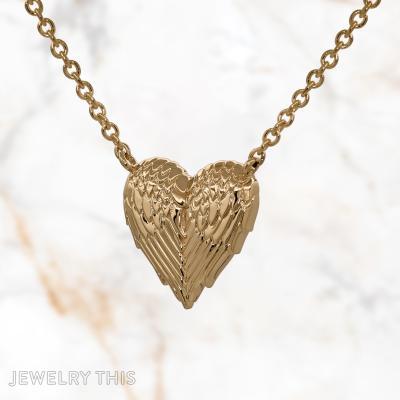
This pendant reshapes the classic angel-wing motif into a heart, with two detailed feathered wings ...


This exquisite 14k yellow gold custom logo pendant is a true masterpiece. Encrusted with sparkling ...

This crescent moon pendant was designed as a family piece — each birthstone marking a ...

Elevate your style with our 1-inch 14kt yellow gold-plated silver round pendant featuring a raised ...

Exuding sleek sophistication, this custom logo pendant boasts the bold letter “B” elegantly adorned with ...

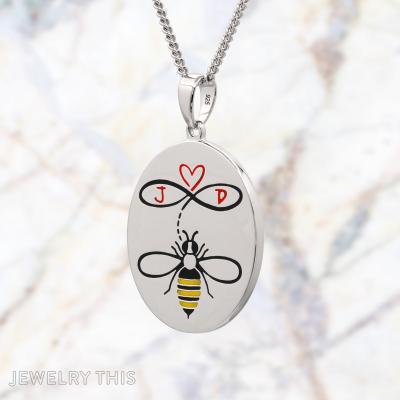
A heartfelt tribute to two best friends, this pendant symbolizes eternal love and connection. A ...