

Recreated Horseshoe Pendant in 18k Gold
$$$
18k yellow gold
A woman wanted to rebuild a pendant that had belonged to her mother — a gift originally given by her mother's grandmother in Italy, stolen while her mother was in the hospital. Working from a single photo and her own memory, she guided the design through several rounds of sketches, correcting the horseshoe's taper, the angle of the etching, and the shape of its ends until it matched what she remembered. When it arrived, she wrote: 'I absolutely love it.'
'I absolutely love it.' — on delivery
Quick specs
Design type
Primary Metal
Primary Stone
Accent Stones
Design Complexity
Intent: Certainty
Size
Pendant approximately 25mm diameter. Bail opening 4mm to fit a 3mm chain. Approximate pre-finishing weight 7 grams in 18k yellow gold.
How they made it distinctive
-
01
Horseshoe shape set upside down with the open ends down — a specific orientation the client was precise about matching to her memory
-
02
Horseshoe's bottom tip attaches directly to the circle with no outward bend, a detail refined over multiple rounds of feedback
-
03
Small circular surface indents on the horseshoe, carried over from the original piece's design
-
04
Diamond-cut rim etching applied at an angle rather than straight, matched closely to reference photos of similar pieces
-
05
Bail opening custom-sized to 4mm specifically to fit the client's own 3mm chain
How you'd make it yours
Horseshoe orientation: this piece uses an upside-down horseshoe with ends pointing down; a new commission could use the traditional upward orientation
Rim etching: this piece uses angled diamond-cut etching; a new piece could use straight-line etching or a plain polished rim
Metal: this piece is 18k yellow gold; the same open-circle design works in 14k gold or white gold
Size: this piece is sized to approximately 25mm and a 4mm bail; a new piece is sized to its own wearer's chain and preference
One of a kind: this exact pendant was designed to recreate one client's personal memory and is not reproduced — a new commission is an original piece inspired by its design, not a copy
Design changes made
The horseshoe shape went through multiple revisions — the taper, the end pieces, and the attachment point to the circle were each adjusted based on client feedback and reference photos until the silhouette matched her memory of the original. The bail opening was also widened from the initial design to properly fit her 3mm chain.
Who this is for
This piece is for someone trying to bring back a specific object that mattered, even with only a single photo and their own memory to work from. It's especially right if you're comfortable going through several rounds of detailed feedback to get small proportions and shapes exactly right, rather than approving the first version that's close enough.
How it's made
Once the final design was approved, the piece was 3D printed in wax and attached to a wax tree inside a flask. The flask was placed in a kiln to burn out the wax, leaving a hollow mold in its exact shape. Molten 18k yellow gold was then poured into that mold under heat, producing the raw cast pendant at approximately 7 grams before any finishing work began.
After casting, the pendant was cleaned and the radiating etched pattern on the outer rim was refined to a crisp, even finish — a detail that required several design rounds to translate correctly from a flat sketch into dimensional metal. The horseshoe's small surface indents were finished by hand, and the entire piece was polished to a bright, reflective shine before the bail was finished to its final 4mm opening.
Key note
The diamond-cut radiating etching around the rim is cut at an angle rather than straight across, a detail that was specifically adjusted after the first render because angled etching catches and reflects light differently than a flat cut.
Pricing guidance
A solid 18k gold pendant of this size and moderate complexity sits in the mid range for custom pendant work. Most of the cost comes from the gold content itself at this karat and weight, with additional labor for the dimensional cut-out design and the detailed rim etching. Simpler or smaller designs in the same metal would fall toward the lower end of this range.
Moves price up ↑
- ↑ Increasing the karat further or using platinum instead of 18k gold
- ↑ Adding gemstone accents along the rim or within the horseshoe cut-out
- ↑ Increasing the pendant's size or overall gold weight
- ↑ Adding a matching chain in solid gold rather than leaving the chain unincluded
Moves price down ↓
- ↓ Using 14k gold instead of 18k to reduce gold content cost
- ↓ Choosing a gold-plated silver base instead of solid gold
- ↓ Simplifying the rim etching to a plain polished edge
- ↓ Reducing the pendant's diameter to lower overall metal weight
Questions people ask
Yes, this is a common request and this pendant is an example of it. The process starts with whatever photos and descriptions you have, followed by a sketch that gets refined through several rounds of feedback before moving to a 3D render. It typically takes a few rounds of back-and-forth to nail down details like proportion, taper, and texture that are hard to see clearly in an old photo. The more specific detail you can provide — even comparison photos of similar pieces — the closer the final result will match your memory.
Diamond-cut etching is a technique where small angled facets are cut into the metal's surface, causing it to catch and reflect light as it moves rather than showing a flat, uniform shine. On this pendant, the cuts radiate outward around the circular rim at an angle, which produces more sparkle than a straight-line cut would. It is a finishing technique applied after casting and polishing. The effect is similar to the faceting used on diamond-cut chains, applied here to a solid cast surface instead of a link.
A solid 18k gold pendant of this size and moderate design complexity sits in the mid range for custom pendant work. Most of the cost is driven by the gold content at this karat and the piece's weight, with additional cost for the cut-out design and the rim etching. Choosing 14k gold or a gold-plated base instead would bring the cost down noticeably for a similar look.
For a piece like this, design typically takes about a week once a deposit is paid, though more rounds of revision will extend that if the design needs several adjustments to get right. Production after design approval takes approximately 4 to 5 weeks. Altogether, a project with a few rounds of design feedback can take several weeks from first conversation to shipment.
Yes. The bail opening — the loop the chain passes through — can be sized to match a chain you already have. For this piece, the bail was adjusted to 4mm to properly fit a 3mm chain, which is a typical margin for comfortable movement. It's worth measuring your chain's thickness in millimeters before finalizing a pendant design so the bail is sized correctly on the first pass.
Yes, 18k gold is a solid choice for daily wear, especially in a pendant where it isn't subject to the same impact as a ring. It's softer than 14k gold because it contains a higher percentage of pure gold, but for a piece that hangs on a chain rather than taking direct knocks, that softness is rarely an issue. Regular wear will keep its shine, and only deep scratches would typically need professional polishing over time.
Yes. A new commission inspired by a design like this could use a different taper or thickness on the horseshoe shape, a different etching pattern or direction on the rim, or a different overall diameter. The open-circle frame and suspended cut-out design language can be adapted to different symbols or shapes entirely while keeping the same construction approach.
An upside-down horseshoe, with the open ends pointing downward, is a traditional symbolic orientation some people use intentionally, often tied to personal or family meaning rather than a universal rule. In this piece, the orientation was specified directly by the client as part of recreating a piece that held personal significance to her. Either orientation is structurally the same to produce — it comes down entirely to personal preference.
Check what our clients say about us

Dr. Mary MacLeod PhD, LCSW-R
4 years ago
Tricia worked with me on recreating a pendant my mother owned which was given to her by her grandmother in Italy. The pendant was stolen from my mother while in the hospital where she shorty thereafter passed away. I had a few pictures and relied on memory but was able to give enough detail for Tricia to recreate this piece. It is stunning! I treasure this piece and think of my beautiful mother when I wear it. Thank you Tricia for recreating this treasured piece!
Explore Similar Creations
Every masterpiece starts with a spark. Explore how our clients raw ideas - sketches, heirlooms, inspirations - were transformed into bespoke works of arts.
Crafted as a heartfelt Valentine’s Day gift, this custom pendant exudes elegance and romance. Inspired ...

This yellow gold pendant is crafted to pay homage to the open road and the ...


This pendant featuring abstract elements inspired by Croatian heritage, blending vibrant colors and distinctive patterns. ...

Inspired by their spiritual journey, this Ankh Cross was made to replicate a previous piece. ...

This gorgeous pendant was made for a husband’s birthday and anniversary by his wife. The ...

This Sterling Silver pendant was designed with timeless elegance in mind to commemorate a remarkable ...


This beautiful sterling silver round pendant features initials prominently displayed on the front. Below the ...
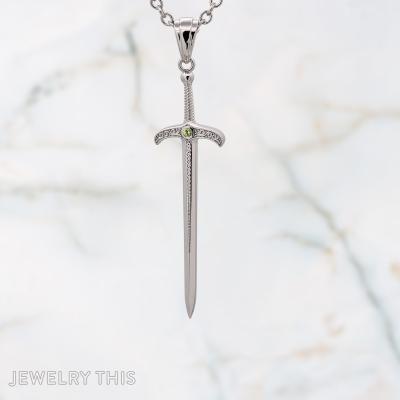
This sword pendant was designed as an engagement-season gift, built around a knight’s-sword silhouette with ...

This custom pendant features a beautifully crafted cut-out heart outline, symbolizing love and connection. In ...
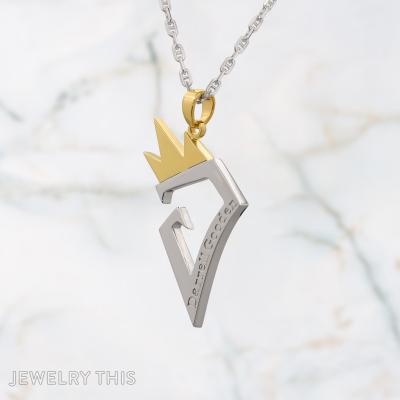
A bold emblem of personal identity and self-made success, this custom pendant is a profound ...



