



Open Heart Pendant — Recreated From a Family Original
$
Gold-plated sterling silver
A client wanted an exact copy of his late mother's heart pendant made for his sister, but was hesitant to risk shipping the original at all. After two rounds of resin models and photo comparisons didn't quite capture the curve and back detail, he sent the original in so the team could mold directly from it. When it was ready, he wrote: 'Thank you soo much! I can't wait to see them!'
'THANK YOU SOO MUCH FOR GOING OUT OF YOUR WAY WITH THIS FOR ME!!!' — on receiving the first resin model
'Thank you soo much! I can't wait to see them!' — on completion before shipping
Quick specs
Design type
Primary Metal
Primary Stone
Accent Stones
Design Complexity
Intent: Certainty
Size
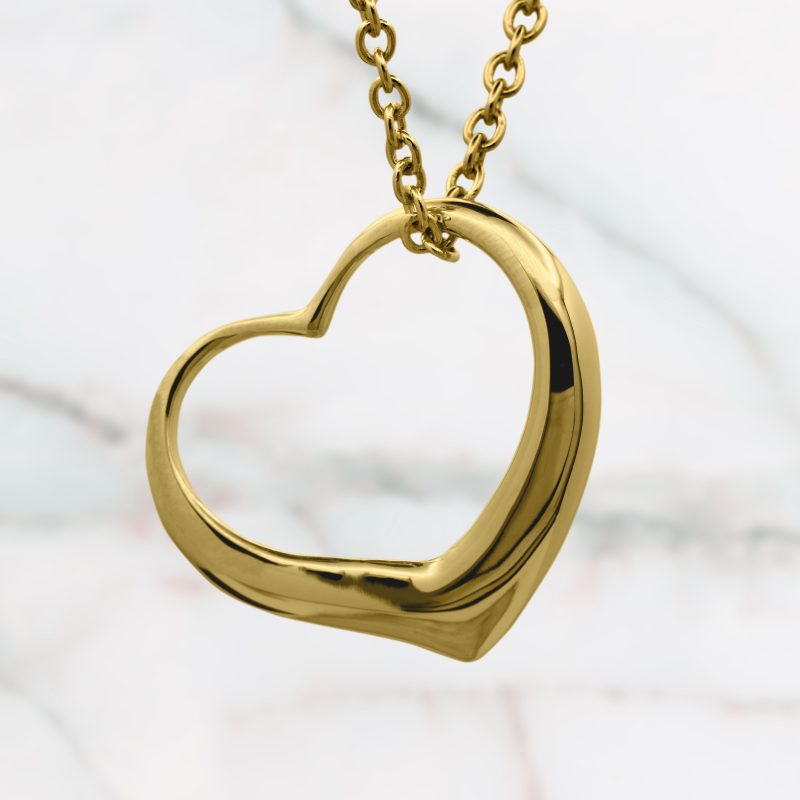
Pendant 31.75mm (1.25in) wide x 26.9mm (1.06in) tall. Weight approximately 6g in the 18k original; final piece weight varies by metal.
How they made it distinctive
-
01
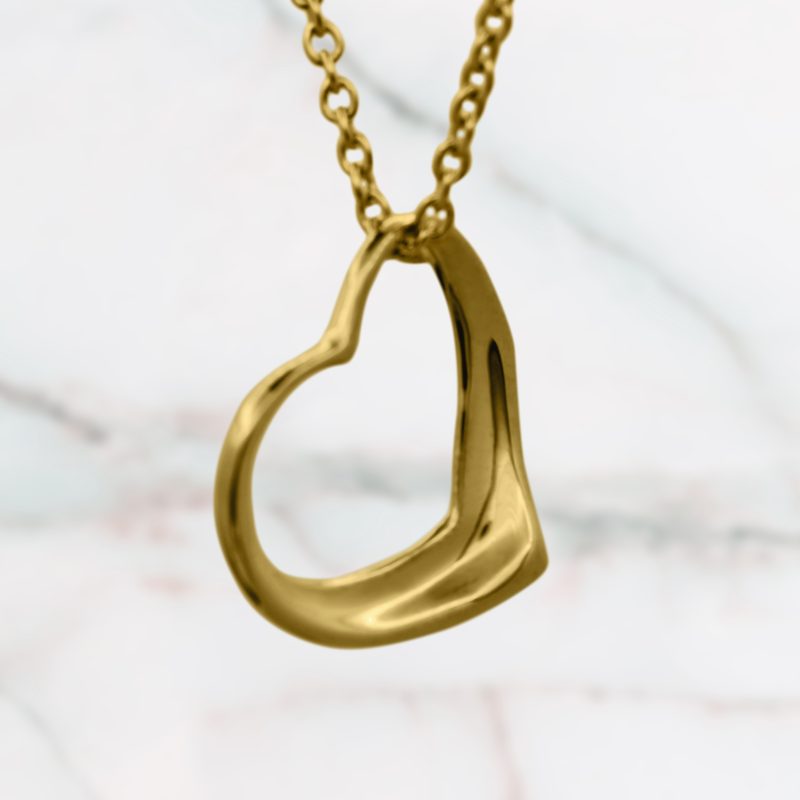
Open, free-form heart silhouette modeled on a specific original piece rather than a standard heart template
-
02
Curve and back-lip transition refined through two rounds of side-by-side photo comparison before a direct mold was made
-
03
Final mold cast directly around the client's original pendant for maximum accuracy
-
04
Tapered thickness — thicker at the bottom curve, thinner at the top — matched specifically to the original's proportions
-
05
Gold-plated silver chosen specifically to keep cost down while preserving the yellow gold look of the original
How you'd make it yours
Metal: this piece uses gold-plated silver; a new commission could use solid 10k or 14k gold for a more durable, longer-lasting finish
Chain: this piece uses a standard cable chain; a new commission could use a different chain style or length
Engraving: the smooth back of the heart could carry a new inscription on a fresh commission
Size: this piece was sized to match a specific original; a new commission can be scaled to any preferred dimensions
One of a kind: this exact pendant was modeled directly from one client's original piece and is not reproduced — a new commission is an original piece inspired by this one, not a copy
Design changes made
The curvature of the heart and the transition at the back lip were adjusted twice based on side-by-side photo comparisons with the original before the client ultimately sent in the physical piece for a direct mold, which captured the remaining detail that photos alone couldn't.
Who this is for
This piece is for someone who has an original piece too precious to risk wearing every day, or too fragile to ship casually, and wants a faithful stand-in instead. It's especially right if you want to share a meaningful design with a family member without parting with the only original copy.
How it's made
The pendant began as a 3D digital model built from photos and measurements of the original piece, then printed as a resin model so the client could compare it side-by-side against the original before any metal was committed. After two rounds of refinement, the client sent in the physical original, and a mold was made directly around it to capture its exact profile, shape, and surface detail. That mold became the basis for the final casting in gold-plated sterling silver.
After casting, the pendant was cleaned up and polished to a mirror finish to match the smooth, rounded surface of the original heart. Because the design has no stones or engraving, finishing centered entirely on getting the curve, thickness variation, and the transition at the back lip to read the same as the original piece. The gold plating was applied last, over the finished silver base, to achieve the yellow gold look of the original at a lower cost.
Key note
The final mold was made directly around the client's original pendant rather than from a digital model alone, because two rounds of photo-based comparison couldn't fully capture the back lip's curve and transition.
Pricing guidance
A simple, stoneless heart pendant like this sits at the lower end of the price range for custom pendants, since there is no stone setting involved and the design complexity is minimal. Most of the cost comes from the 3D modeling and mold-making labor needed to match an existing piece precisely, plus the metal itself. Metal choice is the biggest lever on price for a design this simple.
Moves price up ↑
- ↑ Casting in solid 10k or 14k gold instead of gold-plated silver
- ↑ Adding a personalized engraving on the back of the heart
- ↑ Requesting a heavier gauge of metal for a more substantial feel
- ↑ Sourcing a custom chain length or a more decorative chain style instead of a standard cable chain
Moves price down ↓
- ↓ Skipping the physical mold step and relying only on a digital 3D model from photos
- ↓ Choosing a thinner metal gauge
- ↓ Using a standard stock chain rather than a custom length
- ↓ Simplifying any asymmetric curve detail to a more standard heart silhouette
Questions people ask
Yes, this is a common request, and the most accurate method is to work directly from the physical piece rather than photos alone. In this case, two rounds of resin models built from photos and measurements got close, but the final mold was only accurate once the original was sent in and a mold was made directly around it. If you have the original, working from it in person at any stage will almost always produce a closer match than photos. If you're worried about shipping a valuable original, you can start with photos and measurements and decide later whether to send the piece in.
Gold-plated silver is a reasonable choice if you want the yellow gold look without the cost of solid gold. The plating is a surface layer over sterling silver, so it will gradually wear with daily contact, especially from showering, swimming, or workouts. Removing the piece during those activities extends the plating's life. Once the plating wears thin, the silver underneath will start to show through, and the piece can be re-plated at that point.
Plain sterling silver itself does not typically cause the green skin reaction some people associate with cheap costume jewelry, which usually comes from copper-heavy base metals. Gold plating sits on top of the silver and is not a copper alloy, so it is not a common cause of skin discoloration. If the plating wears through to raw silver and you have sensitive skin, some mild tarnishing is possible but is different from a true allergic or chemical skin reaction. If you have known metal sensitivities, mentioning that upfront lets the design team suggest alternatives.
A stoneless, simply shaped pendant like this sits at the lower end of the pricing range for custom pendant work, since there's no stone setting and the design itself is minimal. Most of the cost is in the modeling and mold-making labor required to match an existing design accurately, plus the metal used. Gold-plated silver is generally the most affordable metal option, with solid 10k or higher karat gold costing more due to material cost alone. The exact price depends on final metal choice and any additional detail work.
The initial 3D design typically takes about a week once a deposit is placed, followed by three to four weeks of production. If the recreation requires extra rounds of comparison against an original piece, or if the original needs to be shipped in and molded directly, the timeline extends beyond the standard estimate. In this case, the back-and-forth comparison process and the time to physically ship the original piece in both directions added meaningfully to the standard timeline. Expect a faithful recreation project to take longer than a brand-new design with no reference piece.
Yes, this is actually the most accurate way to recreate an existing piece. A mold made directly around the physical original captures the exact profile, curvature, and surface transitions that are very difficult to reproduce from photographs and measurements alone. This does mean temporarily parting with the original piece, which some people understandably hesitate to do with a sentimental item. If that's a concern, you can start with a photo-based 3D model and decide later whether a direct mold is needed to close the gap.
A resin model is a 3D-printed preview, usually in a white or clear plastic-like material, used to check proportions and shape before any metal is cast. It won't have the final finish, weight, or color of the metal piece, but it lets you compare the shape directly against a reference. In this project, the resin was mailed to the client twice so he could do a side-by-side comparison with the original pendant before moving forward. Once the shape is confirmed, the design is cast in the final metal and then polished and finished.
Yes, asymmetric and organic shapes can be replicated, though they are inherently harder to match from photos alone than a simple geometric shape would be. Small details like curve thickness, the way two edges meet, or a slightly irregular silhouette are the first things that read as 'off' in a replica even when the overall size is correct. This is usually where working from the physical original, rather than photos, makes the biggest difference in accuracy. Multiple rounds of comparison are normal for this kind of project.
Explore Similar Creations
Every masterpiece starts with a spark. Explore how our clients raw ideas - sketches, heirlooms, inspirations - were transformed into bespoke works of arts.
Crafted in 14k white gold, this pendant showcases a captivating design that combines the shapes ...

This unique custom pendant, crafted in 10K yellow gold, is a celestial homage to the ...

This pendant was built around a stone the client already owned — a loose 3-carat ...

This dainty 14k yellow gold mini star pendant is captivating with its intricate details. The ...

This custom jewelry pendant features a beautifully crafted sterling silver crescent moon with flowers, hanging ...

This custom one inch yellow gold crest pendant is designed with cut out and dimensional ...
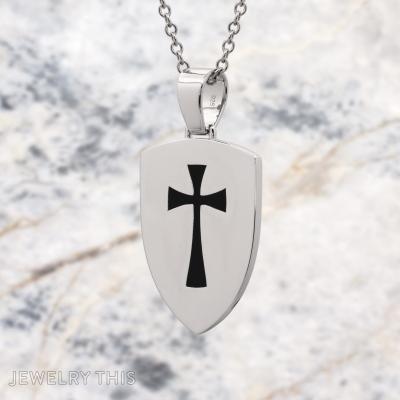
This pendant takes the classic crusader shield shape and pairs it with a single black ...

This pendant spells out the number 444 in three connected numerals, each one fully covered ...

This symbolic key-shaped piece was crafted to represent different levels of a charity organization. At ...

This pendant was designed around four children, represented by four stones set along a twisting, ...

This custom sterling silver pendant is more than just a beautiful accessory – it’s a ...

This 14karat yellow gold pendant is a heartfelt tribute to the cherished matriarch of the ...