


444 Numeral Pendant in Pavé Diamonds, White Gold
$$$
14k white gold, natural diamonds
A client came to us wanting to turn a meaningful number sequence into a wearable pendant for his partner, with the diamonds covering the entire face of each numeral rather than just part of it. He was specific from the start about solid white gold with no plating and a sturdy but petite chain that would hold up over time. When it arrived, he wrote back: 'Yes, thank you she loved it.'
'Yes, thank you she loved it.' — on delivery
Quick specs
Design type
Primary Metal
Shape / Cut
Primary Stone
Accent Stones
Design Complexity
Intent: Certainty
Size
Pendant approximately 1in long x 3/8in tall. Chain: 1.5mm white gold cable, 16in length.
How they made it distinctive
-
01
Three connected numerals fully pave-set edge to edge, rather than partial stone coverage, after the client clarified this early in the design phase
-
02
Solid 14k white gold with no plating specifically requested for lasting color and durability
-
03
Chain attaches at both ends of the numeral sequence instead of a single bail, keeping the pendant sitting horizontally
-
04
Dark-toned recessed background behind the stones increases contrast so the diamonds read brighter against the white gold
-
05
Natural diamonds chosen over lab-created for the full pave surface
How you'd make it yours
Stone type: this piece uses natural diamonds — a new commission could use lab diamonds for the same look at lower cost
Metal: this piece is solid 14k white gold — the same design works in 18k white gold or platinum
Numeral sequence: this piece spells a specific three-digit number — a new piece could spell any number or combination of digits
Stone coverage: this piece has full pave coverage on every numeral — a new commission could leave portions of the numerals in plain polished metal
Chain: this piece uses a 1.5mm cable chain at 16 inches — a new piece is sized and styled to its own wearer
One of a kind: this exact pendant was designed for one client and is not reproduced — a new commission is an original piece inspired by this one, not a copy
Design changes made
The client's reference photo showed diamonds covering only part of the numerals, so this was clarified early and confirmed to full pave coverage across the entire face of all three numbers before the 3D model was built.
Who this is for
This piece is for someone who wants a number or sequence that holds personal meaning turned into something wearable every day. It's especially right for anyone who prefers symbol-driven jewelry over a traditional pendant shape, and who wants full stone coverage rather than a subtle accent.
How it's made
Once the sketch and 3D render were approved, a resin model of the pendant was 3D printed as the first physical version of the piece, giving an early look at the numeral proportions before any metal was involved. That model was then used to build a wax version, which was invested in plaster and burned out in a kiln to leave a hollow mold. Molten 14k white gold was cast into the mold, then the piece was cooled, extracted, cleaned, and polished.
After casting, the three numerals were polished to a bright white gold finish and the recessed background behind the stones was finished in a contrasting dark tone to help the diamonds stand out. Each numeral face was then hand-set, stone by stone, with small round natural diamonds in a continuous pave pattern so no bare metal showed across the front. The cable chain was attached at both ends of the numeral sequence rather than from a single bail, keeping the piece sitting horizontally when worn.
Key note
The dark-toned background behind the pave stones is a deliberate finishing choice, not a flaw — it increases contrast so the small diamonds read brighter against the white gold numerals.
Pricing guidance
A multi-numeral pave pendant like this sits in the mid range for custom pendant work, driven mainly by the stone-setting labor required to cover three separate numeral faces edge to edge. Choosing natural versus lab diamonds and the total carat weight used across the piece are the next biggest cost factors. Metal choice between white gold and platinum also shifts the price from there.
Moves price up ↑
- ↑ Choosing platinum instead of 14k or 18k white gold for the numerals
- ↑ Increasing the total diamond carat weight for larger stones in the same pave layout
- ↑ Adding a fourth numeral or extending the sequence length
- ↑ Upgrading from lab-created to natural diamonds across the full pave surface
- ↑ Requesting a thicker statement chain instead of a petite cable chain
Moves price down ↓
- ↓ Switching from natural diamonds to lab-created diamonds for the same pave look
- ↓ Reducing the pendant size so fewer stones are needed to cover each numeral
- ↓ Leaving part of each numeral smooth rather than fully pave-covered
- ↓ Choosing a simpler pre-made chain rather than a custom-matched petite cable chain
- ↓ Using a single numeral or shorter sequence instead of three connected digits
Questions people ask
Yes, numeral pendants work the same way as letter or name pendants from a production standpoint. Each digit is modeled individually and then connected into a single continuous piece, so the full sequence reads as one pendant rather than separate charms. Numbers with repeated digits, like a three-digit repeating sequence, are straightforward to design since the same numeral shape can be reused and adjusted slightly for spacing. The main design decision is how much of each numeral's face is covered in stones versus left as plain polished metal.
A fully pave-set pendant in solid 14k or 18k white gold is generally durable for daily wear because each stone is individually prong-set rather than glued or channel-set loosely. The main wear point to watch is the prongs themselves, which can loosen slightly over years of regular wear and should be checked periodically by a jeweler. Natural diamonds rate a 10 on the Mohs hardness scale, so the stones themselves will not scratch or wear down under normal use. Solid gold construction, rather than plated, also means the color and finish won't wear through over time.
Natural and lab-created diamonds are chemically and visually identical — both are real diamond, graded on the same cut, color, and clarity scales. The difference is origin: natural diamonds formed underground over millions of years, while lab-created diamonds are grown in a controlled lab environment over a matter of weeks. For a pave pendant using many small stones, lab-created diamonds typically cost significantly less for the same total carat weight and clarity grade. Choosing natural versus lab is purely a matter of preference and budget, since there's no visible difference to the naked eye.
A three-numeral pendant with the entire face of each digit covered in pave-set diamonds falls in the mid range for custom pendant work, largely because of the labor involved in setting dozens of small stones cleanly across multiple connected shapes. The choice between natural and lab-created diamonds is usually the single biggest factor in the final cost at this stone density. Metal choice — 14k white gold, 18k white gold, or platinum — also affects the price, with platinum sitting at the higher end. A simpler version with less stone coverage or a shorter chain can bring the cost down from there.
A custom pave pendant like this typically takes about one week for the design phase, covering the initial sketch and a photorealistic 3D render for approval, followed by three to four weeks for production once the design is approved. Production includes 3D printing a resin model, casting the metal, polishing, and then hand-setting every stone into the piece. Clients usually see a resin preview photo partway through production before the final cast and finishing stages begin. Rush timelines are sometimes possible but will depend on the complexity of the stone-setting work required.
Yes, chain color and width are typically matched to the pendant metal as a standard part of the process — in this case a petite white gold cable chain was chosen to complement the pendant without overpowering it. Chain width matters for both look and durability: a thinner chain reads more delicate, while a slightly heavier gauge holds up better to daily wear and tangling. Length is also a personal choice, with 16 to 18 inches being the most common range for a pendant meant to sit at the collarbone. The chain can attach to the pendant from a single point or, as with multi-shape pendants like this one, from both ends for a more horizontal, structured look.
The dark-toned finish behind the pave stones is a surface treatment applied after the metal is cast and polished, and like most oxidized or darkened finishes on fine jewelry, it can soften gradually with years of handling and daily wear. It is not a plating in the sense of a different metal layer, so it won't flake, but high-contact areas may lighten slightly over time. If the contrast fades more than desired, most jewelers can re-darken the recessed areas during a routine cleaning or maintenance visit. This is a cosmetic detail rather than a structural one, so it doesn't affect the durability of the pendant itself.
Explore Similar Creations
Every masterpiece starts with a spark. Explore how our clients raw ideas - sketches, heirlooms, inspirations - were transformed into bespoke works of arts.
Enhance your style with our 1-inch round pendant, resembling a coin, featuring an intricately detailed ...
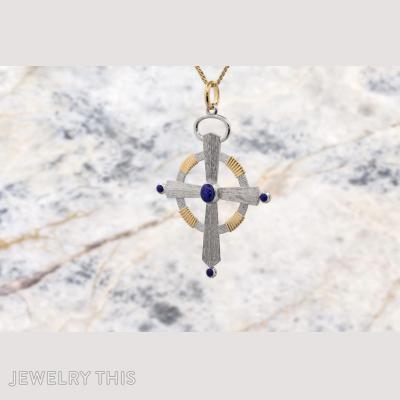
A striking statement cross pendant combining refined craftsmanship and bold design. The piece is crafted ...

This custom pendant features the initials “OB” elegantly intertwined in a modern style, showcasing a ...

This lovely gold plated silver pendant is a symbol of love, commitment and family. The ...

This exquisite custom pendant features a captivating center star, delicately crafted with intricate detailing and ...

A sterling silver butterfly pendant with multiple colors of purple in the wings and amethysts ...


This sterling silver pendant takes the classic sun-face motif and renders it with real dimension ...

This two-piece pendant set was designed so each hummingbird stands complete on its own, but ...

This 5 heart pendant is a heartfelt tribute to family bonds, meticulously crafted with love ...

This pendant reimagines a found reference image as a fully three-dimensional piece: a winged figure ...

This custom pendant is crafted in a distinctive wax seal style, embodying both elegance and ...



