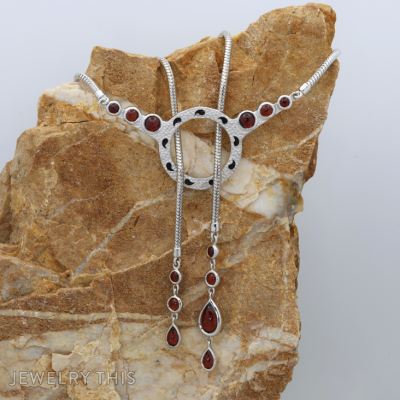
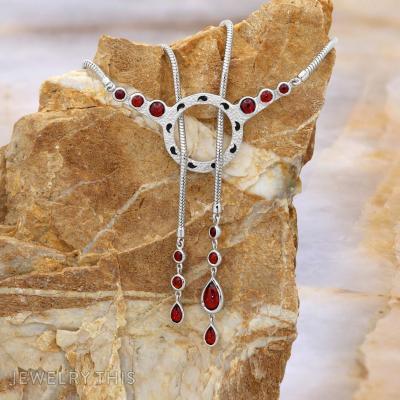
Oxidized Silver Lariat Necklace with Garnet Teardrops
$$$
Sterling silver, garnet
A client came to us wanting a lariat necklace to pair with a set of earrings already in progress elsewhere in her collection, with a specific symbolic design in mind and a texture reference she'd sourced herself. She worked closely through several rounds of render feedback — adjusting the angle of each teardrop along the hoop so the symbol would read correctly, and asking for a discreet 925 stamp on the back. The finished piece arrived after several months of design and production.
'Thank you, Tricia - it's beautiful!' — on seeing the first render
'Yep looks good!' — on final design approval
Quick specs
Design type
Primary Metal
Shape / Cut
Primary Stone
Accent Stones
Design Complexity
Intent: Certainty
Size
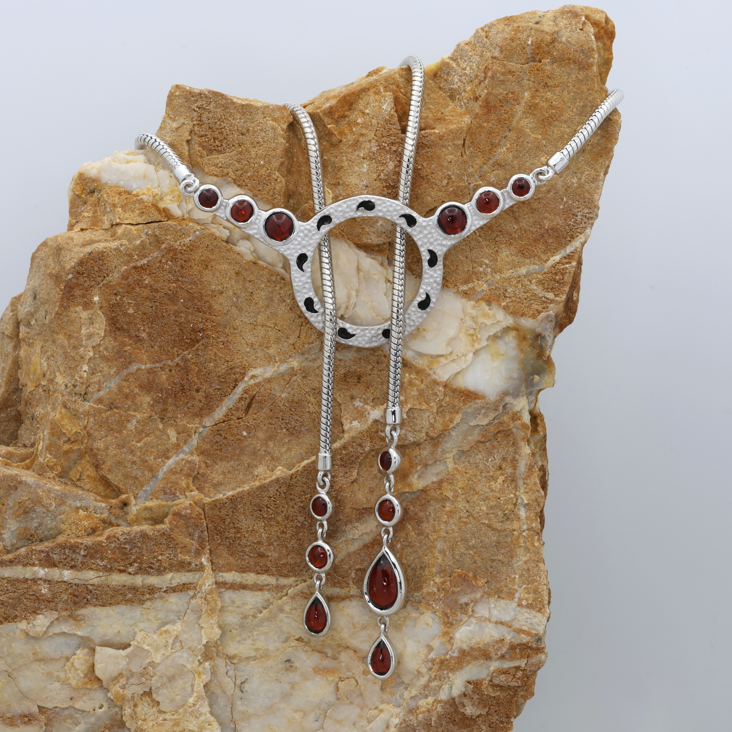
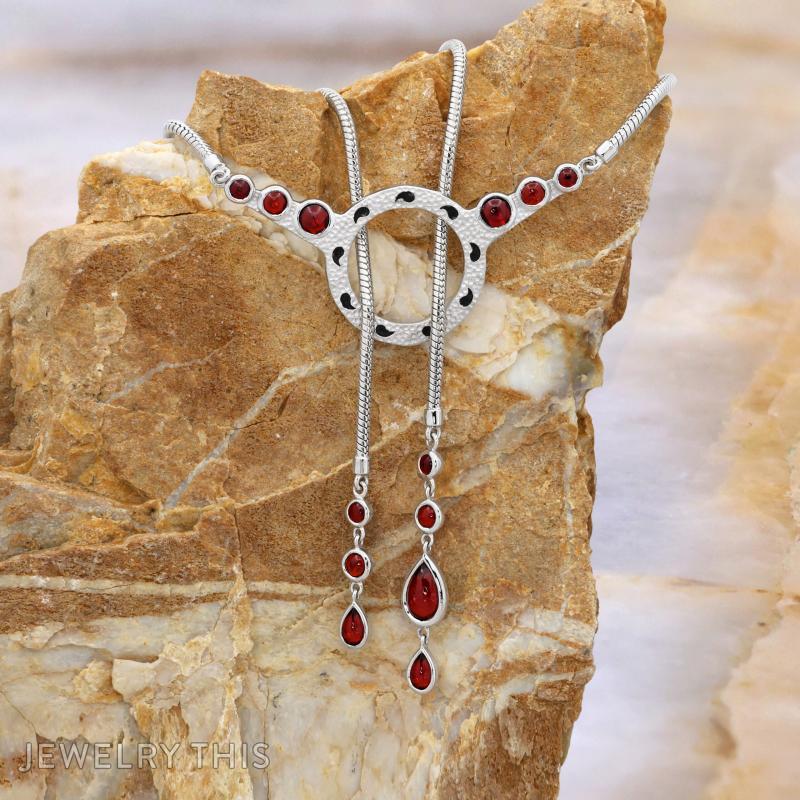
Necklace lariat-style; short side 55cm, long side 60cm. Central hoop with bezel-set round and pear-shaped garnets; three graduated pear-drop dangles on each lariat end.
How they made it distinctive
-
01
Domed, bezel-set garnets chosen specifically to read as rounded droplets rather than faceted gemstones
-
02
Pierced central hoop textured to read as hand-forged rather than cast, per the client's own texture reference
-
03
Matte finish applied throughout, with oxidization worked selectively into the recessed cutouts to create an aged-artifact look
-
04
Teardrop cutout angles adjusted after client review to keep the symbolic design precise and accurate to reference
-
05
Designed as a deliberate companion piece to a matching earring set, sharing the same garnet stones
-
06
Discreet sterling silver hallmark added to the back at the client's request
How you'd make it yours
Stone: this piece uses garnet; a new commission could use natural ruby, red spinel, or lab-created alternatives for a similar red tone
Metal: this piece is sterling silver; the same textured, oxidized design language works in gold vermeil or solid gold
Chain length: made to this wearer's measurements; a new piece is sized to its own wearer
Stone count: this piece uses multiple bezel-set stones along the hoop and drops; a new commission could use fewer or more depending on budget
Engraving: a discreet hallmark or personal mark can be added to the back of a new piece
One of a kind: this exact necklace was designed for one client, in collaboration with her own reference imagery, and is not reproduced — a new commission is an original piece inspired by this one, not a copy
Design changes made
The teardrop-shaped cutouts around the central hoop were rotated slightly counterclockwise after the client compared the render to her own reference drawing, since the piece is based on a specific symbol and needed to be precise. She also requested a matte rather than high-shine texture on the metal after reviewing the render, and asked for a discreet 925 stamp to be added to the back.
Who this is for
This piece is for someone drawn to symbolic, slightly gothic jewelry that reads as an old, found artifact rather than a polished new accessory. It's especially right for someone who has a specific visual reference in mind and wants to be closely involved in getting every detail — down to the angle of a single design element — exactly right.
How it's made
The center hoop was modeled digitally and refined through two rounds of client review, including a 3D file the client could examine from any angle before a resin model was 3D-printed as the final pre-casting check. The confirmed design was then cast in sterling silver using a lost-wax process, producing the pierced, textured hoop and the lariat's snake-chain ends in one coordinated piece.
After casting, the surface was given an all-over matte finish rather than a polish, keeping the hammered texture readable without high reflectivity. Oxidization was worked into the pierced crescent cutouts and textured recesses to darken them against the lighter, brushed metal — the aged-artifact effect the client asked for. The round and pear-shaped garnets were then bezel-set by hand along the hoop and down each lariat end, their domed faces left exposed above the bezel rim to read as rounded droplets.
Key note
The oxidization is applied after the matte finish, not before, so the darkened color settles into the recessed texture and cutouts rather than sitting evenly across the whole surface.
Pricing guidance
A multi-component lariat necklace with a pierced textured hoop, hand-applied oxidization, and several bezel-set colored stones sits at the higher end for custom pendant work of this complexity. Most of the added cost over a simpler pendant comes from the number of individually bezel-set stones and the assembly of multiple cast and chain elements into one piece. Metal choice and stone count are the two biggest levers on price from there.
Moves price up ↑
- ↑ Increasing the number of bezel-set stones along the hoop or lariat ends
- ↑ Casting the dangle settings as more separate assembled pieces rather than fewer combined castings
- ↑ Upgrading from sterling silver to gold or gold-vermeil
- ↑ Adding hand-applied oxidization or other multi-step finishing across a larger surface area
- ↑ Lengthening the lariat ends or adding additional graduated drops
Moves price down ↓
- ↓ Reducing the number of individual bezel-set stones
- ↓ Combining the dangle-end settings into fewer cast pieces instead of multiple assembled parts
- ↓ Simplifying the pierced cutout pattern on the central hoop
- ↓ Using a single finish (polished or matte) rather than a combined matte-plus-oxidized treatment
- ↓ Choosing a shorter, single-strand design instead of a lariat with graduated drops
Questions people ask
The stones set into this piece are garnets, chosen for their deep red color to suggest droplets within the design. Garnet is a durable stone rated around 6.5 to 7.5 on the Mohs hardness scale, which makes it suitable for regular wear in a pendant or necklace. Natural garnet is widely available and is generally more affordable than comparably sized rubies while offering a similar rich red tone. The specific clarity and tone can vary stone to stone, so slight natural variation between stones is normal and expected.
The textured look comes from a combination of surface texturing applied before casting and a matte finish applied afterward rather than a high polish. Oxidization is then worked selectively into the recessed and pierced areas of the design, darkening those crevices while leaving the raised surfaces lighter. This contrast is what creates the worn, artifact-like appearance rather than a bright, new-looking piece. The matte finish also helps the texture read clearly instead of being washed out by reflections, which is a common issue with high-polish silver.
Oxidization on sterling silver is a surface treatment, not a permanent change to the metal, so it can lighten gradually with handling and cleaning over years of wear. Because it is intentionally concentrated in recessed texture and cutout areas rather than spread evenly, minor fading is less noticeable than it would be on a smooth oxidized surface. Avoiding harsh jewelry cleaners and abrasive polishing on the darkened areas will help it last longer. If it does fade significantly, re-oxidizing is a standard service most jewelers can perform.
A lariat necklace with a detailed pierced center hoop, several bezel-set stones, and graduated drop ends falls toward the higher end for custom pendant-style work, mainly because of the number of stones set and the number of separate cast and chain components that have to be assembled into one piece. The cost moves up further with more bezel-set stones or more individually cast dangle components, and down if the design is simplified to fewer stones or fewer assembled parts. Metal choice also plays a role, with sterling silver sitting at a lower cost point than gold options of the same design.
For a piece with this level of detail — a pierced center design, multiple bezel-set stones, and a two-sided lariat chain — production typically runs in the range of several weeks once the design is finalized and approved. The process usually starts with a render for review, sometimes followed by a rotatable 3D file for closer inspection of shape and proportion, and a 3D-printed resin model as a final check before casting. After casting, finishing steps like matte texturing, oxidization, and hand stone-setting add additional time before the piece is ready to ship.
Yes, and for symbolic designs where the exact orientation or arrangement of elements carries meaning, that precision is worth confirming carefully before casting. The design process typically includes a render and can include a rotatable 3D file, both of which allow small adjustments — like the angle of a repeated design element — to be checked against a reference drawing before anything is cast in metal. Making these corrections at the render or 3D-file stage is far easier than adjusting after casting. Clients working from a specific symbolic reference should plan for at least one round of detailed feedback on element placement and orientation.
Yes, a small stamp such as a sterling silver hallmark can be added to a discreet location on the piece, such as the back of a center element or an inconspicuous point along the chain. This is a standard request and does not affect the overall design or the structural integrity of the piece. It's best to confirm the stamp and its placement during the design review stage, before the piece goes into production, so it can be incorporated into the casting rather than added afterward. Exact placement can typically be left to the maker's discretion if the client has no strong preference.
Yes, designing a necklace and earrings as a companion set is a common request, and the easiest way to achieve a cohesive look is to use the same stone type across both pieces, as was done here with garnet. Shared design language — similar texture, similar setting style, or a repeated motif — also helps two separately designed pieces feel like part of the same set. It's usually easier to finalize one piece's design first and use it as the reference point for the second, rather than designing both simultaneously from scratch.
Explore Similar Creations
Every masterpiece starts with a spark. Explore how our clients raw ideas - sketches, heirlooms, inspirations - were transformed into bespoke works of arts.
This 14karat yellow gold necklace embraces both celestial love and the bond between a mother ...

Elegance blossoms in this white gold necklace where nature’s grace meets the sparkle of moissanites. ...

This ‘Y’ style drop necklace is a timeless and elegant piece. Made from sterling silver, ...

This exquisite 14k yellow gold lariat necklace is the perfect gift to show your love ...

This custom necklace is a beautiful celebration of motherhood and dedication. Crafted in radiant yellow ...

Presenting a heartfelt custom jewelry pendant, a sterling silver necklace that beautifully captures the essence ...

This stunning necklace is a true testament to elegance and sophistication. The strand is composed ...
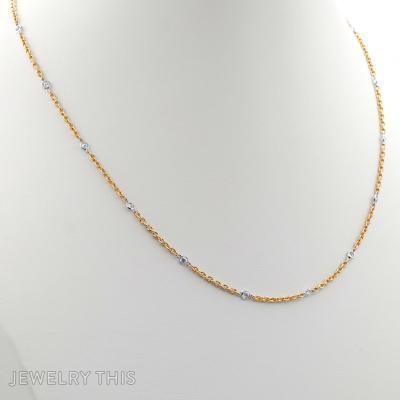
This station necklace upgrades a well-loved costume piece into fine jewelry, replacing its small silver ...
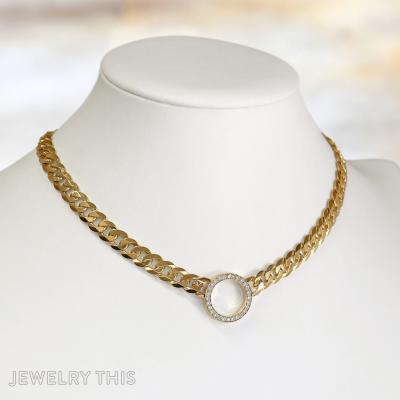
This choker takes the familiar Cuban-link nameplate necklace and simplifies it down to a single ...

This yellow gold necklace is a harmonious blend of spirituality and sophistication. The necklace consists ...

This sentimental gold pendant beautifully captures the essence of family through its trio of vibrant ...

This three-piece set was built to echo a design from an old family photograph: a ...