


Mexican Eagle Crest Signet Ring in 14k Gold
$$
14k yellow gold, black rhodium plating
G. wanted a ring built around his own version of a family crest — an eagle design he had in mind from the start, with the family surname anchoring it at the bottom. During design, he asked for the crest to stand out more, so the background was finished in black rhodium to set the raised gold eagle in sharper relief. He called the finished piece amazing when it arrived.
'It looks great Carrie!!' — on seeing the first render
'I can't wait to see it in person.' — on seeing the resin model update
Quick specs
Primary Metal
Primary Stone
Accent Stones
Design Complexity
Intent: Certainty
Size
Ring size 13 US. Signet top 18mm x 18mm round.
How they made it distinctive
-
01
Eagle-on-cactus crest hand-modeled from the client's own reference image rather than a stock design
-
02
Black rhodium plating added mid-design specifically to make the raised crest pop against the background
-
03
Surname placed at the bottom of the crest to visually anchor the heavier bird motif above it
-
04
Large 18mm round signet face chosen to give the detailed crest enough room to read clearly
-
05
Single-face design with no side stones or band detail, kept deliberately plain to let the crest be the focal point
How you'd make it yours
Face shape: this piece uses a round 18mm signet top; a new commission could use an oval or cushion-shaped face
Metal: this piece is 14k yellow gold; the same crest design works in 18k gold or a white gold contrast
Plating: this piece uses black rhodium on the recessed background; a new piece could use a plain polished background or colored enamel fill
Text placement: the surname sits at the bottom of this crest; a new commission could move text to the top or the inside of the band
One of a kind: this exact ring was designed for one client's family crest and is not reproduced — a new commission is an original piece inspired by this one, not a copy
Design changes made
The client requested the crest background be darkened to make the design more visible, so black rhodium plating was added to the recessed surface — this changed the final look from a single-tone gold face to a two-tone contrast piece.
Who this is for
This piece is for someone who wants a ring that carries a personal or family emblem rather than a decorative pattern — something that reads as a mark of identity on the hand. It's especially suited to someone comfortable with a larger, substantial ring face and who wants their surname or symbol visible every day, not tucked away inside the band.
How it's made
The approved 3D design was first produced as a wax model using a 3D printer, then attached to a wax tree and invested in plaster. The flask was fired in a kiln to burn out the wax, leaving a hollow mold, and molten 14k yellow gold was cast into that mold under pressure to form the raw ring, which was then cleaned and prepared for finishing.
Once cast, the shank and the raised eagle crest were polished to a bright finish, while the recessed background surrounding the bird and the engraved surname was left textured for the plating step. Black rhodium was applied to that recessed field last, since plating goes on only after all mechanical polishing is complete, creating the dark backdrop that makes the raised gold crest and lettering stand out.
Key note
The black rhodium is confined to the recessed background only — the raised eagle and lettering stay bare polished gold, which is why the contrast reads cleanly rather than coating the whole face in dark plating.
Pricing guidance
A substantial 14k gold signet ring with a hand-carved crest design and two-tone plating sits in the mid range for custom signet work. Most of the cost comes from the 3D modeling and hand-finishing needed to render a detailed emblem at this scale, plus the metal weight of a large round top. Plating, metal karat, and face size are what move the price from there.
Moves price up ↑
- ↑ Upgrading from 14k to 18k gold, which increases material cost at the same weight
- ↑ Enlarging the signet face beyond 18mm, which adds more gold weight and more surface to hand-finish
- ↑ Adding colored enamel fill instead of plain black rhodium plating
- ↑ Engraving additional text on the inside of the band
- ↑ Adding a more elaborate multi-figure crest design with finer relief detail
Moves price down ↓
- ↓ Reducing the signet face diameter from 18mm to a smaller size
- ↓ Choosing a plain polished background instead of black rhodium plating
- ↓ Simplifying the crest to a single element rather than a bird-and-plant composition
- ↓ Dropping the engraved surname from the face
- ↓ Choosing 10k gold instead of 14k
Questions people ask
Yes, a hand-drawn or digital crest image can be converted into a 3D wax model and then cast in metal. The design team builds a photorealistic render from the reference image first, so you can review and request changes before anything is cast. Fine details like feathers or small plants translate well into relief work at a large signet size. Very thin or tiny details may need slight simplification to hold up during casting and wear.
Black rhodium is a dark metal plating applied over gold or silver to create a deep black-grey surface finish. It is a surface coating, not a solid material, so it will gradually wear thinner with regular skin contact and friction, especially on a ring worn daily. Most pieces hold their black finish well for one to two years before noticeable fading occurs. Re-plating is a standard jewelry service and can restore the original dark look when needed.
A custom 14k gold signet ring with a detailed hand-carved design generally falls in the mid range for bespoke ring work. The price is driven mainly by the labor of modeling a raised relief design and the gold weight of a larger signet face. Adding plating, upgrading karat, or enlarging the face all push the price higher, while a smaller face or simpler design brings it down. An exact quote typically follows once the 3D render is approved.
Yes, 14k gold is a common choice specifically because it balances durability with gold content — it is harder than 18k gold and holds up well to daily knocks and friction. A substantial signet ring like this, with a solid shank and thick face, is built to withstand regular wear on an active hand. The main maintenance consideration is the black rhodium plating, which will need periodic re-plating over time, not the gold itself. The gold structure underneath will outlast the plating by a wide margin.
From approved design to finished piece, production typically takes about two to three weeks. Before that, the initial 3D design and render usually take about a week to prepare and refine with the client. The full process from first deposit to shipping is commonly five to six weeks total, though simpler requests or fewer revisions can finish faster. Shipping time is additional once the piece leaves production.
Yes, text and imagery can be combined on the same signet face, with the name typically placed along the bottom edge to anchor a larger emblem above it. This works especially well when the main design element, like an animal or crest figure, is visually heavier at the top. Text can also be engraved on the inside of the band instead if you prefer the face to carry the emblem alone. Font style and letter size are adjusted during the design phase so the name stays legible at signet scale.
A signet ring is defined by its flat or lightly domed face, traditionally meant to carry a stamp-like design — historically used to press a wax seal, though most modern signet rings are decorative or symbolic rather than functional seals. A regular engraved ring usually has a continuous band design with text or imagery added somewhere on the surface, without that dedicated flat face. The signet style gives more room for a detailed emblem, like a crest or an animal figure, than a standard band typically allows. Both can carry personal or family meaning, but the signet format is specifically built around a central emblem.
A solid signet ring like this can typically be resized within a modest range, usually a size or two, without disturbing the face design. Because the face is a separate raised element from the shank, resizing work focuses on the band itself and does not usually affect the crest or plating. Larger resizing jumps may require additional metal to be added to the shank, which can affect cost. It's best to confirm your size carefully before casting since resin or wax fit checks can catch sizing issues early.
Explore Similar Creations
Every masterpiece starts with a spark. Explore how our clients raw ideas - sketches, heirlooms, inspirations - were transformed into bespoke works of arts.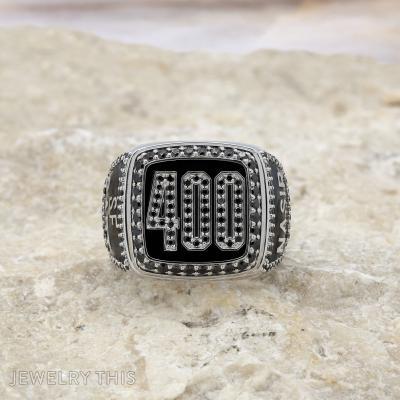
This signet-style ring centers on the number 400 set against a black enamel background and ...

This signet ring is filled with sentiment and symbolism. The top surface features a flying ...
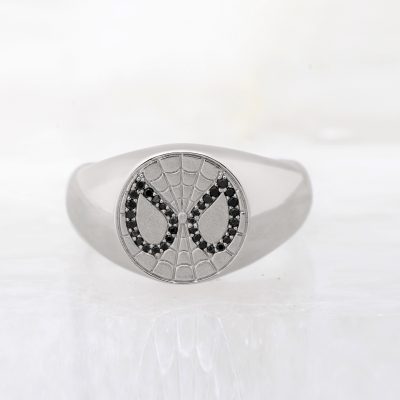
This Sterling Silver ring is perfect for the individual who wants to show off their ...

This 14k yellow gold Harley ring is the perfect personalized accessory for any Harley Davidson ...

This flat-top signet ring was designed by the client himself as a personal mark to ...

Personalized signet ring featuring enamel filled symbol inlayed into the top of the ring which ...

Sterling silver ring with geometric design. Rose gold plated top with silver accents. Personalized engraving ...

This distinctive pair of yellow gold signet-style rings blends personal significance with timeless style. The ...


Meticulously crafted in 14K gold, this men’s ring is a stunning combination of classic style ...

This signet-style ring trades the traditional flat engraving table for a fully dimensional skull face, ...

This heartfelt custom signet ring is crafted in luminous 10K yellow gold. This special ring ...



