
Recreated Citrine Halo Ring — Lost Ring Reborn
$$$
Sterling silver, custom-cut citrine, lab-grown diamonds
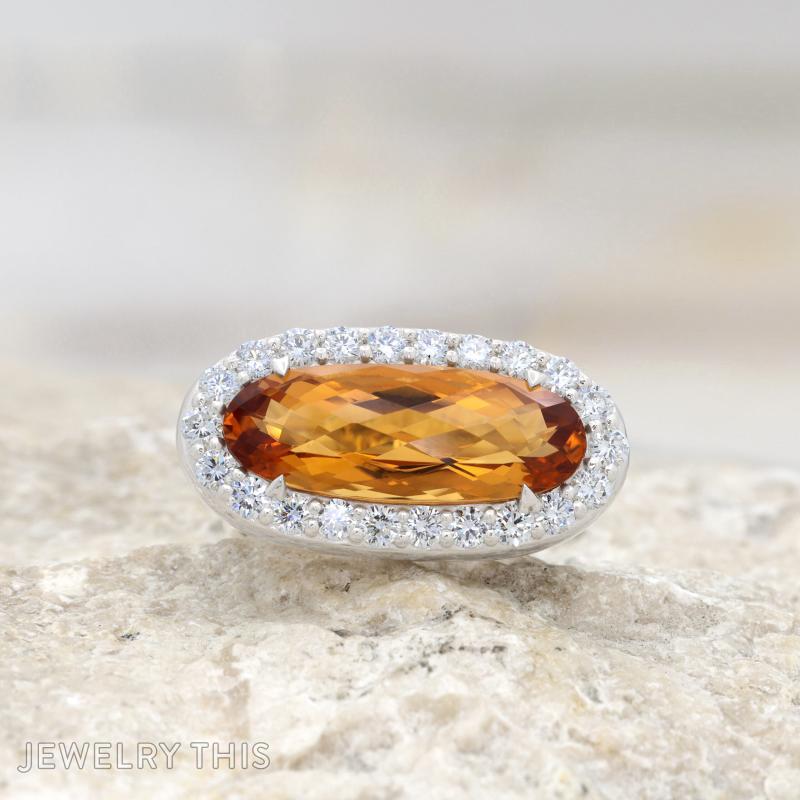
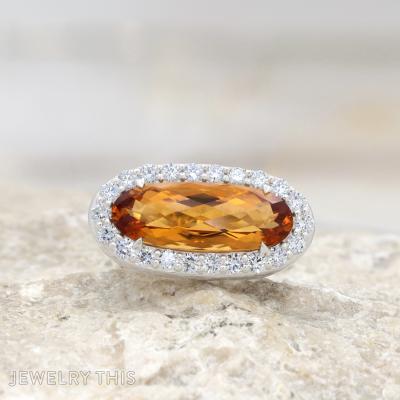
A husband set out to recreate the ring his wife had lost more than 15 years ago — a piece with such an unusual shape that she'd tried and failed to recreate it herself more than once. Working from a handful of old photos he'd found by chance, the design came together stone by stone, down to a custom-cut citrine sized as close to the original as material would allow. When he gave it to her on their 20th anniversary, she said: "They NAILED it!"
'They NAILED it!' — on delivery
Quick specs
Design type
Primary Metal
Shape / Cut
Primary Stone
Accent Stones
Design Complexity
Intent: Certainty
Size
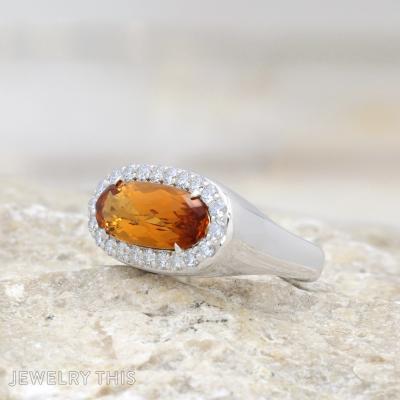
Ring size 10 US (19.76mm). Center stone approximately 20-24mm in length, set east-west. 22 round accent stones in halo.
How they made it distinctive
-
01
Elongated oval citrine custom-cut specifically to approximate the shape and proportions of a ring lost over 15 years ago
-
02
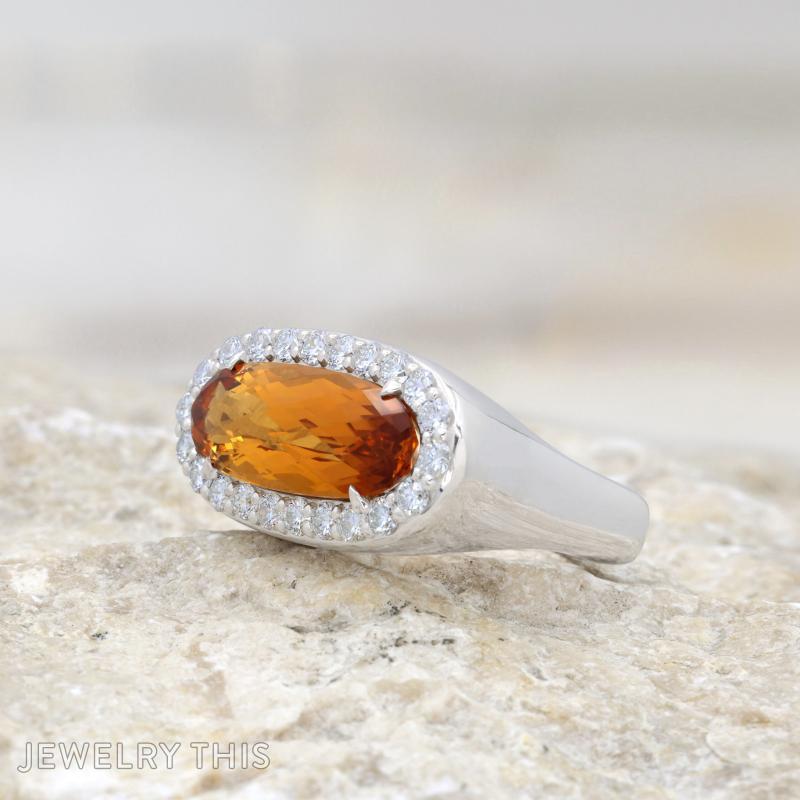
East-west setting orientation preserved from the original — the stone sits sideways across the finger rather than lengthwise
-
03
22 round diamonds in the halo, matched as closely as possible to the original stone count
-
04
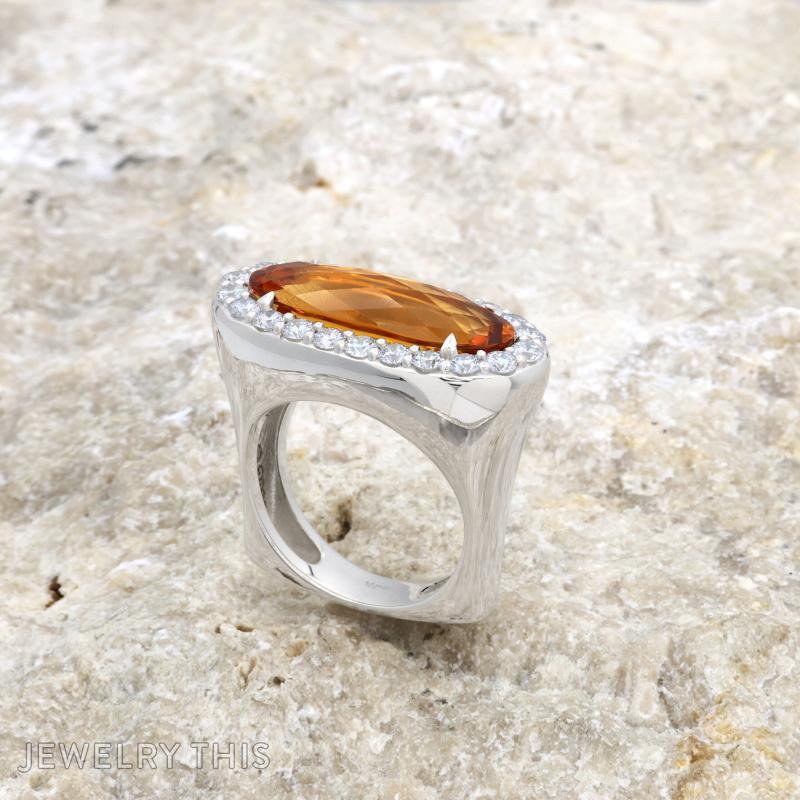
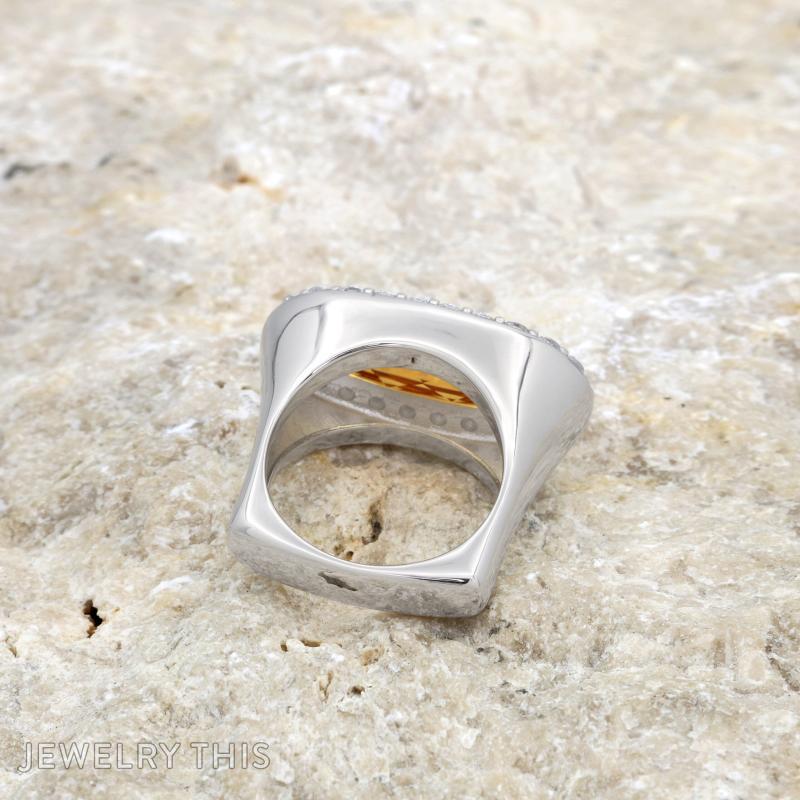
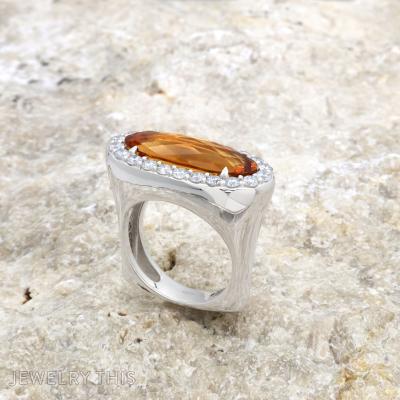
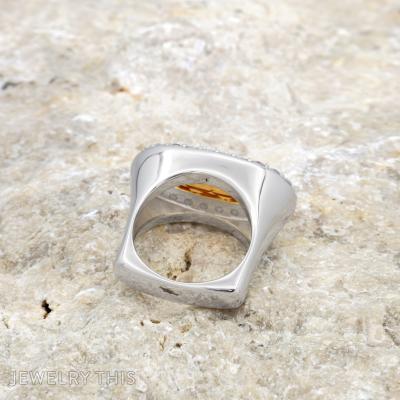
Underside of the band deliberately hollowed out to offset the weight of such a large stone and dense halo setting
-
05
Engraving placed on both shoulders rather than centered on the back, specifically to survive a future resize
-
06
Rebuilt entirely from a handful of old photographs with no physical original or appraisal to reference
How you'd make it yours
Stone type: this piece uses custom-cut citrine — a new commission could use golden topaz or another warm-toned stone for a different color depth
Metal: this piece is sterling silver — the same design language works in 14k or 18k white gold for added durability
Accent stones: this piece uses 22 lab-grown diamonds — a new piece could use natural diamonds or moissanite for a similar look
Stone shape: this piece uses an elongated custom-cut oval — a new commission could use a standard oval to avoid custom cutting time
Engraving: the shoulders of this piece carry a short inscription — a new piece can carry its own personal engraving in the same placement
One of a kind: this exact ring was rebuilt to match one specific lost piece and is not reproduced — a new commission is an original piece inspired by this one, not a copy
Design changes made
The center stone came out slightly smaller than the original's estimated 23-24mm length after cutters struggled to source citrine material long enough — the client agreed to prioritize matching the shape and feel over the exact original size. The final stone also reads a touch richer/darker in color than the original due to the material available for cutting.
Who this is for
This piece is for someone trying to bring back a design that mattered, working from nothing more than old photos and memory. It's especially right if the original had an unusual shape or proportion that never quite got recreated on prior attempts, and you want a team willing to custom-cut a stone to get it close.
How it's made
Once the technical drawing was approved and the custom-cut citrine was received from the cutter, the design team built a 3D model and produced a photorealistic render for approval. From that model, a mold was created and molten sterling silver was cast into it, producing the raw ring. Because the elongated center stone and its surrounding halo made for a heavy setting, the underside of the shank was hollowed out during this stage to reduce weight while preserving the look of the original chunky design.
After casting, the piece was cleaned up and finished with two distinct surfaces — a brushed, textured treatment on the vertical sides of the squared shank and a high polish on the top and setting area. The 22 round lab-grown diamonds were then hand-set into the halo surrounding the citrine, and the citrine itself was secured in its custom setting. Engraving was added by hand to both shoulders of the ring, working around the hollowed interior to preserve as much flat surface as possible.
Key note
The ring's underside was deliberately hollowed out during casting — not just for comfort, but because the elongated stone and dense diamond halo would have made the piece uncomfortably heavy in solid silver.
Pricing guidance
A ring built around a large custom-cut colored stone with a diamond halo, in a substantial squared silver setting, sits toward the higher end for pieces of this complexity in sterling silver. Most of the added cost over a simpler ring comes from the custom stone cutting and the sheer amount of metal and labor needed for such a chunky, hollowed setting. Stone choice and accent stone count are the biggest levers on price from there.
Moves price up ↑
- ↑ Upgrading the band from sterling silver to 14k or 18k white gold for a more durable, tarnish-resistant setting
- ↑ Using natural diamonds instead of lab-grown diamonds for the halo
- ↑ Choosing a rarer or larger custom-cut center stone that requires more cutting time and material
- ↑ Adding a second engraving location or more detailed lettering
- ↑ Increasing the accent stone count beyond 22 stones
Moves price down ↓
- ↓ Reducing the halo to fewer accent stones
- ↓ Choosing a standard oval cut rather than an elongated custom-cut shape, which avoids custom cutting fees
- ↓ Selecting moissanite instead of lab-grown diamonds for the surrounding stones
- ↓ Using a smaller center stone that requires less material and cutting time
- ↓ Simplifying the band from a hollowed squared shank to a standard rounded band profile
Questions people ask
Citrine rates about 7 on the Mohs hardness scale, which makes it reasonably durable for daily wear but softer than sapphire, ruby, or diamond. It can still scratch over years of regular contact with hard surfaces, so it's best paired with a protective setting like a halo or bezel that shields the edges. With normal care — avoiding harsh chemicals and impacts — a citrine center stone can hold up well for decades. It's a good choice for a statement ring that's worn often but not for heavy manual work.
Yes, this is a regular part of custom jewelry work when a design calls for a non-standard stone shape or size. A cutter works from photos, measurements, and any other reference material to get as close to the original proportions as available rough material allows. Elongated or unusual shapes can be harder to source in the exact length needed, so some flexibility on final size is often required. The goal is typically to match the overall shape and visual feel rather than an exact millimeter measurement.
Lab-grown and natural diamonds are chemically and optically identical — same hardness, same brilliance, same fire. The only real differences are origin and price, with lab-grown diamonds typically costing noticeably less for the same size and quality. For a halo of small round stones like this, most people can't tell the difference by eye, which is why many clients choose lab-grown for the same look at a lower cost. Both are true diamonds, not diamond simulants.
A ring built around a large custom-cut colored stone with a full diamond halo and a substantial silver setting tends to sit toward the higher end for sterling silver custom work, given the cutting fees and metal weight involved. The center stone type, the number and quality of accent stones, and the metal choice are the main variables. Moving to gold or upgrading the accent stones to natural diamonds would push the price higher still.
The process typically starts with a technical drawing to work out stone shapes, sizes, and layout, which takes about a week. If a stone needs custom cutting, that step can add several weeks depending on the cutter's availability and how easily the right material can be sourced. Once the stone is in hand, building the 3D model, casting, and finishing generally takes another few weeks. Total timelines for a piece like this, with a custom-cut stone, typically run longer than a standard four to six week custom ring.
Yes, but a ring with a hollowed-out shank and an engraving near the shoulders requires some care during resizing. If the ring needs to be sized down or up, the resizing cut is usually made at the back of the band, and any engraving located there could be affected. That's why engraving is often placed on the shoulders or sides rather than dead center at the back, so it's more likely to survive a future resize.
Natural and custom-cut colored stones can vary slightly in tone depending on the specific piece of rough material used, even within the same stone type. A render is built from photos and approximate color data, so the finished stone may read a shade lighter or darker in person. This is a normal and expected variation with natural materials like citrine, which can have visible color zoning within a single piece of rough. It doesn't affect the durability or quality of the stone, just its exact shade.
An east-west setting places an elongated stone, like an oval or marquise, sideways across the finger instead of running lengthwise up the finger toward the knuckle. It's a distinctive look that changes how the stone catches light and how the ring sits visually on the hand. This orientation is a deliberate design choice rather than a standard default, and it tends to make a ring feel more unusual and eye-catching. It works particularly well with elongated stone shapes like the one in this design.
Explore Similar Creations
Every masterpiece starts with a spark. Explore how our clients raw ideas - sketches, heirlooms, inspirations - were transformed into bespoke works of arts.
This 14karat White gold ring is a beautiful tribute to the matriarch of a beloved ...

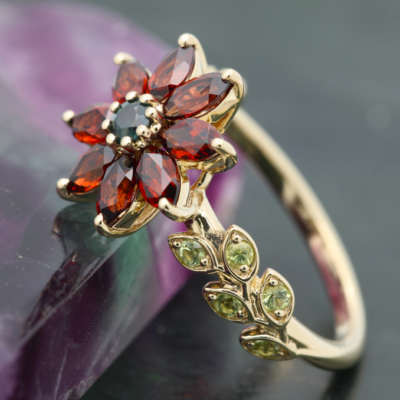
This custom 14k yellow gold ring is a blooming masterpiece. At its heart lies a ...

This custom engagement ring set is a unique testament to love and unity, inspired by ...

This unique three stone combination memorial ring is rich with memory and love. Crafted in ...

Two interlocking bands made of 14k white gold with channel set with VS1 diamonds in ...

This engagement ring centers on a shield-cut lab-grown diamond, custom cut to just over two ...
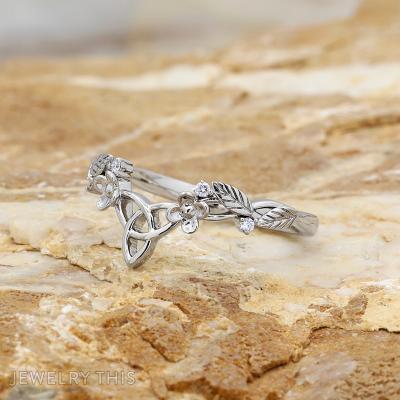
This custom platinum wedding band was thoughtfully designed to complement an existing engagement ring while ...

This beautiful engagement ring features a brilliant 2carat Radiant Diamond at its center. The Diamond ...
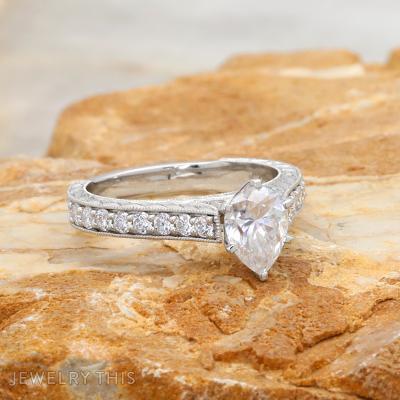
This custom sterling silver engagement ring is a meaningful recreation designed to restore the cherished ...

This engagement ring featuring an oval Australian opal, nestled within an 18k yellow gold setting. ...
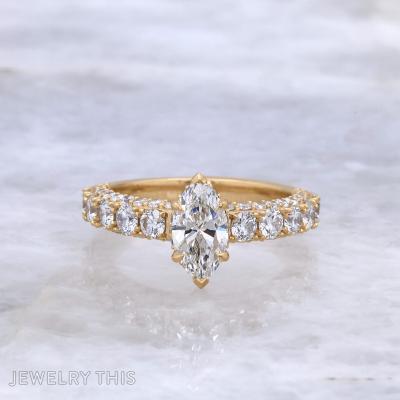
This breathtaking 14K yellow gold engagement ring is a true masterpiece of light and luxury. ...



