


Labradorite Engagement Ring with Amethyst & Peridot Halo
$$
14k white gold, labradorite, amethyst, peridot
B. came to us wanting something unusual for his partner — a labradorite ring that felt subtle rather than loud, with his own birthstone (amethyst) and hers (peridot) worked in without clashing. The design went through a few rounds of thinking before landing on separating the two colors into different zones of the ring, and the plan grew to include a plain companion band for days she's working with ceramics. When the render came through, he wrote: "I love it! What a great job!"
'I love it! What a great job!' — on seeing the first render
Quick specs
Design type
Primary Metal
Shape / Cut
Primary Stone
Accent Stones
Style
Design Complexity
Intent: Certainty
Size
Ring size 5.75 US (16.31mm). Companion band sized to match, worn as a stacked pair.
How they made it distinctive
-
01
Amethyst and peridot kept in separate zones of the ring rather than mixed together, to avoid competing with the labradorite's own color flash
-
02
Pear-shaped labradorite chosen and cut to a specific size rather than selected from stock, giving a tailored center stone
-
03
Companion plain band added specifically for hands-on activities, so the stone ring can be set aside without leaving the finger bare
-
04
Chevron-point silhouette ties the amethyst halo and peridot V-band into one continuous visual line
-
05
White gold selected specifically to complement labradorite's cool gray-blue flash rather than warm it up
How you'd make it yours
Stone type: this piece uses labradorite — a new commission could use moonstone or opal for a similar soft flash effect
Accent stones: this piece uses amethyst and peridot — a new piece could use different birthstone pairings for other couples
Metal: this piece is 14k white gold — the same design language works in yellow or rose gold
Companion band: this piece pairs with a plain band — a new commission could add texture or a thin stone line to the second band instead
One of a kind: this exact ring and its companion band were designed for one client and are not reproduced — a new commission is an original piece inspired by this one, not a copy
Design changes made
The original idea was a single stone ring with amethyst and peridot surrounding the labradorite together, but the design shifted to keep the two colors in separate zones — amethyst as a halo around the center stone, peridot along the lower V-band — so the colors wouldn't visually compete with the labradorite. A plain companion band was also added to the order after the client asked about a stackable second ring for more durable, everyday wear.
Who this is for
This piece is for someone who wants color and personal meaning in a ring without it feeling like too much — someone who likes an unusual stone but still wants restraint in how it's presented. It's especially right for a couple who want their individual birthstones represented without the design feeling matchy or literal, and for anyone who needs a secondary, sturdier ring for hands-on days.
How it's made
Once the design was approved from the photorealistic render, the piece moved into physical production. The center labradorite was cut to the approved pear shape by a specialist cutter, while the amethyst and peridot melee stones were sourced separately. The ring was cast in 14k white gold from the finalized 3D model, then cleaned up in preparation for stone setting.
After casting, the metal was polished to a high shine across the chevron band and prong structures. The amethyst stones were prong-set in a small cluster halo above the center stone, and the peridot stones were channel- or prong-set in a continuous line along the lower V-shaped band. The labradorite itself was set last, secured in prongs positioned to show off its natural flash. The companion band was cast and finished separately as a plain, unset piece.
Key note
The amethyst and peridot were deliberately kept in separate zones of the ring rather than mixed together, because placing both colors directly against the labradorite's own blue-gray flash risked the colors visually competing with each other.
Pricing guidance
A multi-stone white gold ring with a labradorite center and two accent stone types, plus a companion band, sits in the mid range for custom work of this complexity. Sourcing and cutting a labradorite to a specific shape, plus setting two additional stone types, adds labor beyond a single-stone ring. Adding a second plain band increases the total since it is effectively a second cast piece, even without stones.
Moves price up ↑
- ↑ Adding diamonds or more precious accent stones in place of amethyst and peridot
- ↑ Increasing the size or quality grade of the center labradorite
- ↑ Setting stones on the companion band instead of leaving it plain
- ↑ Upgrading from 14k to 18k white gold
- ↑ Adding more rows or a denser stone pattern along the band
Moves price down ↓
- ↓ Dropping the companion band and ordering a single ring
- ↓ Reducing the number of accent stones in the halo
- ↓ Choosing a smaller center stone size
- ↓ Using a single accent stone type instead of two
- ↓ Selecting sterling silver instead of 14k white gold for the companion band
Questions people ask
Labradorite rates around 6 to 6.5 on the Mohs hardness scale, which is softer than sapphire or diamond and more comparable to opal or moonstone. It can hold up to normal wear but is vulnerable to chipping or scratching during activities like gardening, dishes, or weightlifting. Most jewelers recommend removing a labradorite ring for any hands-on or physically demanding tasks. Pairing it with a plain companion band for those activities is a common workaround so the wearer still has a ring on without risking the stone.
Yes, but placement matters. When amethyst (purple) and peridot (green) sit in the same cluster right next to each other, the contrasting colors can compete for attention, especially alongside a multi-toned stone like labradorite. A common solution is to separate the two colors into different structural zones of the ring — for example, one stone type in a halo near the top and the other along a lower band — so each color reads cleanly rather than blending into visual noise.
A two-piece order like this — a stone-set labradorite ring plus a plain companion band — sits in the mid range for custom jewelry. The bulk of the cost comes from cutting the labradorite to a specific shape, sourcing two additional accent stone types, and casting two separate pieces rather than one. Keeping the companion band unset and choosing a single accent stone type instead of two are both ways to bring the price down from there.
A standard custom ring set typically takes about four to five weeks once production begins, following roughly a week for the design and render stage. Sourcing a center stone cut to a specific shape, like the pear-shaped labradorite here, can add a few days while waiting on the cutter. Setting multiple accent stone types also adds some time compared to a single-stone ring, since each stone type is sourced and set separately.
Yes, most rings can be resized after delivery, typically by a half to a full size in either direction without compromising the setting. The ring is shipped back to the original jeweler with a return label, resized, and shipped back once complete. Rings with stones set low to the band or with complex banding may have more limited resizing range, so it's worth asking before ordering if you expect your size to change.
Moissanite is typically used as a diamond alternative rather than a substitute for colored stones like amethyst or peridot, since moissanite is colorless and has a different kind of brilliance. If the goal is colored accent stones, amethyst and peridot remain a strong choice for their saturated purple and green tones respectively. Moissanite would be a better fit if someone wanted sparkle and brilliance similar to a diamond without the diamond price point.
White gold is a common pairing with labradorite because the cool white tone complements the gray base color and lets the stone's natural blue-green flash stand out without competing with a warmer metal tone. Platinum would achieve a similar effect but at a heavier weight and higher cost. Yellow or rose gold can also work but will shift the overall look warmer and may mute some of the labradorite's cooler flash.
Yes, a plain companion band is a common request specifically for this reason — it gives the wearer a ring they can wear during activities like gardening, exercise, or hands-on work without risking a more delicate stone-set piece. The companion band can be designed to sit flush against the main ring when worn together, or simply worn on its own. It's typically priced as a separate cast piece since it requires its own metal and casting process even without stones.
Explore Similar Creations
Every masterpiece starts with a spark. Explore how our clients raw ideas - sketches, heirlooms, inspirations - were transformed into bespoke works of arts.
This enchanting rose gold engagement ring showcases a mesmerizing oval-shaped opal at its center, radiating ...

Look at this radiant 14k Yellow Gold Heart Shaped Moissanite Solitaire Engagement Ring. It showcases ...

This wedding band uses a half-eternity layout, with marquise-cut moissanite stones set east-west along the ...


This engagement ring centers a marquise-cut lab-grown diamond flanked by an oval and a pear-shaped ...
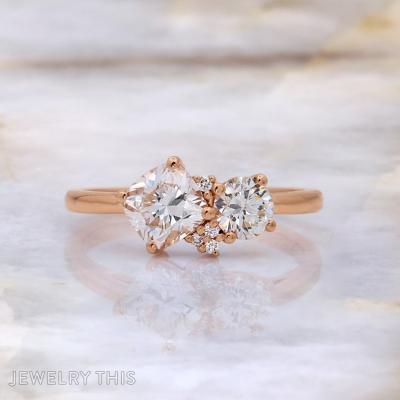
This ring reimagines two heirloom stones into a single two-stone, or toi et moi, design ...

Celebrate the unbreakable bond of motherhood with this custom-designed mother’s ring. Crafted from sterling silver, ...
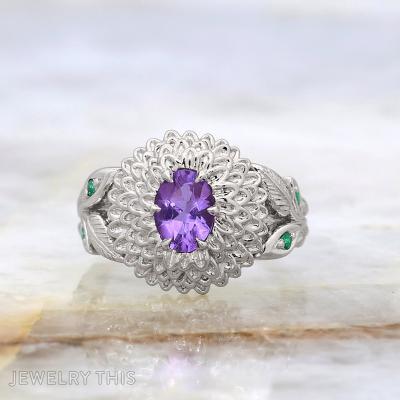
This engagement ring was designed around a lavender amethyst center stone, set within a densely ...

This beautiful White gold and Diamond ring is a stunning homage to the lost beauty ...
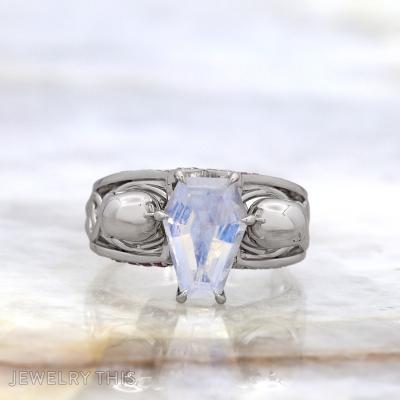
This hauntingly beautiful white gold ring is a masterpiece of dark romance and intricate symbolism. ...

This yellow gold engagement ring is a mesmerizing blend of grace and sophistication. The focal ...

This custom engagement ring set is a unique testament to love and unity, inspired by ...



