


Interlocking Diamond Band Rings in White Gold
$$$$
14k white gold, natural diamonds
H. returned to design a second ring after loving the one made for her the year before. She wanted two interlocking bands, channel-set in diamonds, with larger stones than her reference photo showed — refining the size and setting twice before a resin model confirmed the fit was right. When it arrived, she wrote: 'It is absolutely perfect. When I opened the box I actually gasped when I first saw it.'
'I received it and it is honestly perfect! The size is great. Consider it approved!' — on approving the resin fit model
'It is absolutely perfect. When I opened the box I actually gasped when I first saw it. It is absolutely what I wanted, down to every detail.' — on delivery
Quick specs
Design type
Primary Metal
Shape / Cut
Primary Stone
Accent Stones
Design Complexity
Intent: Certainty
Size
Ring size 6.5 US (16.9mm). Two interlocking bands, each channel-set with 2.5mm round diamonds continuously around the full circumference.
How they made it distinctive
-
01
Two bands interlock through each other without soldering, so they remain freely moving rather than fixed in one position
-
02
Channel setting chosen specifically to eliminate visible prongs and make the diamonds read as more dominant than the metal
-
03
Diamond size increased from about 1.9mm to 2.5mm mid-design so stones would appear to float with less visible metal between them
-
04
Ring size brought down from 7.5 to 6.5 so the piece could be worn on a different finger than originally planned
-
05
A resin fit model was sent before casting to confirm comfort and sizing on two moving bands, a step not needed on a standard single band
How you'd make it yours
Stone type: this piece uses natural mined diamonds; a new commission could use lab diamonds for the same look at lower cost
Setting style: this piece is fully channel-set; a new design could mix channel and prong sections for a different texture
Band count: this piece uses two interlocking bands; a new commission could return to the original three-band inspiration
Diamond size: this piece uses 2.5mm stones; a new piece could use smaller or larger stones depending on the wearer's preference
Metal: this piece is 14k white gold; the same interlocking design works in yellow or rose gold
One of a kind: this exact ring was designed and sized for one client and is not reproduced — a new commission is an original piece inspired by this one, not a copy
Design changes made
The setting style changed from prongs to a channel setting, and the diamonds were upsized from about 1.9mm to 2.5mm so the stones would read as more dominant than the metal. The ring size was also brought down from 7.5 to 6.5 so it could be worn on a different finger.
Who this is for
This piece is for someone who wants movement and dimension on the hand rather than a single static band — two rings that shift and catch light independently. It's especially right for someone returning to build on a design relationship they trust, choosing something for themselves rather than waiting for an occasion to justify it.
How it's made
Once the channel-set design was finalized, the ring was 3D modeled and printed in resin so the client could confirm fit before any metal was committed — a step the client approved as a perfect fit. The approved model was then printed in wax, attached to a wax tree, and invested in plaster. The flask was fired in a kiln to burn out the wax, leaving a hollow mold that molten 14k white gold was cast into under pressure, producing the two raw interlocking bands.
After casting, each band was cleaned and polished to a high-shine finish before the diamonds were set. Round diamonds were channel-set continuously around each band, held flush between two parallel metal walls rather than with prongs, so the stones sit level with the band's edges all the way around. The two finished bands were then joined by interlocking them through each other without soldering, so they remain two separate, freely moving rings.
Key note
Because the two bands are interlocked rather than soldered, they remain fully separate rings that rotate and shift against each other on the finger instead of being fixed in one position.
Pricing guidance
A two-band interlocking eternity-style ring with full channel-set diamonds sits toward the higher end for custom bands, largely because of the diamond volume required to cover two full bands edge to edge. Labor is also a factor — assembling two freely interlocking bands without soldering requires more precise casting and fitting than a single band. Diamond size and quality are where the price moves most from there.
Moves price up ↑
- ↑ Increasing diamond size beyond 2.5mm across two full channel-set bands
- ↑ Choosing higher clarity/color mined diamonds over lab-created stones
- ↑ Widening the bands, which requires more diamonds per row to maintain full coverage
- ↑ Adding a third interlocking band as in the original inspiration photo
Moves price down ↓
- ↓ Switching to lab-created diamonds instead of natural mined diamonds
- ↓ Reducing diamond size back toward 1.9–2mm
- ↓ Setting diamonds only partway around each band instead of full channel coverage
- ↓ Choosing a single band instead of two interlocking bands
Questions people ask
Yes. This design uses two separate bands that are threaded through each other during assembly so they move freely, rather than being fused into one fixed piece. Each band is cast individually and finished before the two are interlocked. The result is a ring that shifts and rotates slightly on the finger, which some wearers like because each band can turn independently. This construction requires more precise casting tolerances than a single soldered band, since the two rings need to pass through each other smoothly without catching.
A channel setting holds stones between two parallel walls of metal with no prongs visible, so the diamonds sit flush with the band's surface. A prong setting uses small metal claws to grip each stone, which leaves more of the stone exposed but also more metal visible around it. Channel settings tend to look more stone-forward because less metal competes with the diamonds for visual attention. They also protect the stone edges well for daily wear since there are no raised prongs to catch on fabric or hair.
The exact count depends on the ring size and diamond size, since smaller ring sizes have less circumference to fill. For a band set with diamonds slightly over 2mm around a size 6.5-7.5 finger, the count typically runs in the high teens to low twenties of stones per band. With two full bands set this way, the total diamond count roughly doubles compared to a single eternity band. Diamond size and ring size are the two biggest variables affecting the final count.
A piece like this sits toward the higher end of custom ring pricing because it requires double the diamond coverage of a standard eternity band plus the extra labor of fitting two freely moving bands together. Natural mined diamonds cost meaningfully more than lab-created diamonds of the same size and clarity grade. Diamond size has the single biggest effect on price here, since channel-set stones are priced per stone across two full bands rather than a handful of accents.
Yes, lab-created and natural diamonds can both be channel-set using the same technique, and they look identical to the naked eye since they share the same chemical and optical properties. The main difference is cost, with lab-created diamonds typically running significantly less for the same size and clarity. Some clients choose natural stones specifically for resale or appraisal reasons, while others prioritize getting larger stones within the same budget by going lab-created. Either option sits securely in a channel setting with no difference in durability.
The design phase typically takes about a week to produce an initial 3D render, though a design like this with two moving bands may take longer to finalize the technical details. Many jewelers send a 3D-printed resin model for the client to try on and confirm fit before committing to metal, which adds time but prevents sizing issues later. Once the design and fit are approved, production — wax printing, casting, polishing, and stone setting — typically takes four to six weeks. A fully channel-set design with two bands can run toward the longer end of that window because of the diamond-setting labor involved.
Resizing an interlocking two-band ring is more complex than resizing a standard single band, because each band is fully channel-set with diamonds around its entire circumference. Cutting and resizing a fully set channel band risks disturbing the stones near the cut point, so any resize needs to be done carefully by someone familiar with the construction. It's generally easier to get the sizing right before production, using a resin or wax fit trial, than to adjust a finished fully-set band afterward. Minor size adjustments may be possible, but significant changes are more limited than on a plain band.
A single ring with two diamond rows is soldered into one fixed object, while two interlocking bands remain separate and can move independently on the finger. Some wearers prefer the visual and tactile effect of the bands shifting slightly as the hand moves, which a fixed two-row ring can't replicate. It also means each band could theoretically be worn alone, though they're designed as a pair. The tradeoff is more complex casting and assembly, since the bands must be sized to interlock smoothly without soldering.
Check what our clients say about us

Holly Crosby
4 years ago
This was the second time working with Jewelry This in creating an originally designed ring. I could not be happier with the quality of their customer service, craftsmanship and overall quality of the finished product. They make the entire process very easy and user friendly. I simply can’t recommend them enough!
Explore Similar Creations
Every masterpiece starts with a spark. Explore how our clients raw ideas - sketches, heirlooms, inspirations - were transformed into bespoke works of arts.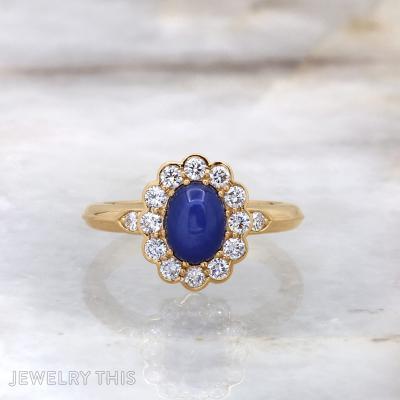
This romantic yellow gold engagement ring centers around a mesmerizing oval cabochon-cut lab grown blue ...


This white gold signet-style ring exudes a powerful and regal presence. The ring’s flat oval ...
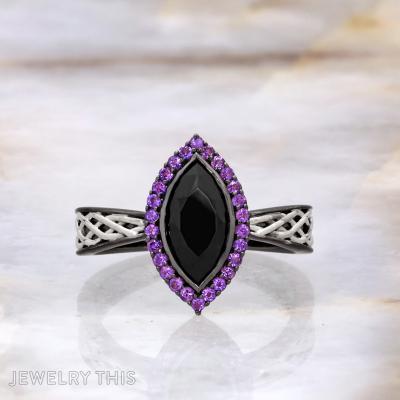
This engagement ring centers a custom-cut marquise black spinel, bezel-set and surrounded by a halo ...
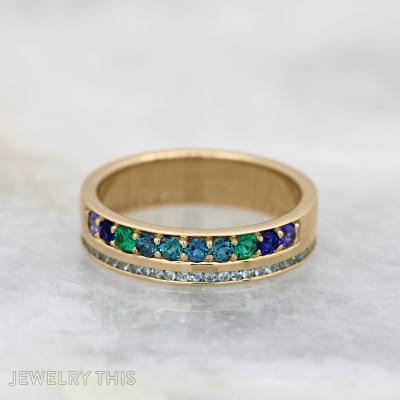
This stunning yellow-gold ring features two dazzling rows of stones. The top row showcases an ...

his personalized signet ring is a symbol of individuality and character. Its square top boasts ...


This custom ring is a heartfelt expression of love and connection. Crafted in sterling silver, ...

This captivating yellow gold engagement ring features a stunning pear-shaped diamond as its centerpiece. The ...

This custom ring, crafted to celebrate a 20th wedding anniversary, beautifully symbolizes the client’s love ...

This ring’s round signet style top features the symbol 朱 (Shu) in stunning detail, against ...
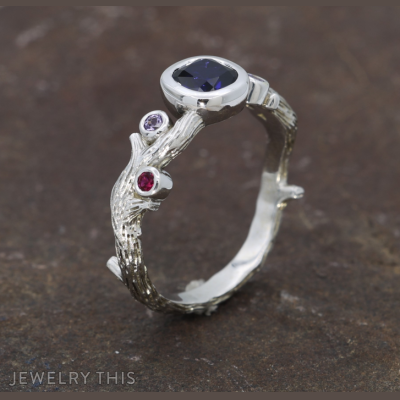
This exquisite engagement ring tells a story of love, individuality, and resilience—crafted to reflect the ...



