


Two-Tone Emerald Engagement Ring with Diamond Accents
$$
14k white gold, 14k yellow gold, lab-grown emerald, lab-grown diamonds
A client wanted an engagement ring built around a green center stone, starting from a couple of inspiration photos and working out the details from there. She went back and forth between yellow gold and two-tone before deciding the two-tone version — yellow gold on the emerald's bezel, white gold everywhere else — read lighter than an all-yellow-gold setting. After asking for the bezel's corners to be rounded rather than sharp, she approved the revised design and later wrote: 'This looks amazing! Just how I imagined.'
'This looks amazing! Just how I imagined.' — on design approval
'I am loving it!' — on delivery
Quick specs
Design type
Primary Metal
Secondary Metal
Shape / Cut
Primary Stone
Accent Stones
Style
Design Complexity
Intent: Certainty
Size
Ring size 7 US (17.35mm). Center stone approx 7.5mm emerald cut.
How they made it distinctive
-
01
Two-tone build chosen specifically after an all-yellow-gold version felt too bulky to the client
-
02
Bezel setting selected for its low profile and because it protects the emerald's edges from daily wear
-
03
Bezel corners rounded rather than squared, softening the geometry while still following the emerald's cut
-
04
Yellow gold isolated to the center bezel only, with the rest of the ring in white gold for contrast
-
05
Lab-grown emerald and lab-grown diamonds chosen to maximize stone size within the client's budget
How you'd make it yours
Stone: this piece uses a lab-grown emerald; a new commission could use a lab-grown sapphire, ruby, or diamond in the same bezel setting
Metal: this piece pairs white gold with a yellow gold bezel; the same two-tone language works in rose gold and white gold, or an all-platinum version
Bezel shape: rounded corners here can be made sharper or softer on a new piece, following whatever stone shape is chosen
Side stones: this piece uses two bezel-set diamonds; a new commission could use colored side stones or omit them for a solitaire look
One of a kind: this exact ring was designed for one client and is not reproduced — a new commission is an original piece inspired by this one, not a copy
Design changes made
The design shifted from all-yellow-gold to a two-tone setting after the client felt the all-yellow version looked too bulky, and the bezel's outer corners were rounded rather than sharply squared to soften the geometry around the emerald.
Who this is for
This is for someone who wants color at the center of their engagement ring without a traditional diamond, and who prefers a setting that sits low and close to the hand rather than raised and prong-heavy. It's especially right if you've gone back and forth on an all-one-metal versus two-tone look and want to see both before committing — small adjustments like metal split and bezel shape make a real difference in how the finished ring reads.
How it's made
Once the two-tone design was approved, the ring was modeled digitally and cast in two separate metals — 14k yellow gold for the center bezel and 14k white gold for the band and side settings — which were then assembled together. A photorealistic render and 3D file were shared with the client before casting so she could review proportions and the bezel shape ahead of time.
After casting, the metal was cleaned up and the two-tone components were joined before stone setting began. The lab-grown emerald-cut emerald was bezel-set into the yellow gold frame, and the two side diamonds were bezel-set into the white gold shoulders, keeping the entire setting low profile with no prongs. The piece was given a final polish after setting to smooth and round the bezel's finished edges.
Key note
The ring was cast as two separate metal components — yellow gold for the center bezel, white gold for the band — which were assembled together rather than produced as a single casting.
Pricing guidance
A two-tone bezel-set engagement ring with a colored center stone and diamond accents sits in the lower-to-mid range for custom engagement rings of this complexity. Using lab-grown stones for both the center and side stones keeps material costs well below natural-stone equivalents, while most of the remaining cost comes from the two-tone casting and bezel stone-setting labor. Center stone size and metal karat are the biggest levers from there.
Moves price up ↑
- ↑ Upgrading the center emerald from lab-grown to natural
- ↑ Increasing the center stone size beyond 1.5 carats
- ↑ Upgrading the band or bezel from 14k to 18k gold
- ↑ Adding more side stones or an eternity-style stone border
- ↑ Switching the side stones from lab diamonds to natural diamonds
Moves price down ↓
- ↓ Using a single metal instead of a two-tone build
- ↓ Reducing the center stone size
- ↓ Choosing a non-emerald colored stone with lower per-carat cost in lab-grown form
- ↓ Omitting the side diamonds entirely for a solitaire-only design
- ↓ Using sterling silver instead of gold for a non-bridal version of the design
Questions people ask
Yes. A lab-grown emerald has the same chemical composition, crystal structure, and optical properties as a mined emerald — it is an emerald, just grown in a controlled lab environment rather than extracted from the earth. The visual difference to the naked eye is essentially none. The main practical difference is cost: lab-grown emeralds typically run a small fraction of the price of a natural emerald at the same size and quality. Even trained gemologists often cannot conclusively distinguish origin without specialized lab equipment.
A bezel setting surrounds the stone's girdle with a continuous rim of metal rather than holding it with prongs. For an emerald, which is a softer and more included stone than a diamond, this matters because the metal rim protects the stone's edges from everyday knocks. It also means there are no raised prongs to catch on clothing or hair, which keeps the ring low profile and comfortable for daily wear. The bezel still has to follow the outline of the stone's cut, so an emerald-cut stone gets a rectangular bezel with corners that can be squared or softened depending on preference.
Emerald rates about 7.5–8 on the Mohs hardness scale, which is durable but more prone to chipping than a diamond or sapphire because emeralds commonly have internal inclusions that create natural weak points. A bezel setting significantly improves its daily-wear durability by protecting the stone's vulnerable edges and corners. Avoiding harsh impacts and removing the ring for heavy manual work is still recommended. Many emerald engagement rings are worn successfully for decades when set this way and cared for reasonably.
A two-tone bezel-set engagement ring with a lab-grown colored center stone and lab-grown diamond accents typically falls toward the lower-to-mid range for custom engagement rings. Using lab-grown stones for both the center and accent stones is the single biggest cost reduction compared to natural stones of the same size. The two-tone casting process and bezel-setting labor make up most of the remaining cost. Center stone carat weight and metal karat are the factors that move the price most from there.
The design phase for a ring like this typically takes about a week, during which a 3D render is produced and refined based on feedback — in this case, a metal change and a bezel shape adjustment were both made during that phase. Once the design and stones are approved and paid for, production including casting, assembly, stone setting, and polishing generally takes three to four weeks. Two-tone pieces require an extra assembly step since the components are cast separately in different metals before being joined. Total time from design approval to shipping is typically four to five weeks.
Yes, within the constraints of the stone's own shape. A bezel has to follow the outline of the stone it surrounds, so an emerald-cut stone will always have a rectangular bezel, but the outer corners of that rectangle can be made sharper and more squared off or softer and more rounded. The degree of rounding is a styling choice made at the 3D modeling stage before casting. Once cast and polished, the metal naturally reads a bit smoother and less angular than it appears in a digital render.
Yes. The bezel-set, two-tone, low-profile design translates well to a diamond or any other center stone shape that can be bezel-set. A round or cushion-cut diamond would need a bezel shaped to match its outline rather than the rectangular bezel used for an emerald cut. Lab-grown diamonds are available at a lower cost than natural diamonds with identical appearance. The side diamonds and two-tone metal treatment could stay the same regardless of the center stone choice.
A bezel-set ring like this can generally be resized within a modest range using standard jewelry techniques, though a full bezel setting does add some complexity compared to a plain band since the bezel sits as a separate soldered component. Larger resizing adjustments are more involved on a two-tone piece because both metals need to be worked without disturbing the join between them. It's best to confirm your ring size as precisely as possible before the piece is cast, since this was addressed during the design phase of this project. Minor adjustments within a size or so are usually straightforward for a jeweler to handle after delivery.
Explore Similar Creations
Every masterpiece starts with a spark. Explore how our clients raw ideas - sketches, heirlooms, inspirations - were transformed into bespoke works of arts.
Celebrate your love with this stunning 14k yellow gold engagement ring, designed to make a ...
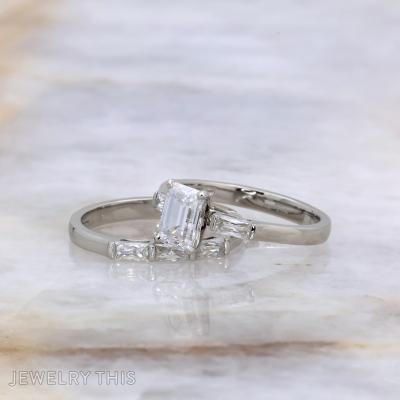
This exquisite platinum engagement ring and wedding band set features a stunning 1-carat emerald-cut moissanite ...


This White gold engagement ring is a mesmerizing ode to love’s enchantement. Nestled at the ...

This engagement ring is a bold yet elegant statement piece. It features a 1-carat central ...

Radiant and reborn, this engagement ring is a recreated masterpiece born from cherished memories. Crafted ...

Step into a world of mythical love and enchantment with this extraordinary wedding set. The ...

This engagement ring was recreated to resemble a vintage three-ring set from the early 1980s, ...
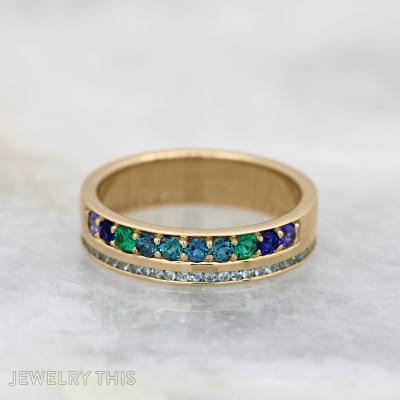
This stunning yellow-gold ring features two dazzling rows of stones. The top row showcases an ...

This engagement ring was designed as a close interpretation of a ring the client admired, ...

This engagement ring is crafted with white gold, featuring an emerald-cut moissanite center stone and ...

This extraordinary Yellow gold ring features a breathtaking 1 carat Round Moissanite stone set at ...



